
Industry Background
This case explores ESP32-S3 edge AI voice device development for a team evaluating on-device voice interaction without constant cloud connectivity.
The target use case involved wake-word detection, basic voice commands, and local inference, with strict requirements on latency, power consumption, and offline capability.
The client had already evaluated cloud-based voice solutions but quickly realized that network dependency, privacy concerns, and recurring API costs made a fully cloud-based approach unsuitable for their product roadmap. They were specifically looking for an ESP32-based edge AI solution that could run voice features locally while remaining cost-effective for mass production.
Why the Client Reached Out to Us
The client initially contacted us during the technical feasibility stage.
Their main challenges were not about writing basic firmware, but about making edge AI work reliably on constrained hardware.
They needed help answering questions such as:
- Is ESP32-S3 capable of running stable voice inference in real-world environments?
- How should memory, audio pipelines, and power management be designed together?
- Can TinyML models be optimized enough to meet latency and battery targets?
- What hardware and firmware decisions would affect future production scaling?
At this stage, the client was looking for an engineering partner with hands-on ESP32-S3 experience, not just theoretical AI knowledge.
What We Built (ESP32-Based Custom Development)
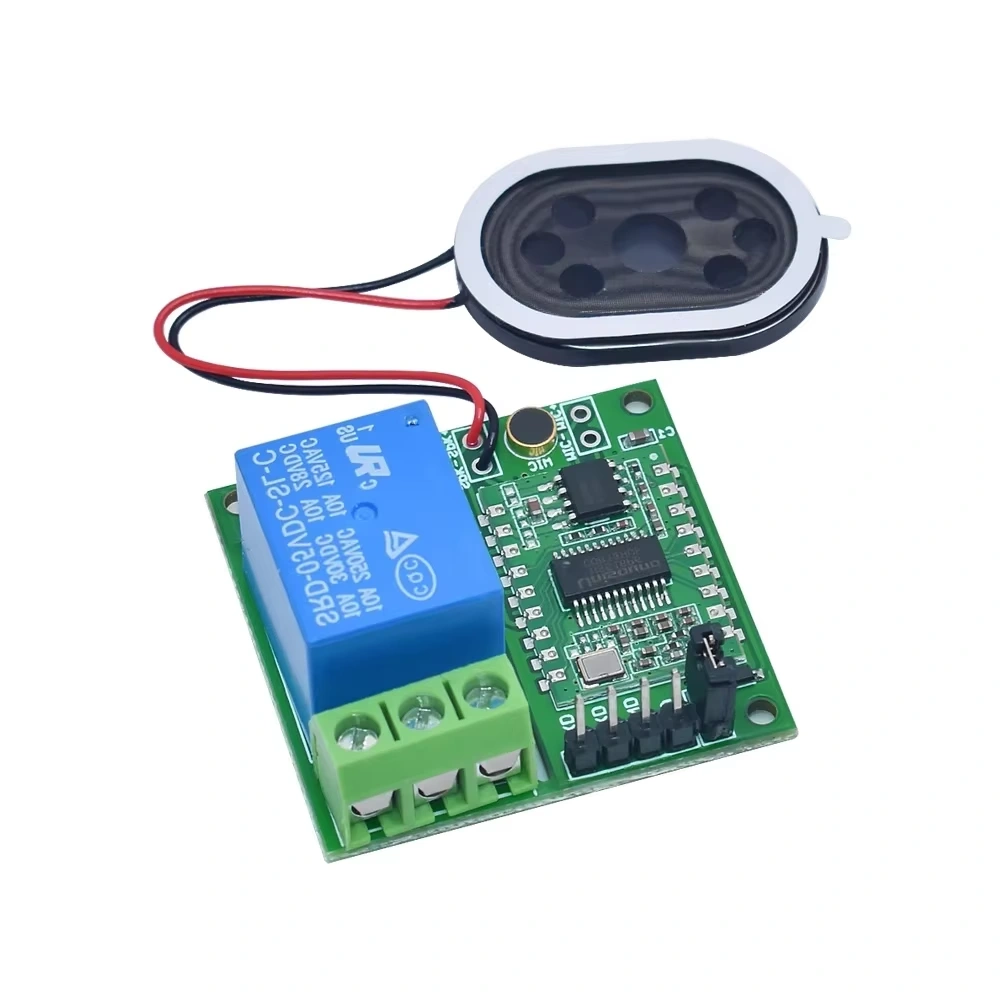
We provided an end-to-end development service focused on ESP32-S3 voice and edge AI use cases, covering both hardware and firmware.
1. ESP32-S3 TinyML Development
We designed the firmware architecture around ESP32-S3 TinyML development, using TensorFlow Lite Micro for on-device inference. The model was optimized for:
- Low memory footprint
- Real-time inference on ESP32-S3
- Stable performance under continuous audio input
Special attention was paid to balancing inference accuracy and power consumption, which is critical for always-on voice devices.
2. ESP32 Voice Recognition Device Architecture
The device was built as an ESP32 voice recognition device capable of offline keyword detection. Audio data was captured through an external microphone module and processed locally without cloud dependency.
We implemented:
- Audio preprocessing and feature extraction
- On-device inference pipeline
- Event-driven wake-up logic to reduce power usage
This allowed the device to remain responsive while maintaining a low idle power profile.
3.ESP32 Keyword Spotting Optimization
A major challenge was ESP32 keyword spotting accuracy in real-world environments. We helped the client refine their keyword set and retrain the model to reduce false positives.
Firmware-level optimizations included:
- Adaptive threshold tuning
- Noise-robust feature extraction
- Task scheduling optimizations under FreeRTOS
These changes significantly improved recognition stability during long-term testing.
Edge AI ESP32 Hardware Considerations
From a hardware perspective, we advised on edge AI ESP32 hardware design considerations, including:
- Power regulation suitable for AI workloads
- RF layout impact on audio signal stability
- Memory configuration for TinyML models
Rather than over-engineering the board, the focus was on a cost-efficient, manufacturable ESP32-S3 design that could scale beyond prototypes.
Outcome & Current Status
The final result was a working ESP32-S3 edge AI voice prototype, capable of reliable offline keyword detection and ready for further product iteration.
While the project did not immediately move into mass production, the client achieved:
- A validated ESP32-S3 TinyML pipeline
- A stable ESP32 keyword spotting firmware architecture
- Clear hardware and firmware foundations for future revisions
The prototype is currently used internally for product demonstrations and investor validation.
Why This Case Matters
This project demonstrates our practical experience in:
- ESP32-S3 TinyML development
- Building real ESP32 voice recognition devices
- Optimizing ESP32 keyword spotting for production-ready systems
- Designing edge AI ESP32 hardware with real deployment constraints
Related ESP32 Edge AI Experience
This case supports companies exploring ESP32-S3 edge AI voice devices and TinyML-based features.
For teams exploring ESP32 edge AI, voice interaction, or on-device intelligence, this case reflects the kind of real-world engineering challenges we help solve.
👉 Looking to build an ESP32-S3 edge AI or voice-enabled device?
Explore our ESP32 Hardware & Firmware Development Services.