
Platform ownership and extensibility

Open-source IoT solutions with maintainable ownership

Open-source IoT projects can reduce lock-in, but they still fail when teams underestimate device models, upgrades, permissions, observability, integrations, data lifecycle, security patches, and long-term ownership. ZedIoT evaluates and customizes open-source platforms, adds device and data services, builds dashboards and APIs, integrates gateways and business systems, and prepares private deployment and handoff materials.

Open sourceThingsBoardPrivate deploymentAPIsSource handoff
Open-source IoT software platform connecting devices, data, dashboards, and APIs
Source access is only the beginningOperations, upgrades, security, and team ownership decide the long-term result.
Choose the right ownership model

Open source, a proven platform base, or a custom build?

The best choice is the one the customer can operate and extend after delivery, not the one with the longest feature list.

01

Customize an established framework

Strong when the device model, rule engine, dashboards, and extension points already fit most of the product.

  • Faster initial platform scope
  • Framework-specific upgrade discipline
  • Custom work stays at supported extension points
02

Use the ZedIoT platform base

Strong when teams need device lifecycle, dashboards, alarms, APIs, and private delivery without assembling every module from zero.

  • Customer-branded and private options
  • Device and operations workflows included
  • Extension path defined with the project
03

Build a focused custom platform

Strong when the workflow, data model, compliance, scale, or product experience cannot fit a general platform cleanly.

  • Maximum workflow control
  • Highest engineering and ownership burden
  • Best started with a narrow product slice
Development services

What ZedIoT can build around an open-source IoT foundation

The scope includes the less-visible work that keeps devices, data, users, releases, and integrations maintainable.

Platform selection and architecture

Compare framework fit, device model, rules, dashboards, multi-tenancy, APIs, deployment, upgrade path, and team ownership before committing.

Device and data services

Build MQTT or HTTP access, device identity, telemetry validation, commands, alarms, time-series storage, reports, and data lifecycle rules.

Custom features and integrations

Add dashboards, workflows, mobile or web experiences, protocol adapters, ERP/WMS/CMMS links, webhooks, and customer APIs.

Private deployment and handoff

Prepare infrastructure, secrets, backups, monitoring, logs, release notes, upgrade plans, repositories, and maintainable ownership.

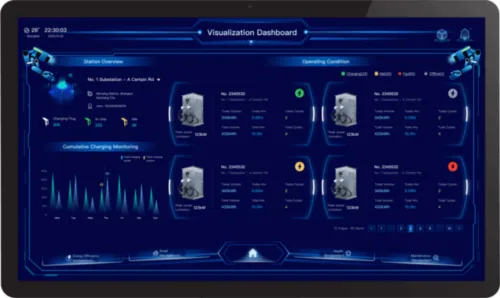
Open-source IoT device management and visualization dashboard
Device and data loop

A usable platform turns field events into accountable operations

Device connectivity is only one layer. The platform must define identity, telemetry quality, commands, alarms, permissions, dashboards, reports, APIs, audit records, and the person or system that acts on each exception.

  • Device models and lifecycle states remain explicit.
  • Telemetry, commands, and alarms have validation and audit rules.
  • Business APIs do not expose raw protocol complexity.
  • Monitoring and backup ownership are part of delivery.
Engineering stack

Use modular technologies without creating a maintenance maze

A typical platform may combine MQTT, device services, time-series storage, queues, APIs, dashboards, rule execution, web and mobile apps, and deployment automation. Each dependency needs a reason, an owner, and an upgrade path.
MQTTHTTP / WebhooksThingsBoardPostgreSQLTime-series dataDocker / KubernetesReact / VueMobile appsObservabilityCI/CD
Open-source software release and platform operations workflow
Industry fit

Open-source IoT works best where workflows need to keep evolving

The platform should reflect the industry's device, data, permission, and response model rather than force every site into the same screen.

Industrial and equipment platforms

Connect gateways, controllers, telemetry, alarms, maintenance, and service workflows without locking the operation to one vendor.

Logistics and asset visibility

Combine RFID, UWB, GPS, barcode, fleet, warehouse, and handover events in a customer-owned data and workflow layer.

Smart buildings and facilities

Unify meters, HVAC, refrigeration, environment, access, and work orders with a platform that can evolve by site.

Connected product SaaS

Create branded device onboarding, dashboards, permissions, APIs, subscriptions, support, and private-delivery options for product companies.

Ownership boundary

Open source reduces lock-in only when someone owns the system

Included in planningLicenses, dependencies, upgrade strategy, hosting, secrets, backups, monitoring, security patches, data retention, and support ownership.

Not automatically freeInfrastructure, customization, testing, operations, security, and long-term maintenance remain real costs.

Best first proofOne representative device group, one dashboard, one alert or action, one integration, and one recovery path.

Delivery path

Move from platform choice to maintainable ownership

The handoff is successful only when the customer's team can understand, operate, deploy, recover, and extend the system.

  1. 01

    Define ownership goals

    Clarify why open source matters: source access, private deployment, extension freedom, cost model, compliance, or vendor independence.

  2. 02

    Compare the platform paths

    Evaluate existing framework, ZedIoT platform base, modular custom build, and migration constraints against the required workflows.

  3. 03

    Prove one complete workflow

    Connect representative devices, data, dashboard, alert, permission, API, and failure handling before broad feature development.

  4. 04

    Harden deployment and operations

    Add observability, backups, security updates, load behavior, release discipline, data retention, and recovery procedures.

  5. 05

    Transfer maintainable ownership

    Deliver code, deployment instructions, configuration ownership, tests, known limits, upgrade notes, and an iteration roadmap.

FAQ

Open-source IoT platform questions

Resolve platform fit, cost, deployment, extensions, upgrades, and ownership before selecting a framework.

Does open source mean the IoT platform has no cost?

No. Open source can reduce license dependence and improve ownership, but engineering, infrastructure, security updates, operations, integrations, and support still require budget and clear responsibility.

How do we choose between ThingsBoard, another framework, and a custom platform?

Compare device model fit, rule engine, dashboards, multi-tenancy, APIs, deployment model, extension points, team skills, expected scale, security obligations, and the cost of changing core behavior.

Can ZedIoT extend an existing open-source IoT deployment?

Yes. We can review the current version, custom code, device data, plugins, integrations, deployment, monitoring, upgrade path, and known failures before defining a safe extension plan.

Can the platform be deployed in our cloud or data center?

Yes. Customer-owned cloud or private deployment can be included with environment design, secrets, backups, monitoring, logs, deployment notes, and an agreed responsibility model.

What should be included in source-code handoff?

A useful handoff includes repositories, build and deployment instructions, configuration ownership, API documentation, database and backup notes, monitoring, test evidence, known limits, and an upgrade roadmap.

Talk to ZedIoT

Review your open-source IoT platform path

Share the current framework, target devices, required workflows, deployment preference, integration systems, and the ownership outcome you need. We will help identify the smallest useful proof.

  • AI + IoT product architecture review
  • Hardware, firmware, cloud, and application integration
  • Prototype planning and production support