
IoT device management for enterprise equipment fleets
ZedIoT builds device management systems that connect equipment communication, monitoring dashboards, alarms, permissions, service records, reports, and APIs into one accountable operating loop.
Enterprises need device management when connected products become service operations
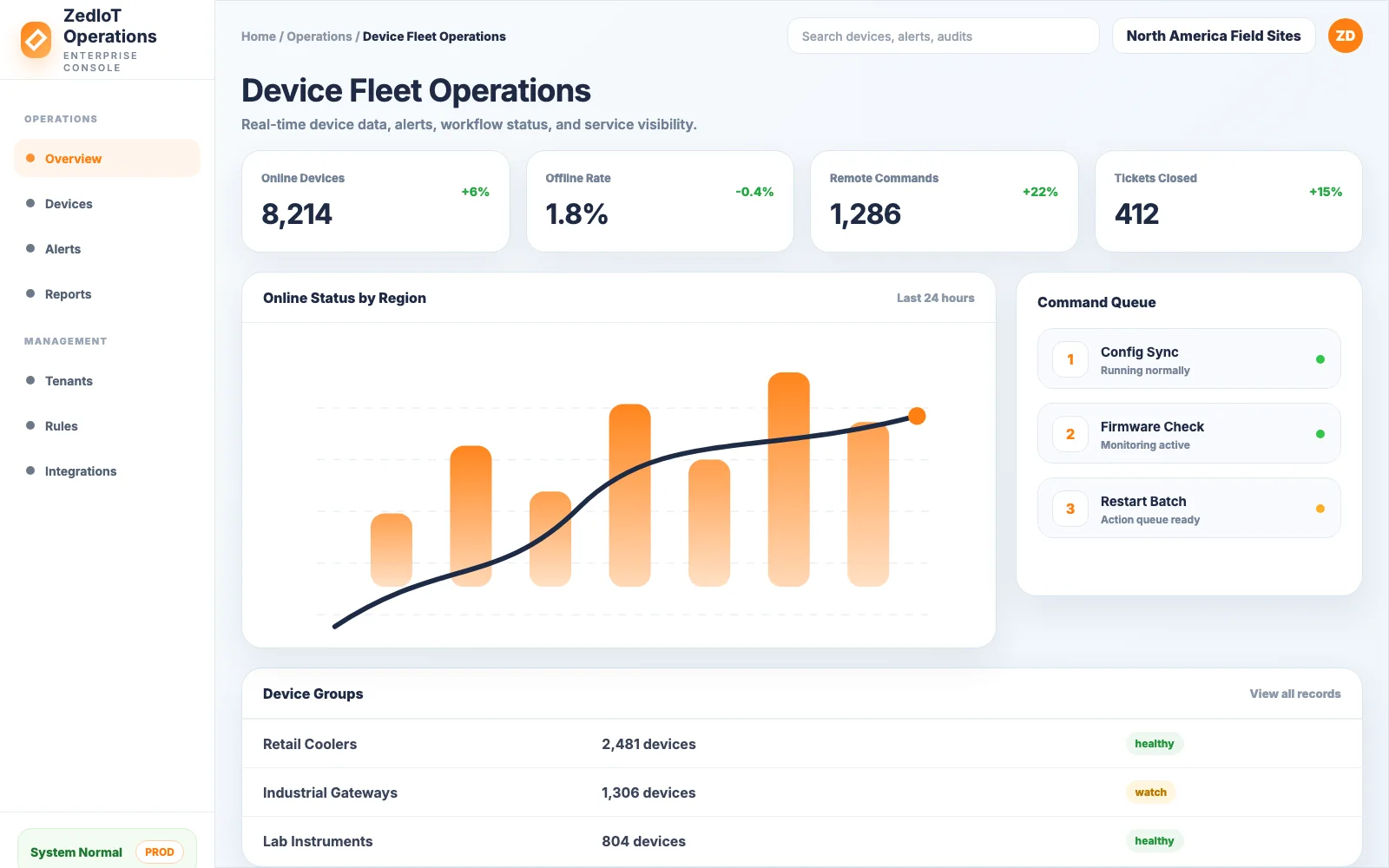
Device management projects usually start from high service cost, technical fragmentation, and unused device data. The page below turns those pressures into a clearer decision path for device brands and equipment operators.
High operation costs
Distributed equipment creates manual checks, unclear ownership, repeated site visits, and delayed maintenance decisions.
Technical gaps slow rollout
Devices may use serial ports, gateways, private protocols, weak networks, or different data models before they can be managed together.
Device data is underused
Telemetry, alarms, fault records, and service actions only create value when they become reports, tasks, and customer-visible operations.
Roles need clear boundaries
Customers, agents, service teams, and administrators need different permissions for data, commands, reports, and configuration.
From device communication to accountable service action
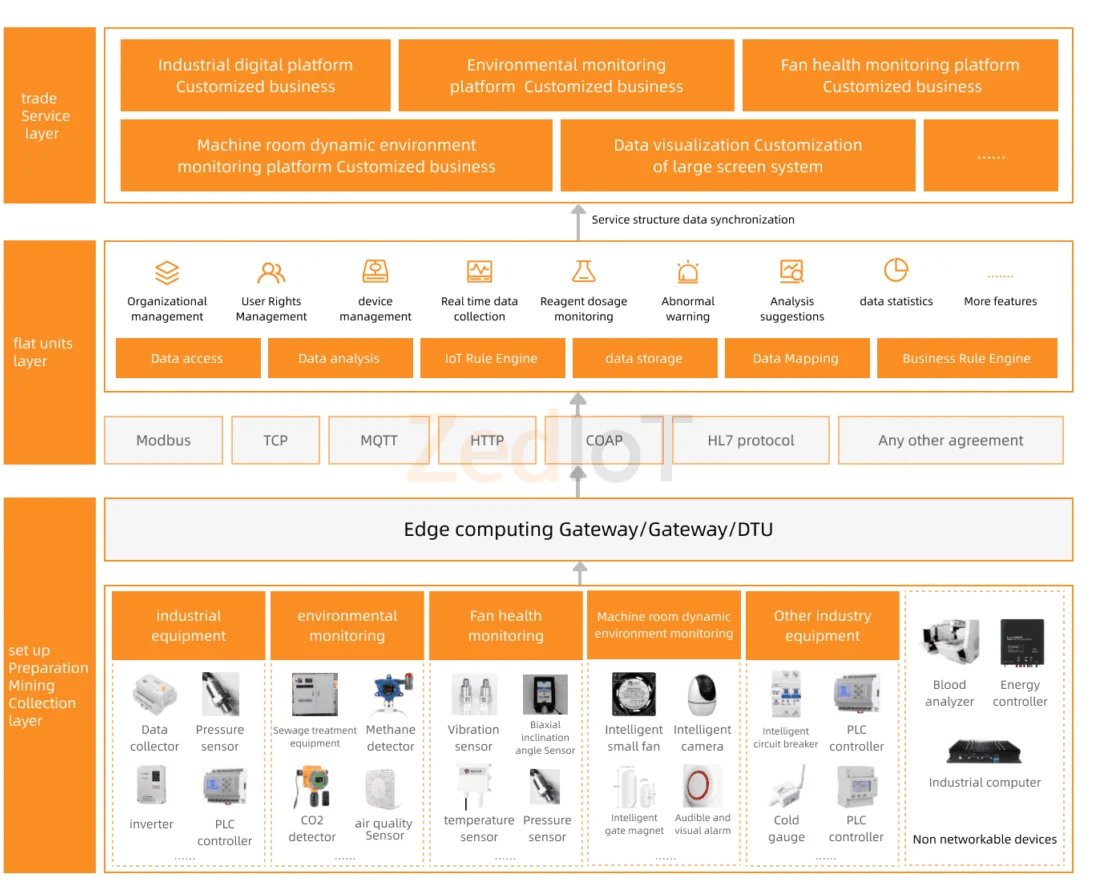
Device management succeeds when each signal has an owner, each alarm has an action path, and each report can be traced back to equipment, customer, site, and service context.
Device communication
Build device access through MQTT, HTTP, TCP, serial gateways, Modbus, private protocols, or edge adapters.
Remote monitoring platform
Create device models, dashboards, map views, online status, telemetry charts, command panels, and role-based access.
Alarm and service workflow
Route exceptions to responsible teams, generate service records, and retain evidence for customer support.
Data analysis and API
Expose reports, customer dashboards, export data, and API integration for ERP, CRM, WMS, or service systems.
Build the operations features that turn device data into daily work
The feature set should cover onboarding, quick access, dashboards, user roles, anomaly alerts, asset records, and API handoff, not just a static device list.
Large screen customization
Executive dashboards, map view, fleet status, alarm trend, and site ranking for operations centers.
Device quick access
Onboarding, product model, serial number, customer binding, site grouping, and lifecycle state.
Equipment and asset management
Device location, ownership, maintenance record, replacement history, and warranty or service status.
Configuration and users
Parameter templates, role rules, customer-level permissions, and operator audit records.
Anomaly alerts
Thresholds, abnormal state detection, notifications, tickets, and escalation paths.
Integration handoff
APIs, webhooks, deployment notes, event models, and data boundary documentation.
Device management should adapt to the equipment category and service model
Industrial, agriculture, healthcare, logistics, warehouse, and connected-vehicle projects use different device models, alarm rules, and acceptance evidence.
Industrial equipment fleets
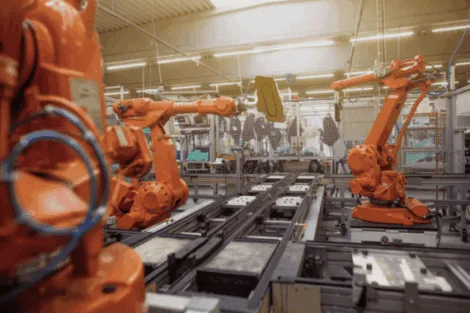
Monitor gateways, PLC-connected devices, instruments, and production equipment with alarms and service records.

Smart agriculture monitoring
Connect field sensors, pumps, controllers, cameras, and environmental data into a remote operating platform.
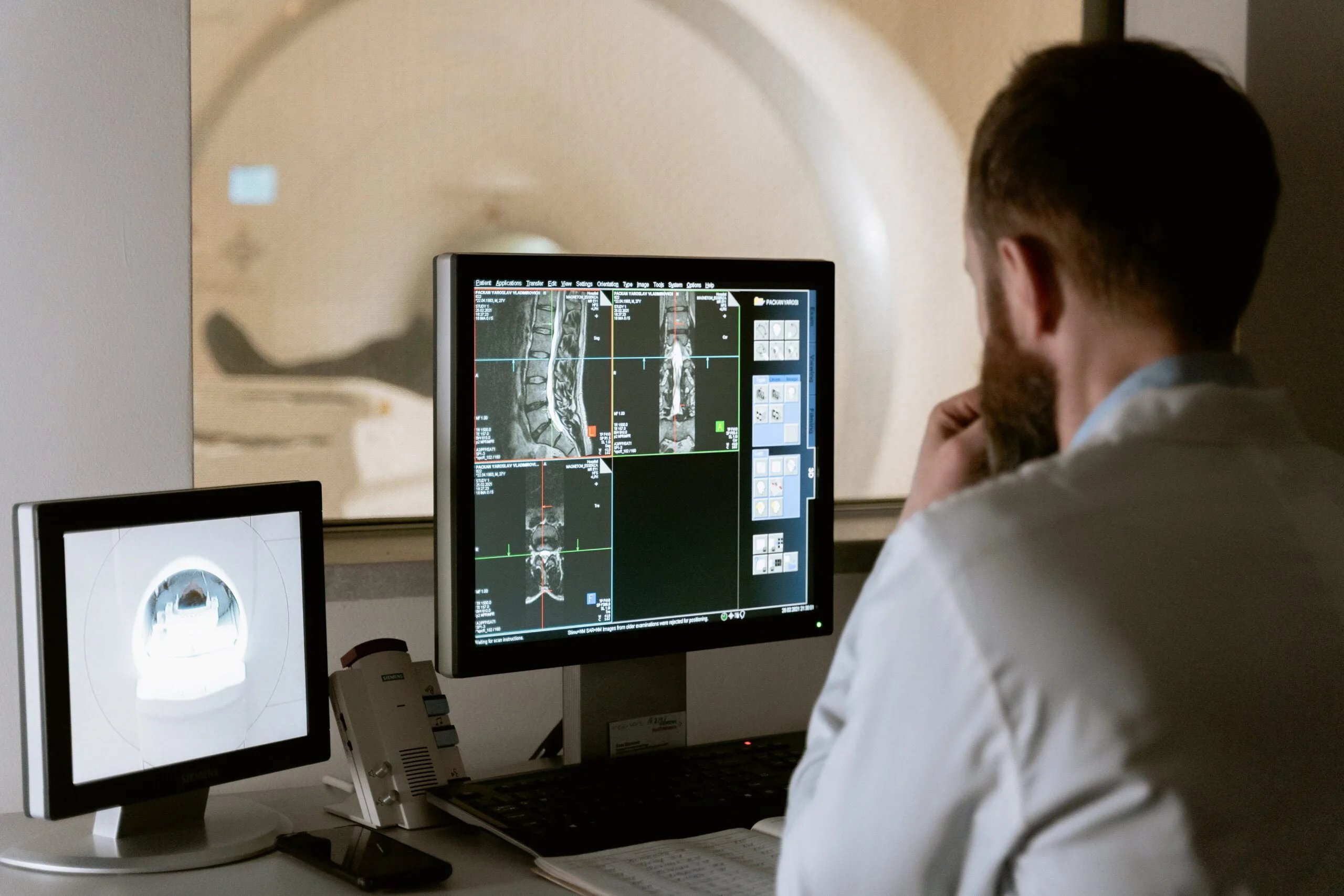
Healthcare device operations
Track connected medical equipment status, middleware data, service alerts, and support records.

Logistics and warehouse devices
Manage scanners, recognition workstations, sensors, gateways, and dock-side equipment around WMS workflows.
Use case evidence should show the device, platform, and service record together
Cabinet monitoring, RFID warehouse management, health monitoring, and instrument middleware all need the same operational proof: device state, platform record, and accountable service action.

Smart cabinet environment monitoring
Connect cabinet status, temperature, energy data, alarms, and service actions for distributed retail or service assets.

RFID warehouse management
Combine readers, gateways, tags, dashboards, and WMS records for traceable equipment and inventory operations.
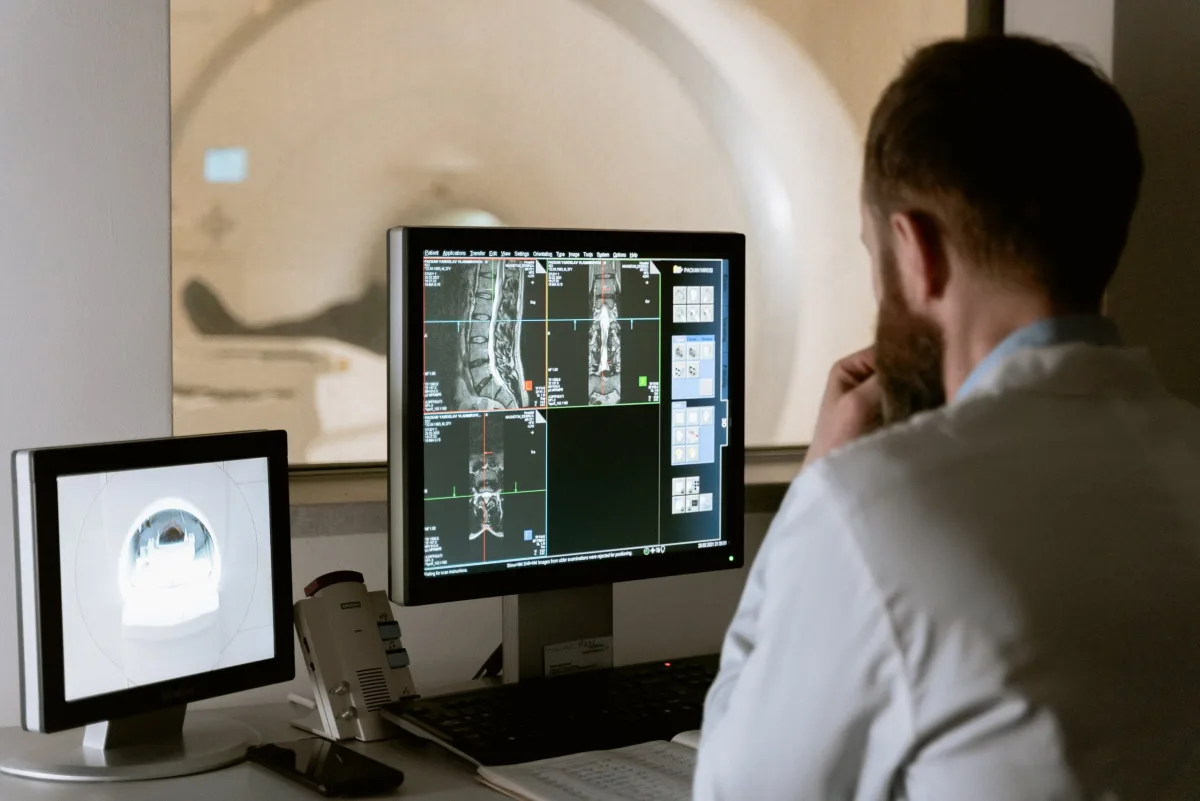
Health monitoring middleware
Build data middleware that collects device signals and normalizes them for platform and business-system use.
Prove one device operations loop before expanding the fleet
A pilot should validate communication, dashboards, roles, alarms, and service records using real device behavior.
- 01
Model devices and owners
Define device type, telemetry, command set, lifecycle status, customer ownership, site hierarchy, and service responsibility.
- 02
Prove device access
Connect representative hardware through gateway, MQTT, API, serial protocol, or edge adapter and validate abnormal states.
- 03
Build operations loops
Create dashboards, alarms, reports, roles, service records, command permissions, and evidence retention.
- 04
Roll out by product line
Document onboarding, API handoff, user roles, deployment, monitoring, and maintenance rules for scale.
Questions before building an IoT device management platform
Use these questions to scope the first device model, access path, deployment model, and service loop.
When should we consider IoT Device Management Solution?
Use this solution path when the current operation has a clear physical or business event that needs to become reliable data, action, or evidence.
Can we start with a narrow pilot?
Yes. A focused pilot usually proves one site, one workflow, one device group, or one exception path before broader rollout.
Can the solution connect to existing systems?
Yes. Integration with WMS, ERP, CRM, ticketing, databases, dashboards, or existing IoT platforms can be part of the scope.
What makes the solution production-ready?
Production readiness depends on data quality, exception handling, logs, permissions, alerts, support workflow, deployment ownership, and acceptance evidence.
Plan an IoT device management solution with ZedIoT
Share the equipment type, communication method, target users, alarms, dashboards, deployment preference, and existing business systems. We will help define a practical device operations path.
- AI + IoT product architecture review
- Hardware, firmware, cloud, and application integration
- Prototype planning and production support