
AI-IoT Platform and Device Management
A guide for teams planning IoT platforms, device operations dashboards, alert workflows, and AI-assisted device management.
What this topic covers
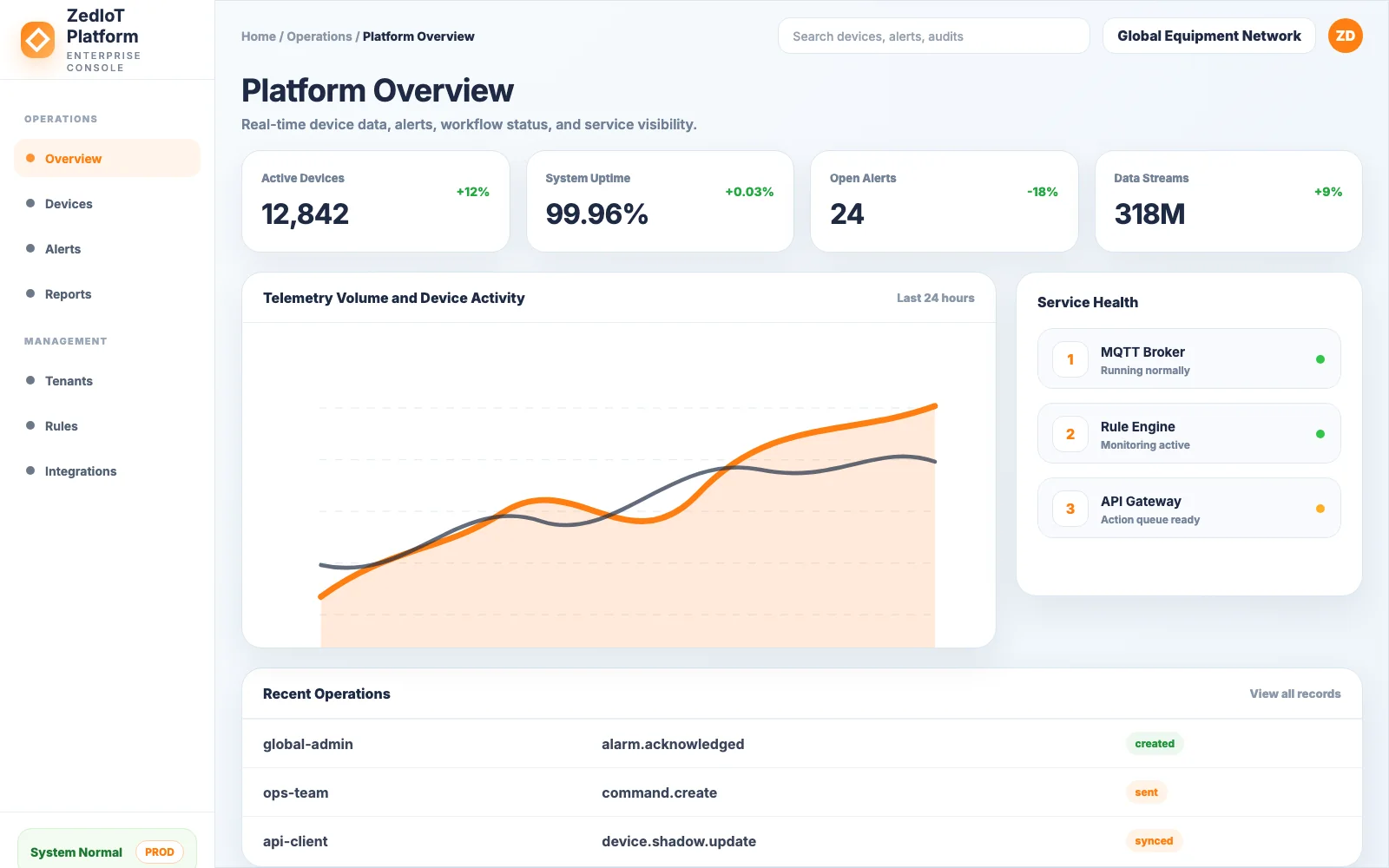
AI-IoT platform and device management covers the complete path from device onboarding, modeling, online status, telemetry, remote commands, alarms, lifecycle management, and integration with business systems.
- Equipment companies that need one device registry, monitoring console, and remote service workflow across many deployed assets.
- Hardware teams moving from standalone devices to SaaS, private cloud, or customer-owned platform delivery.
- Operations teams that need equipment data connected to ERP, WMS, ticketing, service, or customer success systems.
What to clarify before implementation
Device onboarding, telemetry, remote control, alerts, and lifecycle management form the foundation for AI-enabled connected products.
Model the device first
Define product type, telemetry, commands, events, alarms, firmware versions, and ownership before building dashboards.
Separate protocol from business logic
Use adapters for MQTT, HTTP, Modbus, serial, and gateway data so applications work with a stable device model.
Close the operations loop
Connect alerts, logs, tickets, notifications, and service actions so device data leads to action.
Add AI where it changes work
Use AI to summarize alarms, explain telemetry, assist service teams, or automate repetitive triage.
Guides that support this decision
Move from topic to buildable stack choices
Related implementation entries
Planning a connected product platform?
Start with your device model, lifecycle requirements, integration systems, and the workflows where AI can reduce manual work.
Common planning questions
Use these answers to frame the first practical decisions around AI-IoT Platform.
Should we build our own IoT platform?
If device operations are part of your product value, a custom or private platform may be justified. If you only need simple monitoring, a lighter integration can be enough.
Where should AI be added first?
Start where operators already spend time: alert triage, issue explanation, service ticket summaries, or knowledge search.
Plan this topic with an AI-IoT engineering team
Share the current equipment, workflow, data source, or system integration you are evaluating. We will help convert the topic into a practical implementation path.
- AI + IoT product architecture review
- Hardware, firmware, cloud, and application integration
- Prototype planning and production support