

Dify, LLM and Private AI Deployment
A guide for Dify applications, LLM workflow orchestration, private deployment, RAG knowledge bases, local models, and enterprise AI operations.
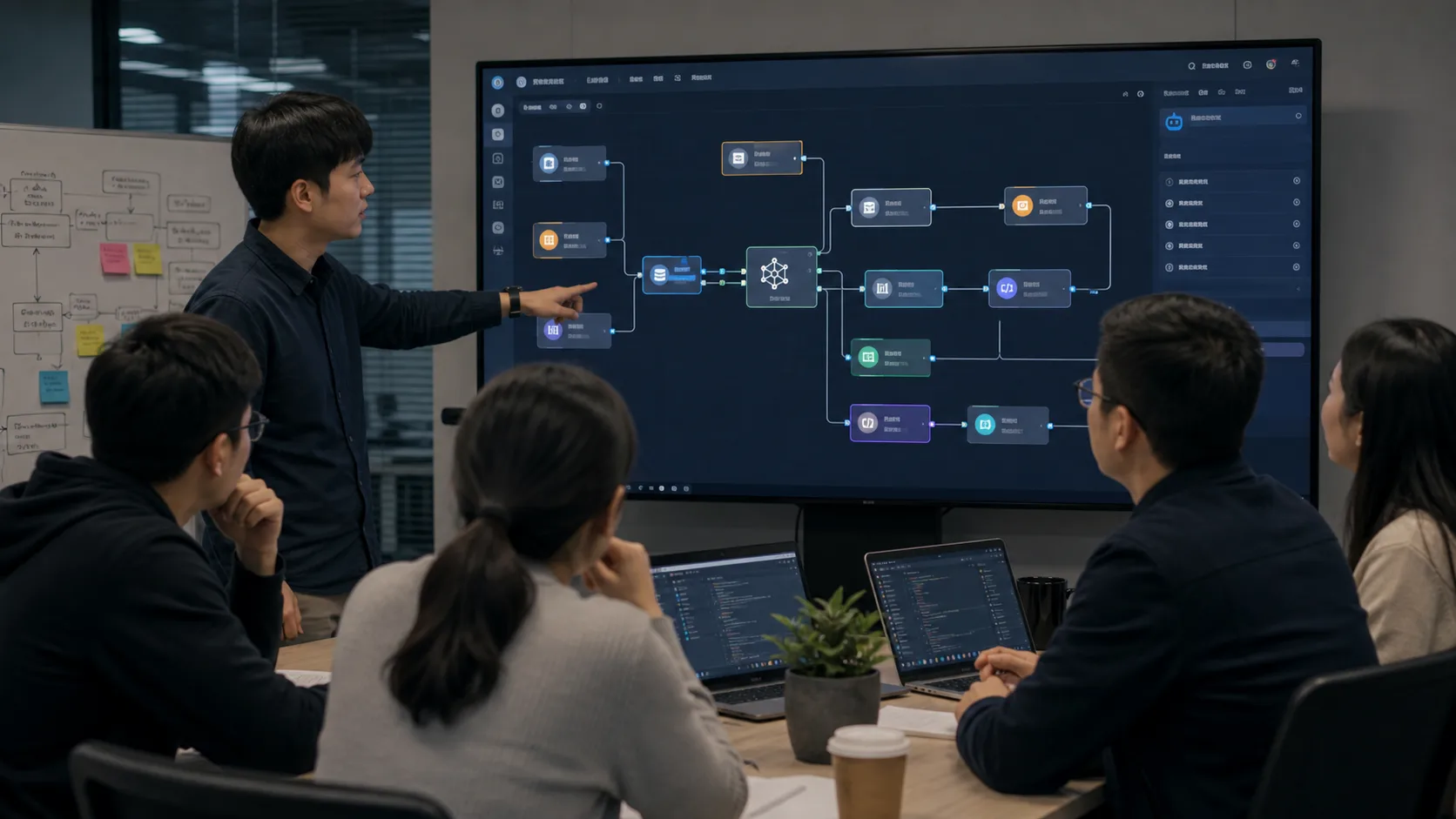
What this topic covers
Dify, LLM and private AI deployment covers enterprise AI applications built around knowledge bases, workflow orchestration, local or private models, permissions, data governance, and day-to-day operations.
- Teams that want private knowledge Q&A, document review, workflow automation, or customer service assistants with controlled data access.
- Organizations comparing cloud models, private cloud, local models, or hybrid AI deployment.
- Product and operations teams that need AI applications integrated with IoT data, CRM, ERP, helpdesk, or internal knowledge systems.
What to clarify before implementation
Dify, LLM workflows, private knowledge bases, and local model deployment need clear app boundaries, data governance, deployment choices, and operating rules.
Define the application boundary
Decide whether the first release is knowledge Q&A, workflow orchestration, document review, customer-service quality review, or business automation.
Choose model and deployment mode
Select cloud model, private cloud, local model, or hybrid architecture based on data sensitivity, cost, quality, and operations capacity.
Design knowledge and workflow layers
Plan document chunking, indexing, citations, approval nodes, tool calls, exception handling, and update procedures.
Operate and govern continuously
Track retrieval hit rate, answer quality, cost, latency, user feedback, model versions, and workflow failures after launch.
Guides that support this decision
Move from topic to buildable stack choices
Related implementation entries
Planning a Dify or private LLM deployment?
Bring the app boundary, data sources, deployment constraints, and workflow rules. We can help choose a practical AI architecture.
Common planning questions
Use these answers to frame the first practical decisions around Dify and Private AI.
Is Dify enough for a production AI system?
Dify is a strong application and workflow platform, but production still needs data governance, permissions, integration, monitoring, backups, and operations ownership.
Is local AI required?
Not always. Local AI is useful for sensitive data or offline environments, while cloud and hybrid options may be more efficient for some teams.
Plan this topic with an AI-IoT engineering team
Share the current equipment, workflow, data source, or system integration you are evaluating. We will help convert the topic into a practical implementation path.
- AI + IoT product architecture review
- Hardware, firmware, cloud, and application integration
- Prototype planning and production support