
IoT Platform Development for Real Device Operations
Build a platform foundation that can manage device models, alarms, dashboards, reports, APIs, permissions, and private deployment instead of stopping at a UI prototype.
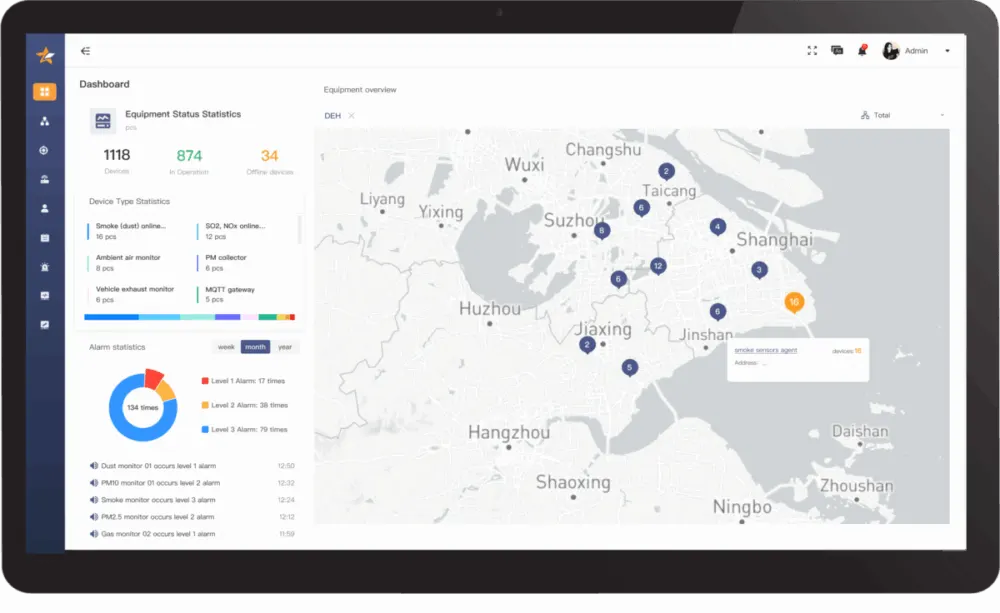
Product models, onboarding, status, telemetry, remote settings, and operational ownership.
Dashboards, alarms, reports, roles, work orders, and service-team visibility.
Customer-owned cloud, API boundaries, logging, backups, and rollout handoff.
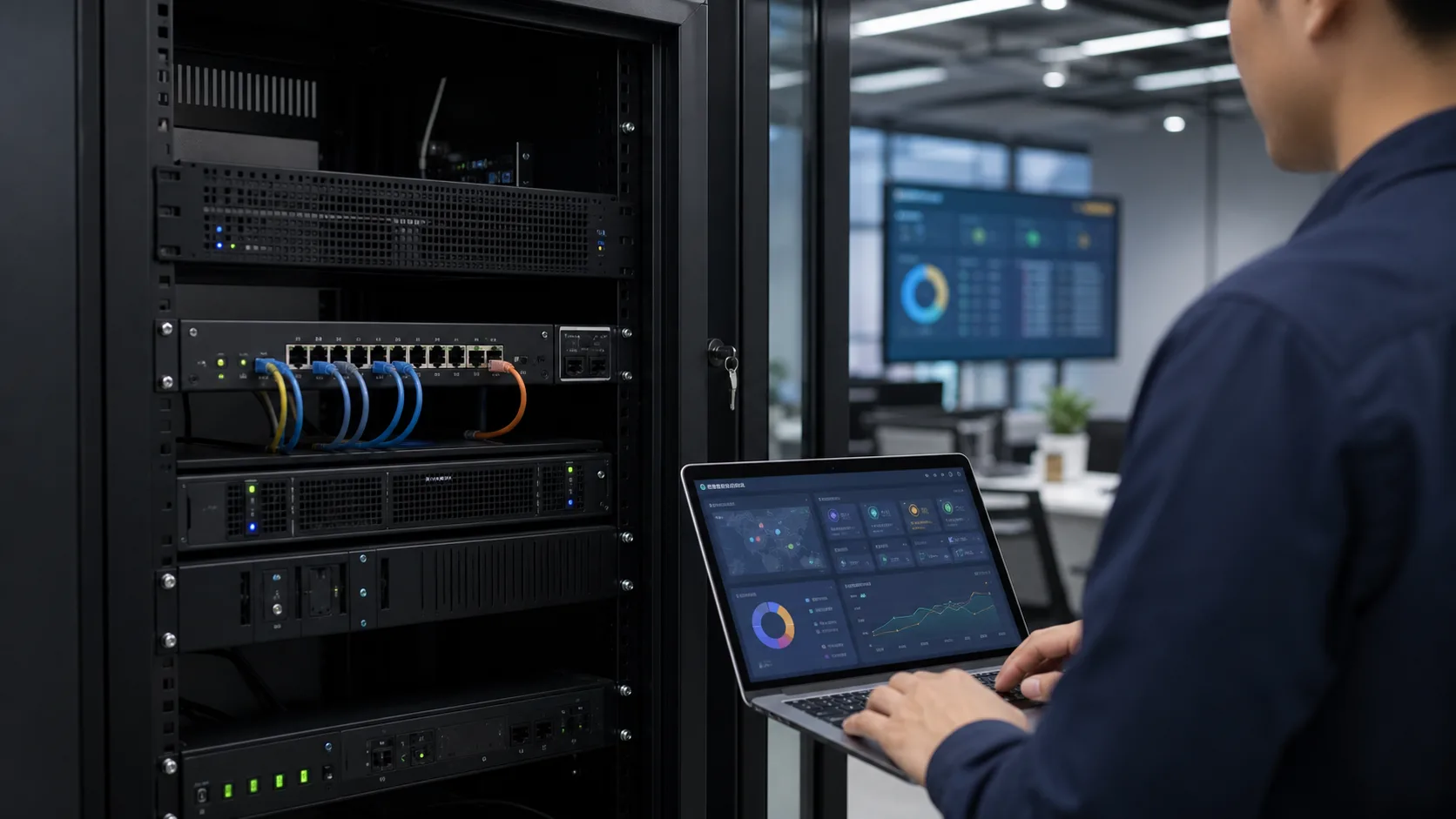
Design the platform around operating rules before expanding features
A useful IoT platform is closer to an operating system for connected products than a dashboard. The early work should lock device model, tenant model, permissions, alarm flow, API ownership, and deployment responsibility.
- Device, tenant, and role model first
- Alarm and report workflow connected to field operations
- Private deployment and API contracts ready for handoff
Workstreams that move the project toward a usable product
Each workstream connects a real device, workflow, user role, or operating constraint with the software and hardware decisions required for delivery.
Device model and lifecycle
Product model, points, commands, online state, firmware version, ownership, and maintenance states.
Operations analytics and data intelligence
Fleet status, trends, alarms, work orders, anomaly review, predictive signals, operating reports, and controlled AI-assisted analysis built from trustworthy device data.
Rule engine and notifications
Thresholds, event routing, escalation, email, SMS, webhook, and business workflow triggers.
API and integration layer
Customer APIs, webhooks, ERP, WMS, CRM, ticketing, and data warehouse synchronization.
Private deployment
Customer-owned cloud, backup, monitoring, logs, data retention, and environment handoff.
Security and permissions
Tenant isolation, roles, scopes, audit records, command safety, and operational data boundaries.
From field device to managed product workflow
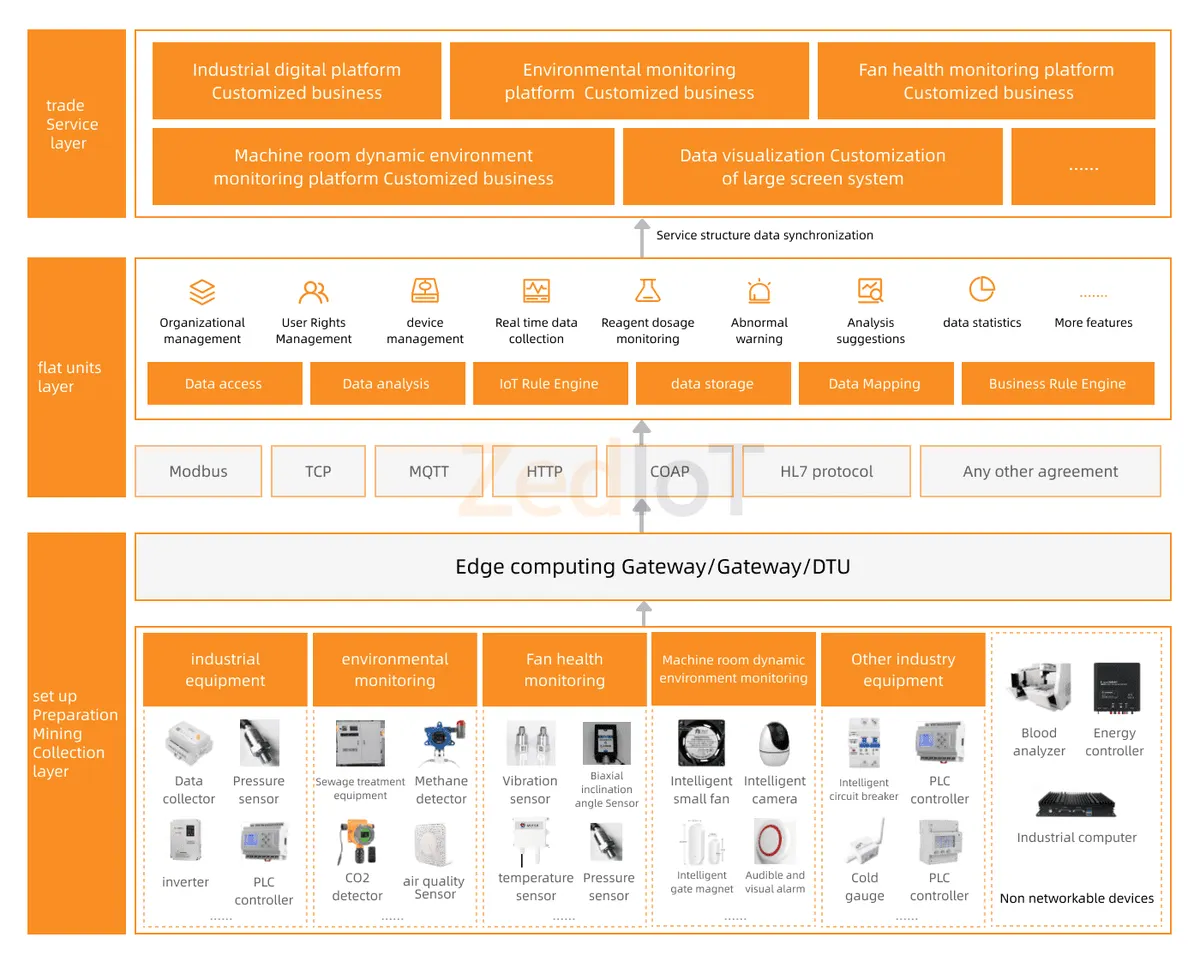
Each layer is defined as an interface, not just a screen. This keeps later modules maintainable as device count and customer roles grow.
Device model
Define product types, points, telemetry, commands, groups, and status rules.
Event and rule layer
Normalize telemetry, trigger alarms, create tasks, and route events to users or systems.
Application layer
Expose dashboards, reports, roles, APIs, customer portals, and operations views.
Deployment layer
Plan monitoring, logs, backups, tenant isolation, and customer-owned infrastructure.
Key engineering decisions to make before production
The most valuable work is often the integration boundary, recovery behavior, diagnostics, and ownership model that keeps the system maintainable.
Tenant and role model
Define who owns devices, who can view data, who can send commands, and how customer boundaries work.
Telemetry quality
Model timestamps, units, offline data, abnormal values, retention, and aggregation before reporting scales.
Command safety
Separate read-only data, parameter settings, control commands, approvals, and audit records.
Integration contracts
APIs are described by business events and device state, not only backend tables.
Operational monitoring
Logs, health checks, backup, alerting, and release rollback are part of platform delivery.
Future AI readiness
Clean device models and event records make later AI alarm triage, reports, and automation safer.
Platform work should produce a reusable operating base
The goal is not a one-off dashboard. It is a device-operation base that can support more products, more users, and stronger service workflows.
Platform fields start from real device behavior and service responsibility.
External systems can consume alarms, records, status, and reports.
Logs, roles, data retention, and handoff are planned before launch.
Platform scenarios that need more than a dashboard
A platform build becomes valuable when it reflects the customer's device model, permission boundary, field workflow, and integration path.
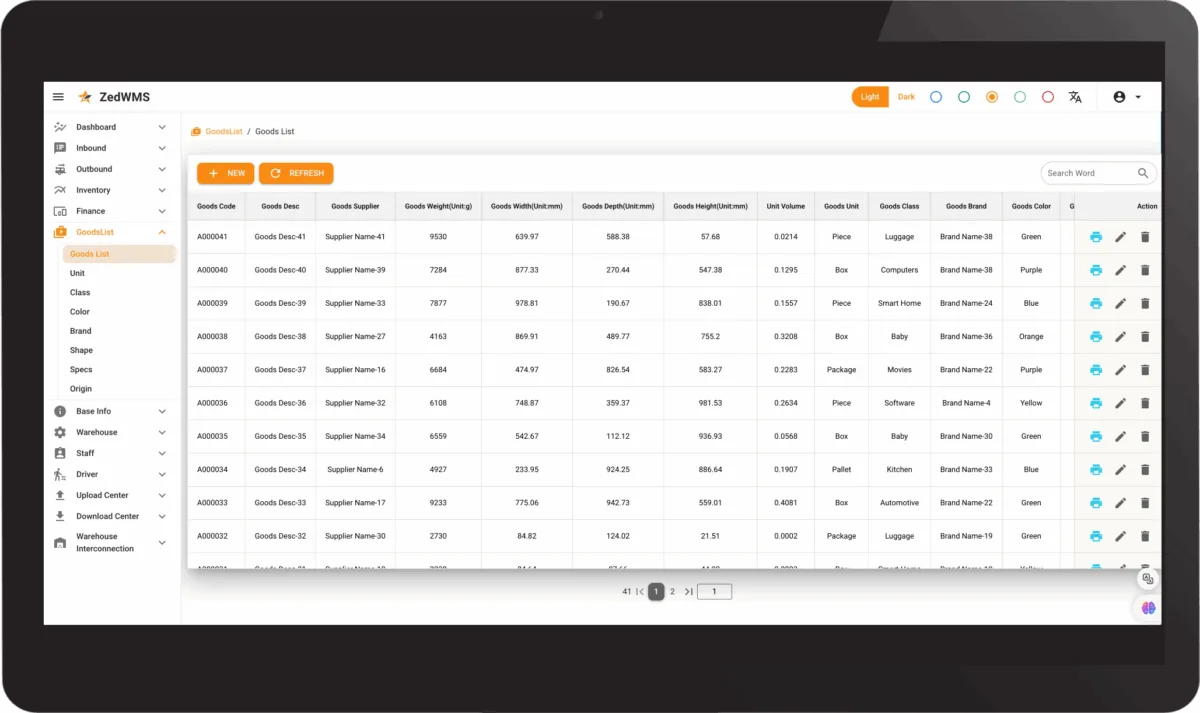
Device model and service workflow
Map products, sites, serial numbers, telemetry points, commands, maintenance states, and service records so teams can operate devices instead of only viewing charts.
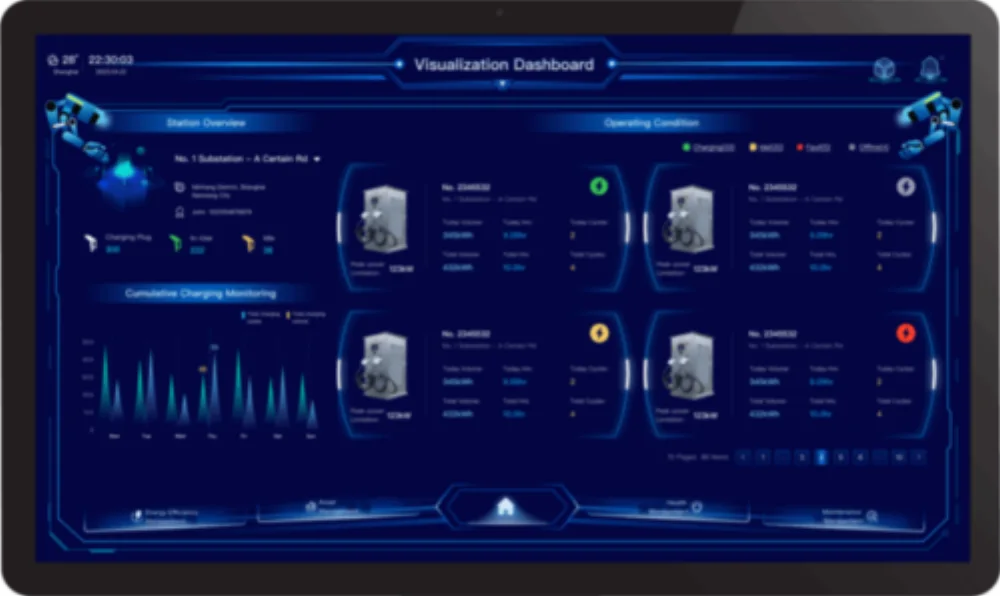
Rules, alerts, and API handoff
Turn thresholds, abnormal status, offline events, reports, and work orders into API records, notifications, and business-system updates.
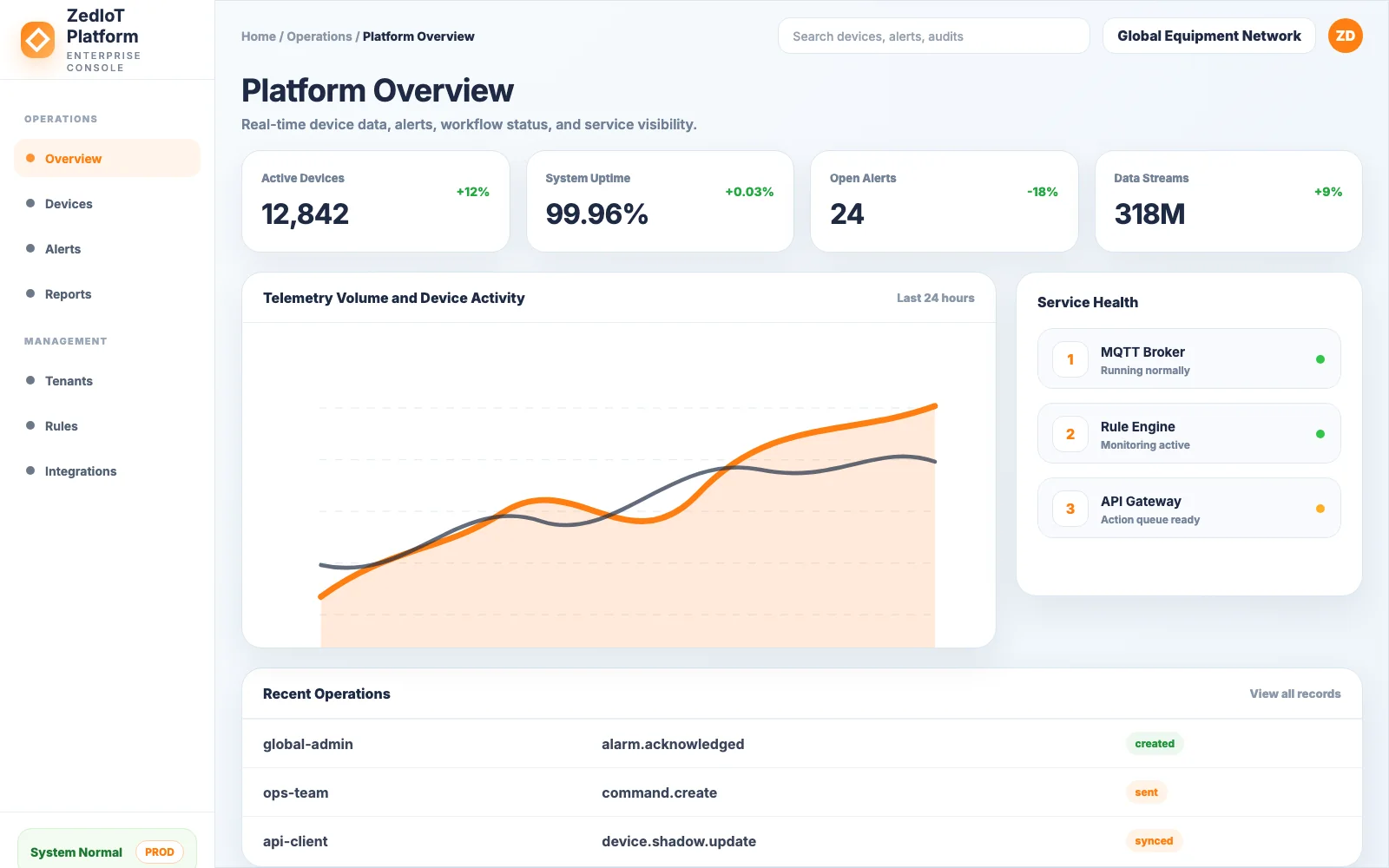
Private deployment and operations
Prepare tenant isolation, roles, logs, backups, monitoring, data retention, release notes, and support handoff for customer-owned cloud environments.
What ZedIoT delivers
The output should help your team make a clear build decision, validate the first release, and keep the system maintainable after launch.
Platform architecture
Device model, tenant model, role design, rule flow, and deployment boundary.
Web console and APIs
Dashboards, device pages, reports, API endpoints, and admin workflows.
Operational handoff
Deployment notes, monitoring, backup, and iteration roadmap.
How the work moves from feasibility to handoff
Model the operating business
Map devices, customers, sites, users, alarms, reports, service actions, and integration systems.
Define platform architecture
Lock tenant, device model, permission, data, API, rule, and deployment boundaries.
Build core modules
Deliver device registry, dashboards, alarms, reports, commands, APIs, and admin workflows.
Validate with real device data
Test online/offline state, commands, alert routing, reports, API consumers, and user roles.
Deploy and hand off
Prepare environment notes, monitoring, backups, logs, release plan, and iteration roadmap.
Practical advantages for AI + IoT product delivery
Platform plus device context
We design around firmware, gateways, telemetry, commands, and field operations together.
Private deployment experience
Customer-owned deployments can include source handoff, monitoring, backup, and support notes.
Reusable ZedIoT foundation
Existing platform assets reduce project risk while leaving room for custom business logic.
Questions to resolve before scope is locked
What is the first step for a IoT Platform Development project?
Start with a short feasibility review: target device or workflow, existing assets, business goal, integration systems, data availability, and the smallest useful pilot.
Can ZedIoT work with existing devices or platforms?
Yes. Many projects reuse existing controllers, gateways, SaaS systems, databases, or field workflows. We define the integration boundary before rebuilding anything.
Can the project be delivered in phases?
Yes. A typical path is feasibility, prototype, staged development, pilot validation, production hardening, and handoff.
Does the page support private deployment or source-code delivery?
For custom engineering projects, private deployment, source-code delivery, documentation, and handoff materials can be included in the commercial and technical scope.
Discuss IoT Platform Development
Share the device, workflow, system integration, deployment requirement, or business outcome you want to validate. We will help turn it into a practical AI + IoT implementation path.
- AI + IoT product architecture review
- Hardware, firmware, cloud, and application integration
- Prototype planning and production support