Build a Production-Ready IoT Platform with ThingsBoard
ZedIoT customizes ThingsBoard for device onboarding, telemetry, dashboards, rule engines, tenant operations, business-system integration, and private deployment. The result is an operational platform shaped around your devices and service workflow, not a generic demo.
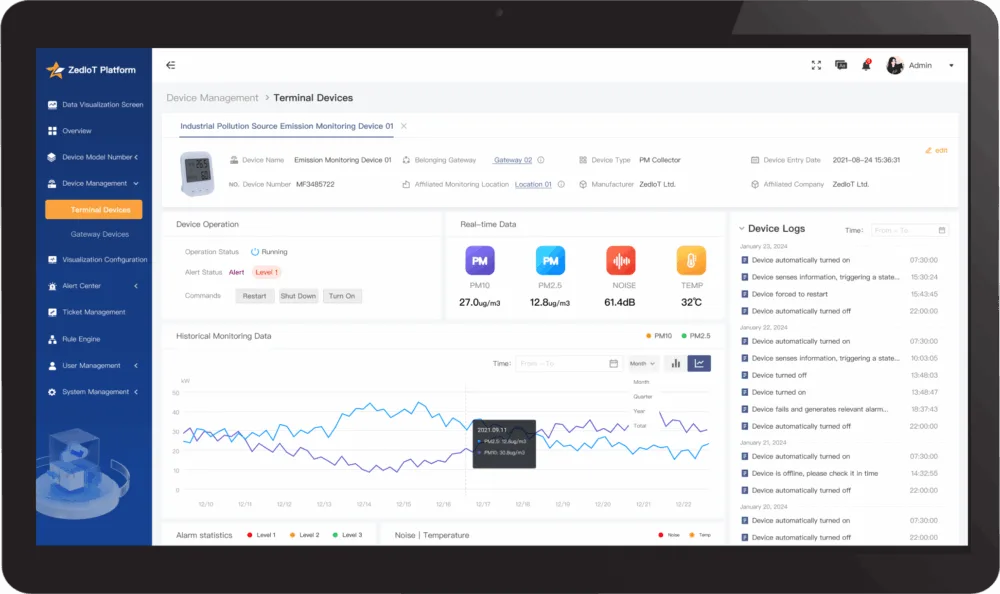
Move from a platform installation to a service your teams can operate
Flexibility, device operations, and enterprise integration are designed together so the platform remains usable after the first deployment.
Limited product flexibility
A standard ThingsBoard deployment often needs a clearer tenant model, branded workflows, custom widgets, and integrations before it can support a real product or operating team.
Fragmented device operations
Device status, alarms, attributes, commands, and support evidence become difficult to manage when gateways and protocols enter the platform through unrelated paths.
Integration complexity
Production systems must connect telemetry with rule chains, databases, business APIs, notifications, and access controls without creating a fragile collection of scripts.
Choose the workstream that matches your current platform stage
Compare platform customization, device operations, and rule-engine integration, then focus the engagement on the path that removes the current bottleneck.
Shape ThingsBoard around the product and operating model
We extend the standard platform only where the customer journey, tenant model, workflow, or integration requires it.
- Branded portals and custom dashboards
- Tenant, customer, asset, and permission models
- Custom widgets, reports, and operator workflows
- Private cloud or on-premises deployment
Give operations teams one dependable view of connected equipment
Device management is designed around state, commands, alarms, firmware, support evidence, and gateway behavior rather than a list of device IDs.
- Provisioning, credentials, and device identity
- Telemetry, attributes, commands, and alarms
- Gateway routing and protocol normalization
- OTA, logs, diagnostics, and support history
Turn telemetry into actions that other systems can trust
Rule chains should make state changes, retries, alarms, and data ownership explicit before connecting the platform to critical business workflows.
- Rule-chain design and custom rule nodes
- Kafka, MQTT, REST, webhook, and database integration
- Alarm routing, escalation, and acknowledgement
- Data transformation, enrichment, and anomaly workflows
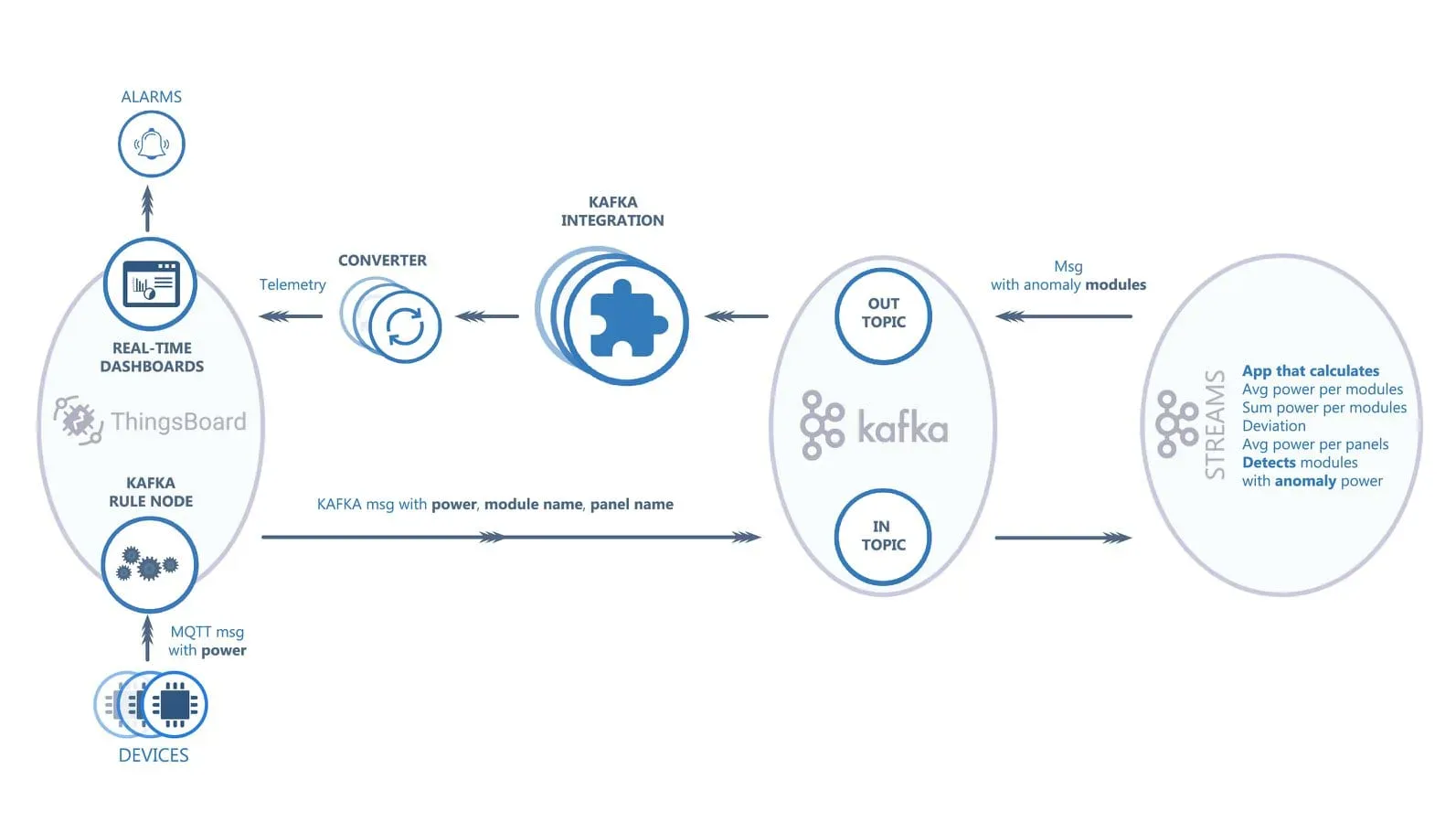
Keep protocol responsibility, platform logic, and business integration explicit
A clear data path makes failures diagnosable and lets teams change dashboards or business systems without rewriting every device.
Sensors, PLCs, meters, equipment controllers, and existing products.
MQTT, HTTP, CoAP, Modbus, OPC UA, BLE, LoRaWAN, and custom adapters.
Device registry, telemetry, attributes, alarms, rule chains, dashboards, and tenancy.
ERP, MES, WMS, CRM, mobile apps, data pipelines, and notification channels.
Role-based views, service workflows, reporting, predictive rules, and audit evidence.
One team across devices, edge software, platform, web, and mobile
Cross-discipline coverage keeps device behavior, gateway software, platform services, and operator workflows aligned through one delivery backlog.
Adapt the same platform foundation to different field and operating constraints
The device model, alarm workflow, deployment architecture, and user roles change by industry. We keep the platform core reusable while tailoring the parts that affect real operations.
Industrial IoT
Equipment status, production telemetry, energy, alarms, work orders, and maintenance evidence.
Logistics and assets
Gateways, trackers, location events, environmental conditions, and fleet operations.
Energy and utilities
Meters, consumption baselines, abnormal-use alerts, power quality, and multi-site reports.
Smart buildings
HVAC, lighting, access, occupancy, environmental monitoring, and service workflows.
Agriculture
Distributed sensors, irrigation controls, weather data, field gateways, and remote alarms.
Connected healthcare
Device connectivity, controlled data paths, alerts, role-based views, and deployment options.
Validate the data path before investing in a full platform rollout
The engagement can start with a focused ThingsBoard pilot, then move through integration, acceptance, and production operations with measurable checkpoints.
Platform fit review
Confirm device volume, telemetry rate, tenant model, integration systems, deployment constraints, and where ThingsBoard should remain standard.
Device and data model
Define device identity, attributes, telemetry, commands, alarms, gateway responsibility, and failure behavior before building dashboards.
Pilot and integration
Connect representative devices, validate rule chains and APIs, build priority dashboards, and test security and offline conditions.
Production rollout
Package deployment, migration, monitoring, backup, acceptance evidence, documentation, and operational handoff.
ThingsBoard is strongest when the open platform already covers most of the required core
Device telemetry, dashboards, alarms, tenant operations, rule chains, and open deployment are central requirements.
Highly specialized workflow, unusual scale, regulated data, or deeply custom UX may justify a hybrid or custom platform architecture.
ThingsBoard development questions
Use these answers to decide whether the next step is a platform fit review, a pilot, or a production integration plan.
What can ZedIoT customize in ThingsBoard?
ZedIoT can customize device and asset models, tenant and permission structures, dashboards, widgets, rule chains, alarms, reports, APIs, business-system integrations, branded portals, mobile workflows, and private deployment operations.
Can ThingsBoard connect to Modbus, OPC UA, BLE, LoRaWAN, or existing equipment?
Yes, usually through a gateway or protocol adapter that normalizes field data before it enters ThingsBoard. The exact design depends on device interfaces, update rate, command behavior, offline requirements, and site connectivity.
Can ThingsBoard be deployed on premises or in a private cloud?
Yes. A private deployment can include container packaging, infrastructure sizing, database and queue services, certificates, backups, monitoring, upgrade planning, and recovery procedures.
When should we choose ThingsBoard instead of a fully custom IoT platform?
ThingsBoard is a strong fit when device telemetry, dashboards, alarms, tenancy, rule chains, and open deployment cover most core requirements. A hybrid or custom platform may be better when the workflow, scale, compliance, or user experience differs substantially from the platform model.
How should a ThingsBoard project start?
Start with a platform fit review and a representative pilot. Define the device model, telemetry, commands, alarm rules, user roles, integrations, deployment constraints, and measurable acceptance criteria before building the complete rollout.
Planning a ThingsBoard platform or integration?
Share your device types, protocols, expected scale, current cloud systems, deployment preference, and the workflow your users need. We will help define a practical pilot and production path.
- AI + IoT product architecture review
- Hardware, firmware, cloud, and application integration
- Prototype planning and production support