

AI Warehouse Recognition Workstation
An AI recognition workstation combining vision recognition, barcode scanning, document capture, face authentication, IC card reading, and peripheral expansion for receiving, inventory, archive digitization, and item verification workflows.
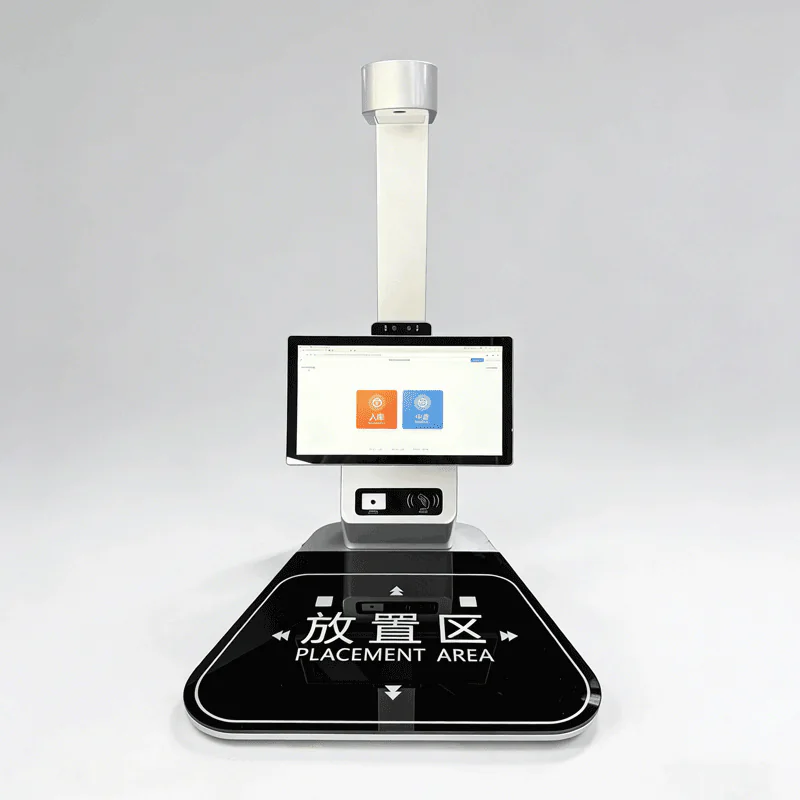
Centralize warehouse recognition, authentication, capture, and system entry
Manual receiving and inventory work often causes re-entry, missing evidence, and traceability gaps. This workstation combines AI vision, barcode scanning, document capture, operator authentication, and business-system integration in one terminal.
- Warehouse receiving and shipping
- Archive and document capture
- Operator permission verification
- Inventory and item traceability
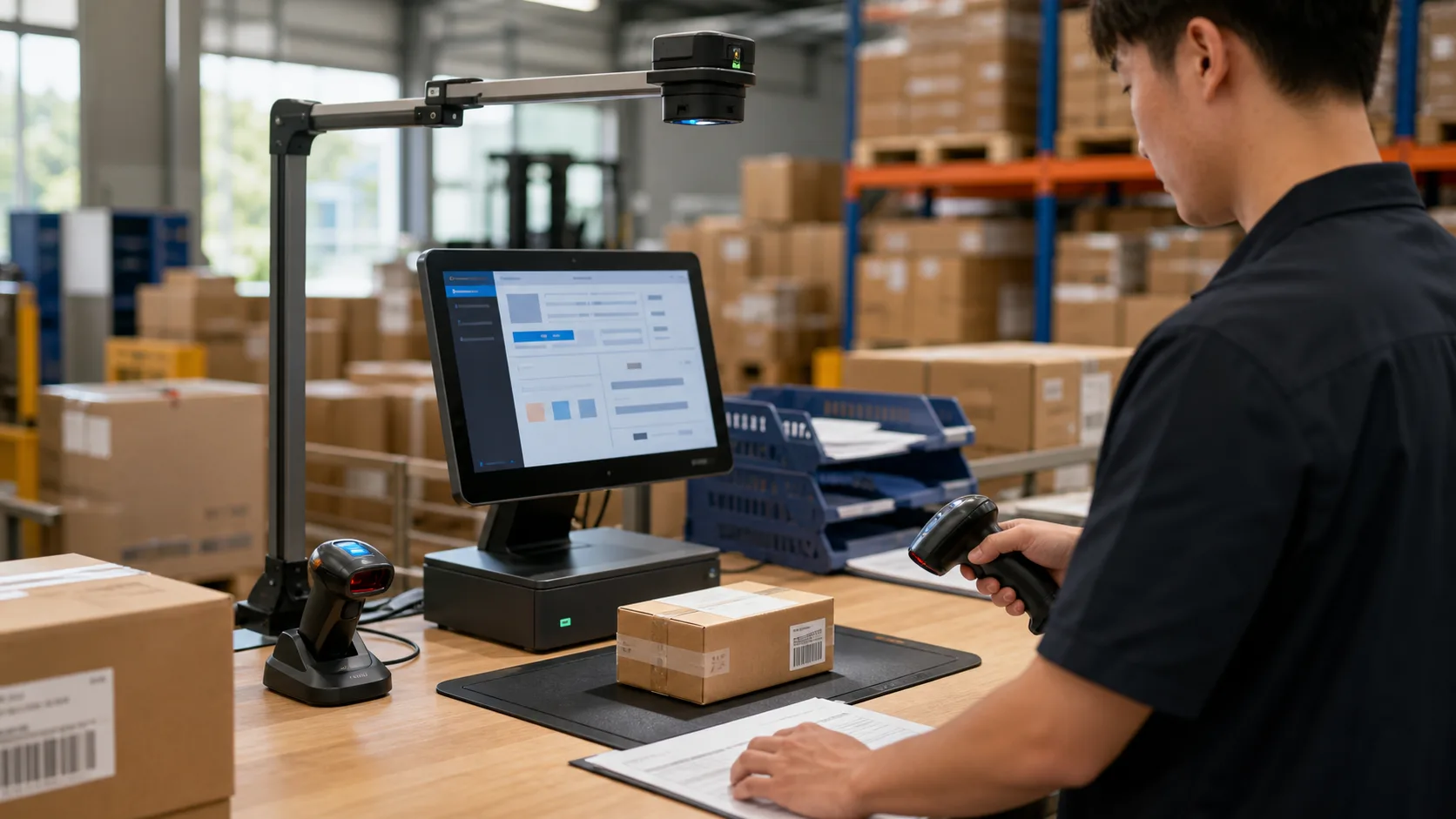 Recognition Workstation
Put recognition, authentication, capture, scanning, and system entry on one workstation
The workstation is not just a camera. It concentrates warehouse verification actions so operators can authenticate, scan, capture, recognize, and write results back to business systems in one workflow.
- Good fit for receiving, inventory, archive capture, and item verification
- Integrates camera, barcode, face, IC card, and peripherals
- Recognition results can enter WMS, ERP, or customer systems
What this product looks like in a real workflow
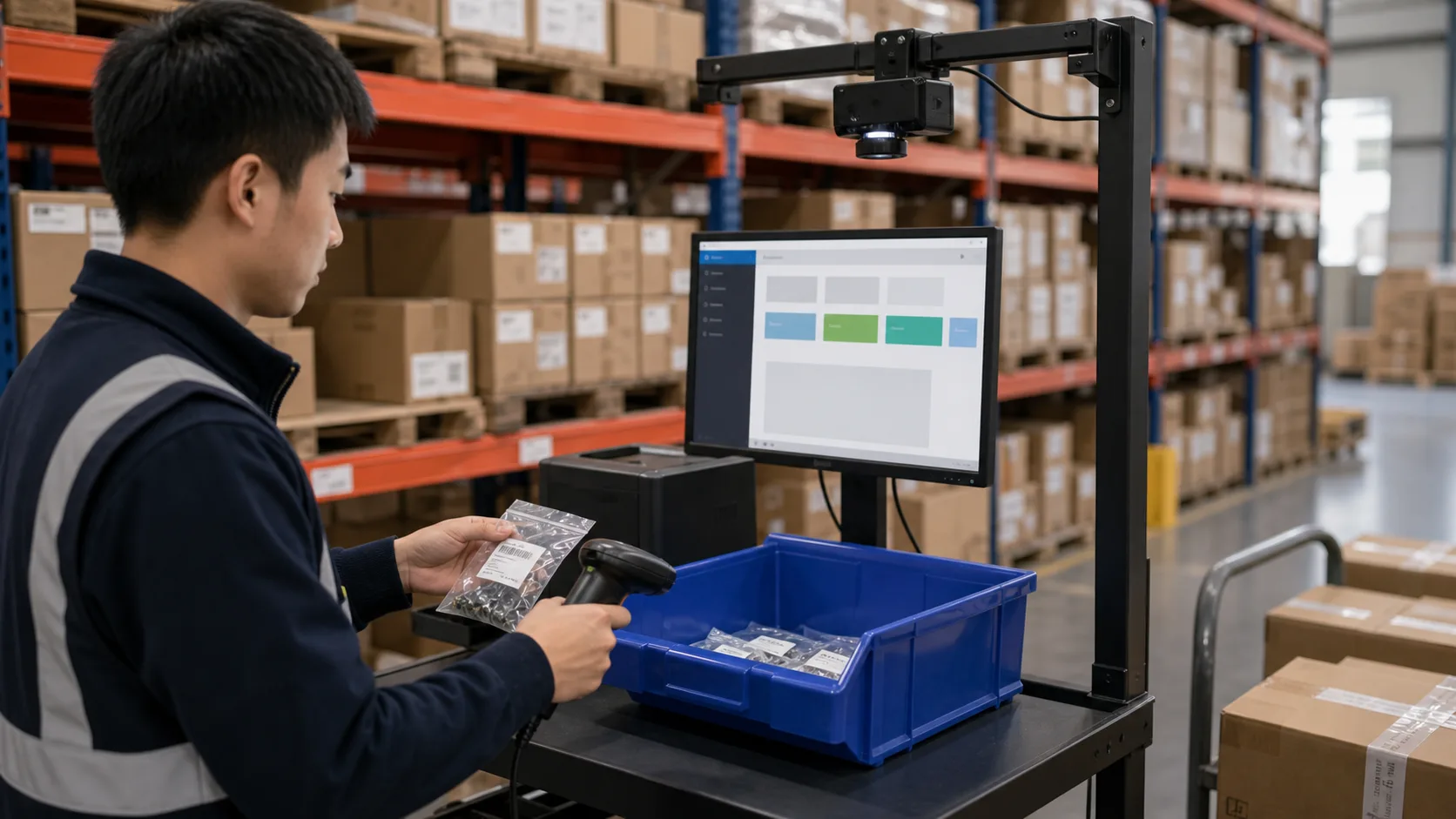 Recognition Workstation
Visual recognition and evidence capture
High-resolution capture and AI models identify goods, packages, documents, or archives.
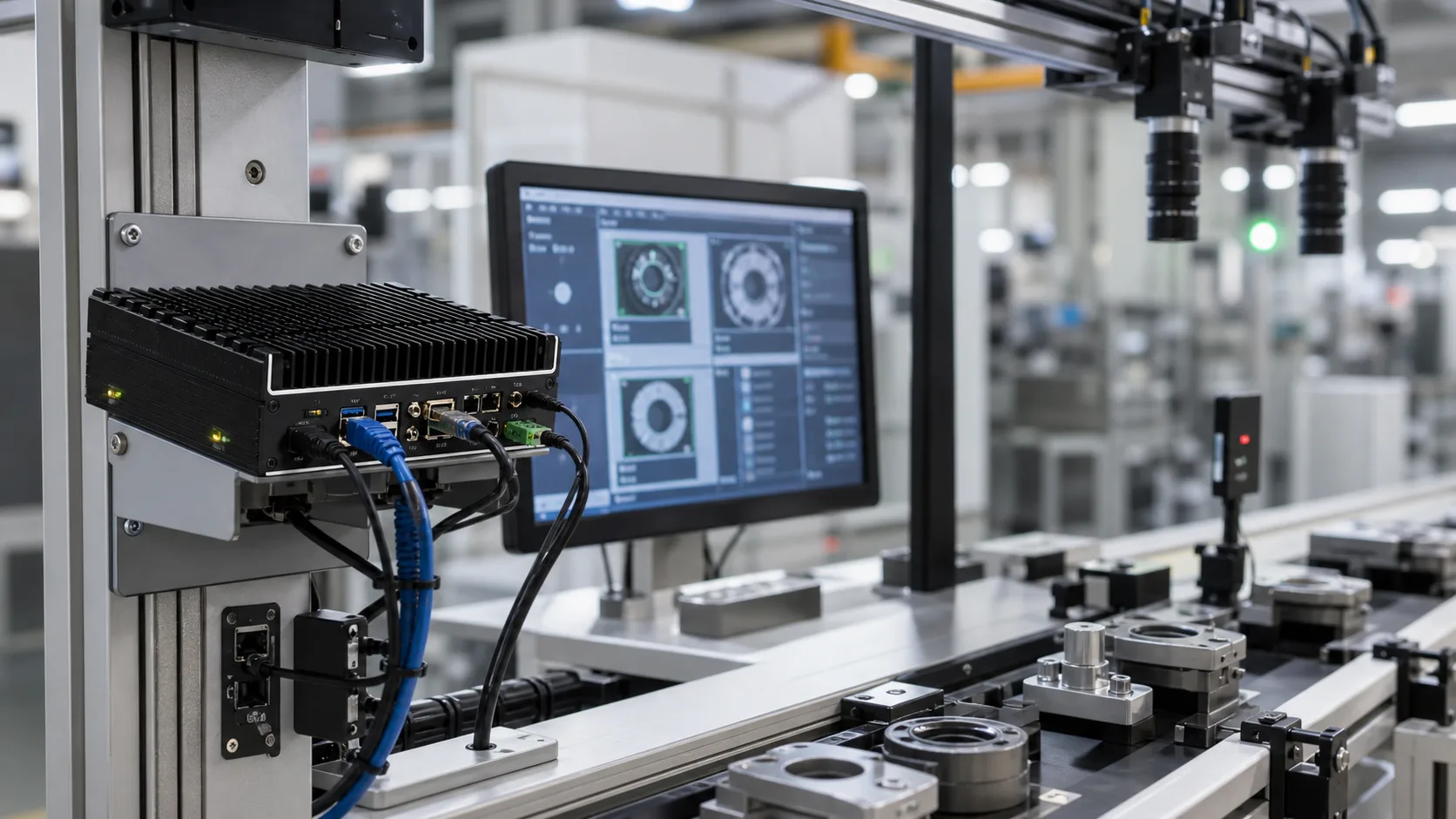 Recognition Workstation
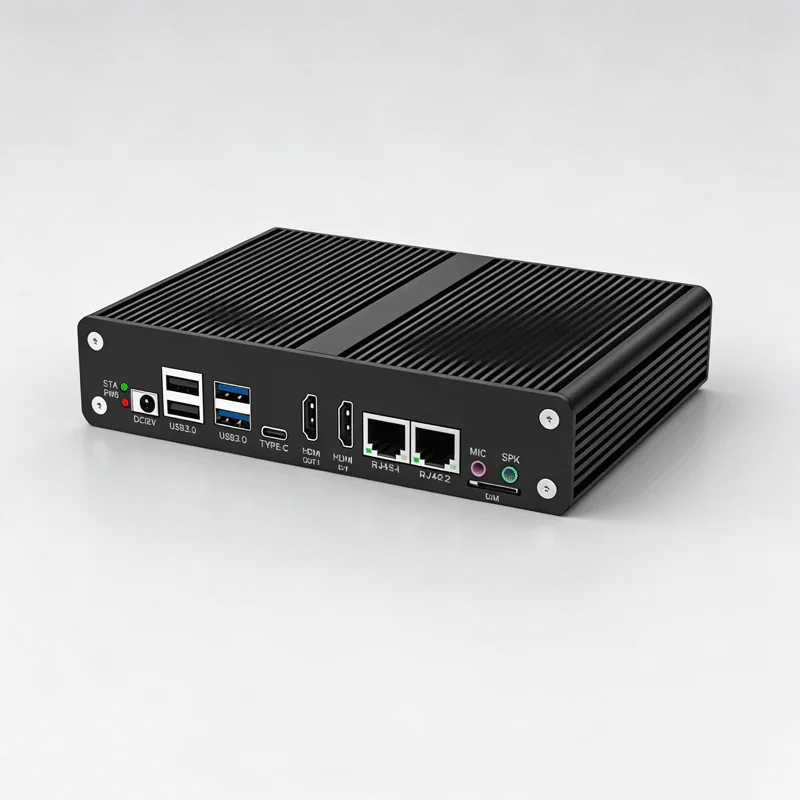
Edge compute expansion
Complex recognition workflows can pair with AIHub-Z5 for local inference and peripheral integration.
Product capabilities that matter in deployment
Each capability is designed around real operating conditions, not isolated hardware parameters.
AI item recognition
Use a camera and model to identify goods, packages, or documents.
Automatic data entry
Write recognition results into WMS, ERP, or custom systems.
Face and IC authentication
Verify operator identity and reduce unauthorized operation risk.
Traceable inventory loop
Connect authentication, recognition, scanning, capture, and upload into one process.
An AI terminal should serve the whole workflow, not just output a prediction
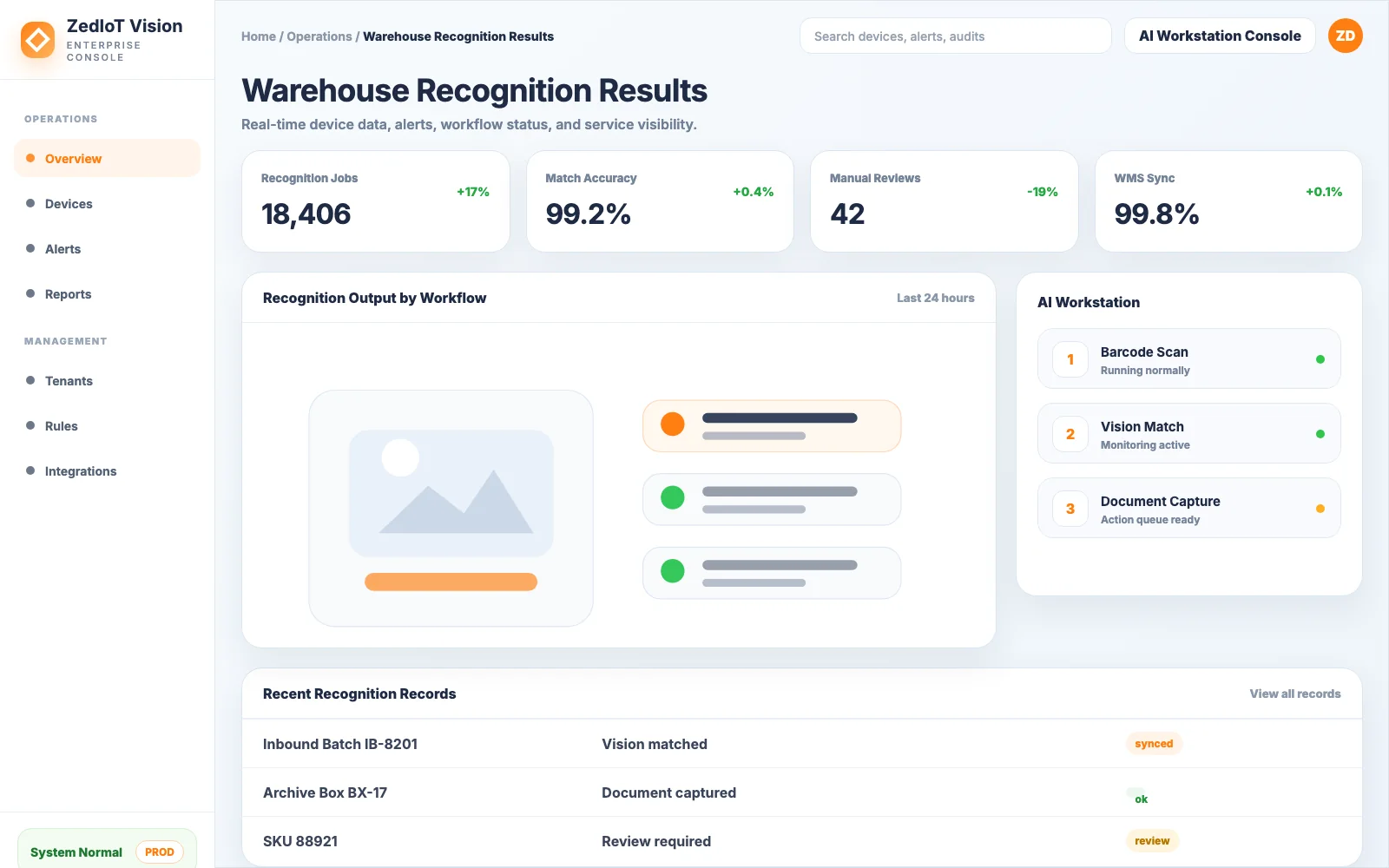
Warehouse teams care about accuracy, evidence, permissions, exception handling, and WMS/ERP integration.
- Map the operation flow and exception branches
- Collect samples and validate recognition speed and accuracy
- Integrate with WMS/ERP/API and retain audit records
From field data to a managed product workflow
Recognition acquisition
Cameras, scanner, face camera, and IC reader capture item and operator signals.
AI model layer
Detection, OCR, classification, and exception logic are adapted to target samples.
Local application
Guides workflow, validates data, buffers offline records, and controls peripherals.
System integration
Connects to WMS, ERP, archive systems, asset systems, or APIs.
Product configuration, capabilities, and deployment details
These sections collect the practical information customers need for selection, integration, installation planning, and rollout evaluation.
Product Capability Notes
The AI warehouse recognition workstation combines AI vision, barcode scanning, high-resolution document capture, binocular face authentication, IC card reading, and peripheral expansion. It is designed to digitize receiving, picking, inventory, document capture, and item-verification workflows.
Core Advantages
Combine vision, barcode, document camera, face authentication, and IC card reading in one operating station.
Turn receiving, shipping, checking, inventory, and archive capture into structured operational records.
Authenticate operators and retain evidence to reduce unauthorized operation and manual errors.
Recognition Workflow
Use a top camera and AI model to identify goods and support inbound/outbound workflows.
Support 1D/2D barcode scanning for goods registration and traceability.
Use binocular face cameras to verify operator identity before sensitive operations.
Capture goods, documents, and archives for traceability and digital filing.
Connect recognition outputs to WMS, ERP, API, or customer systems.
Where this product direction is a good fit
Warehouse receiving and shipping
Scan, recognize, capture, and upload records in one operation.
Item recognition and inventory
Use visual recognition to assist checking and cycle counts.
Operator permission control
Authenticate staff and retain operational audit trails.
Archive digitization
Capture documents and object evidence for later retrieval.
Define the business goal before finalizing the hardware list
These items help teams turn a product idea into an engineering brief that can be estimated and prototyped.
How we turn this into a deployable product
Target and workflow definition
Define recognition targets, operating steps, exceptions, and system interfaces.
Algorithm and data preparation
Collect samples, label data, train or configure models, and evaluate performance.
Terminal application development
Build device UI, peripheral control, authentication, and local cache.
Integration and rollout
Connect WMS/ERP/API, train operators, validate site workflow, and iterate.
Build this product direction with ZedIoT
Tell us your target device, equipment scenario, current technical constraints, and the business workflow you want to support.
- AI + IoT product architecture review
- Hardware, firmware, cloud, and application integration
- Prototype planning and production support