


Campus and remote facilities
Environmental, utility, room, tank, parking, or infrastructure sensors across distributed buildings and outdoor areas.

Industrial monitoring
Low-frequency equipment state, vibration, temperature, pressure, leakage, meter, and maintenance signals.
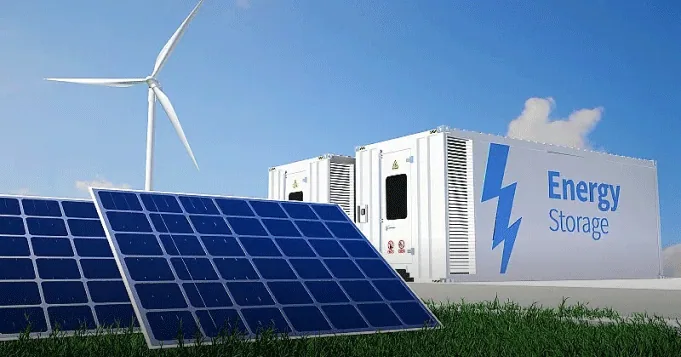
Energy and field assets
Metering, storage, pumps, utility cabinets, renewable assets, agriculture, and sites where wired connectivity is costly.
LoRaWAN planning questions
Resolve coverage, power, payload, platform, and field-operations assumptions before selecting hardware at scale.
When is LoRaWAN a good fit?
LoRaWAN fits low-power sensors that send small, periodic or event-driven payloads across a building, campus, industrial site, agricultural area, or remote region. It is not designed for continuous high-bandwidth video or large files.
How many gateways will a site need?
Gateway count depends on terrain, building materials, antenna height, frequency plan, interference, link budget, device position, redundancy, and backhaul. A representative site survey or pilot is more reliable than a distance claim.
Can LoRaWAN data connect to our existing platform?
Yes. Network-server events and decoded payloads can be routed through MQTT, HTTP, webhooks, databases, or APIs into ZedIoT, ThingsBoard, customer platforms, ERP, CMMS, or alerting systems.
What should a LoRaWAN pilot prove?
A pilot should prove coverage at difficult points, packet success, battery assumptions, payload decoding, gateway backhaul, device provisioning, alarm behavior, and the operator response to one real event.
Can ZedIoT develop custom LoRa sensor firmware?
Yes. Scope can include module selection, MCU firmware, sensor drivers, power states, payload encoding, join behavior, retries, device diagnostics, OTA strategy where practical, and production test guidance.
Plan a representative LoRaWAN pilot
Share the site type, sensor events, coverage constraints, battery target, reporting interval, gateway options, and platform destination. We will help define what the first pilot must prove.
- AI + IoT product architecture review
- Hardware, firmware, cloud, and application integration
- Prototype planning and production support