

ESP32 modules for connected product upgrades and bulk procurement
For teams adding connectivity, interaction, multi-protocol wireless, or endpoint AI to an existing product, ZedIoT helps compare ESP32, ESP32-C3, ESP32-S3, ESP32-C6, and ESP32-P4 options before bulk sourcing or engineering work begins.
Choose the module around the product upgrade, not only the chip name
The source page is organized for enterprise procurement and product retrofit decisions. The useful question is not only "which ESP32 is newer?" but which family matches antenna placement, firmware load, protocol needs, enclosure limits, and future production volume.
Connectivity first
Confirm Wi-Fi, BLE, classic Bluetooth, Matter, Thread, Zigbee, or a wireless-plus-compute split.
Runtime and interfaces
Review Flash, PSRAM, USB, camera, display, audio, GPIO, and the firmware features that must run locally.
Procurement reality
Validate exact part number, antenna variant, temperature grade, quantity, and schedule before locking the BOM.
From one ESP module to a production-ready connected product
You can request only module sourcing and part-number advice. When the project needs to continue, hardware, firmware, app, platform, ecosystem, and production preparation can be combined by phase without rebuilding mature parts of the existing product.
Module selection and supply
Check active part numbers, alternatives, Flash, PSRAM, antenna, temperature grade, package size, and purchase quantity.
Recommended part numbers, quotation input, and lead-time adviceExplore this stepProduct feasibility review
Review the existing device, target features, cost limit, interfaces, and launch timing before prototype work starts.
Feature boundary and prototype pathExplore this stepHardware and RF design
Coordinate power, host MCU, IO, antenna clearance, peripherals, enclosure space, schematic, PCB, BOM, and prototype bring-up.
Hardware plan and prototype validationExplore this stepFirmware and device access
Build drivers, provisioning, protocol logic, control behavior, logs, OTA, recovery, sensors, and serial-device connection.
Firmware, device model, and upgrade pathExplore this stepPlatform, app, and ecosystem integration
Connect MQTT, mobile app, web console, Tuya, Matter, Home Assistant, or an existing IoT platform as needed.
Control experience and system integration planExplore this stepPilot and production readiness
After features stabilize, confirm flashing, production test, version control, diagnostics, delivery files, and batch support.
Production test and launch support checklistExplore this stepMatch each ESP32 module family to the right product upgrade path
Each group preserves the source page's family structure and module coverage, with English fit notes for international buyers.
ESP32
ESP32 Series
Mature Wi-Fi and classic Bluetooth modules for upgrading proven devices into connected, controllable, and maintainable products.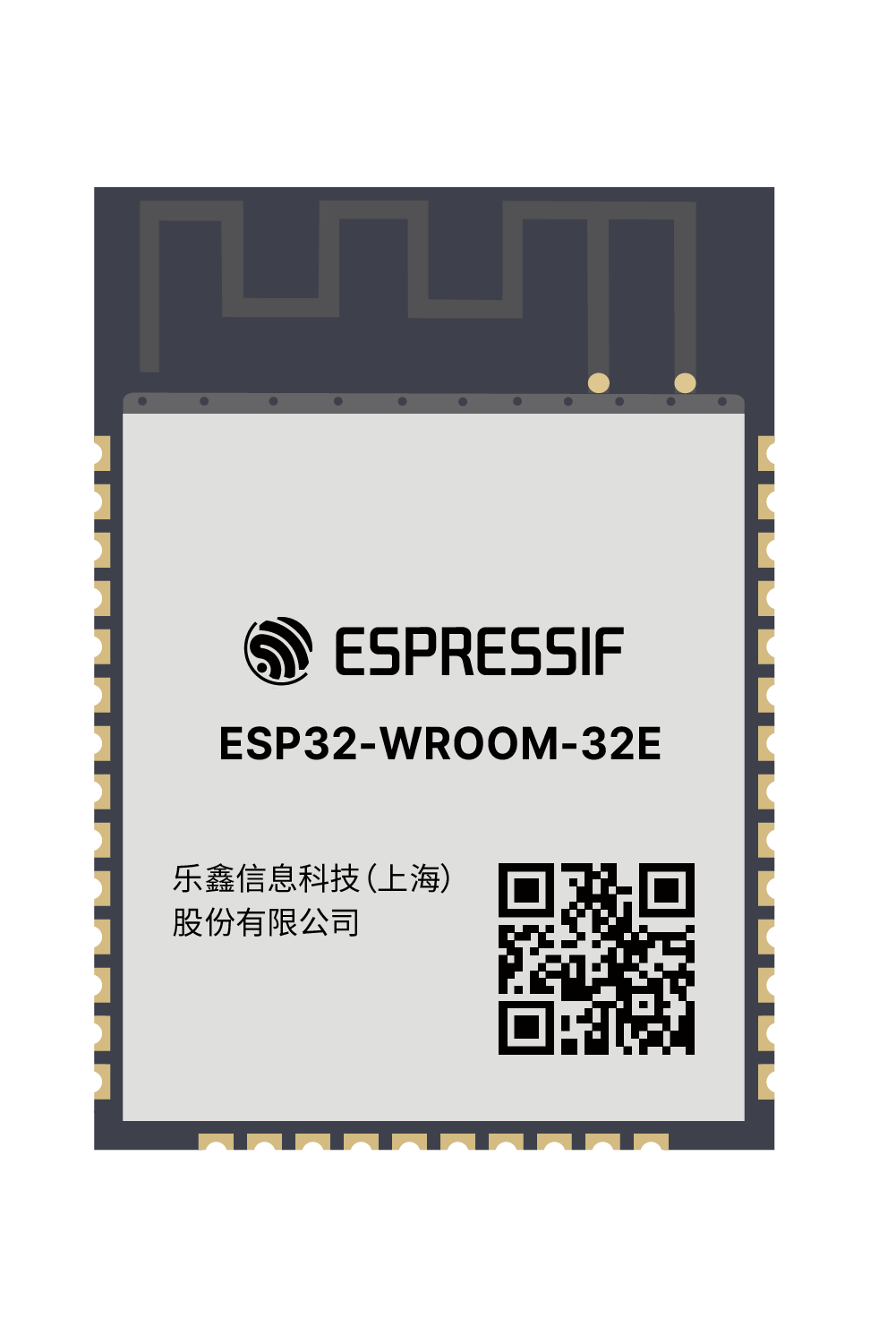
ESP32-WROOM-32E
General Wi-Fi / Bluetooth devices, controllers, and gateways
- Available configs
- N4 / N8 / N16 / H4; N4R2 / N8R2 / N16R2
- Package and antenna
- 18 x 25.5 x 3.1 mm · PCB antenna
- Operating temperature
- -40 to 85°C; H4 is -40 to 105°C
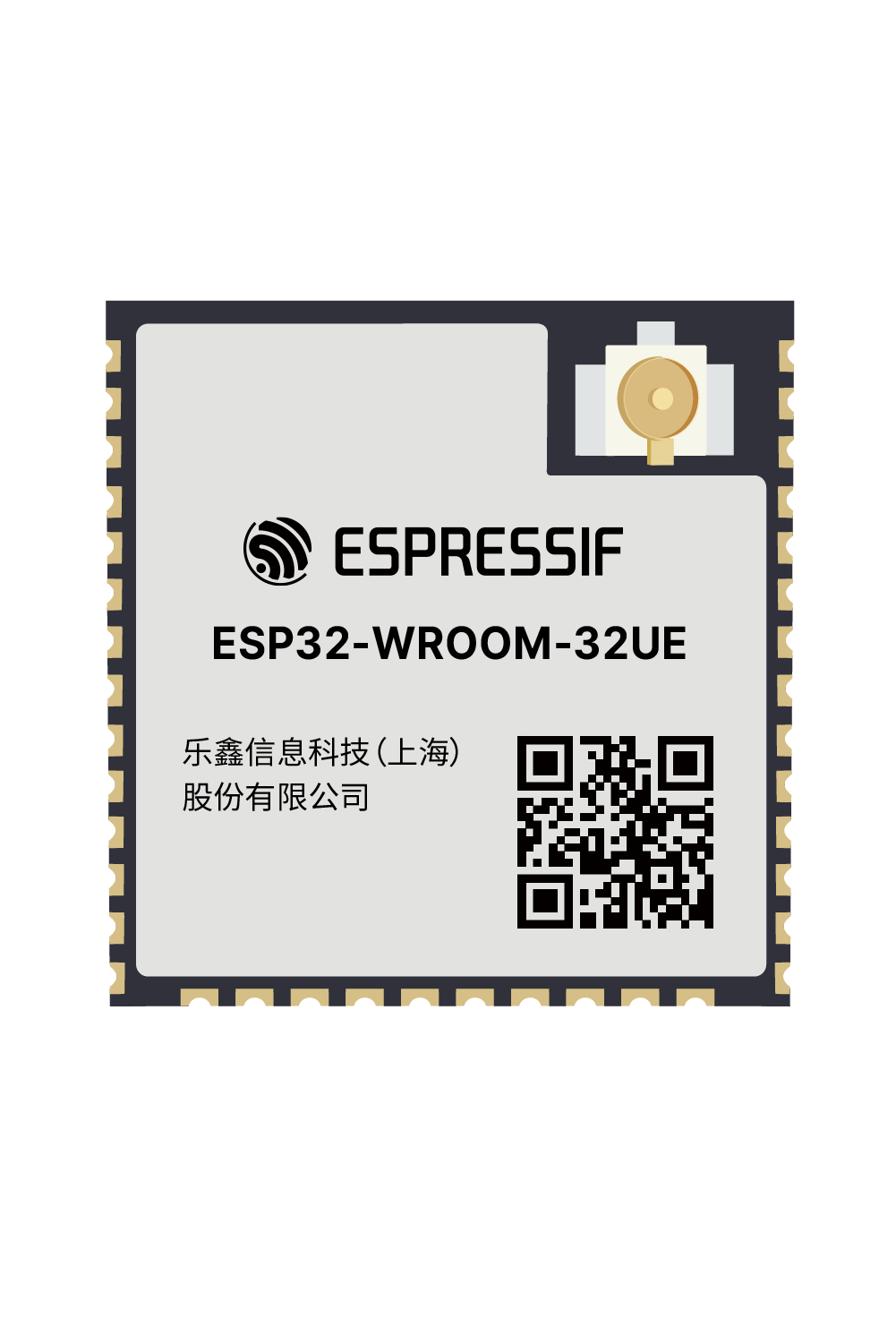
ESP32-WROOM-32UE
Metal enclosures, remote antennas, or constrained RF layouts
- Available configs
- N4 / N8 / N16 / H4; N4R2 / N8R2 / N16R2
- Package and antenna
- 18 x 19.2 x 3.2 mm · external antenna connector
- Operating temperature
- -40 to 85°C; H4 is -40 to 105°C
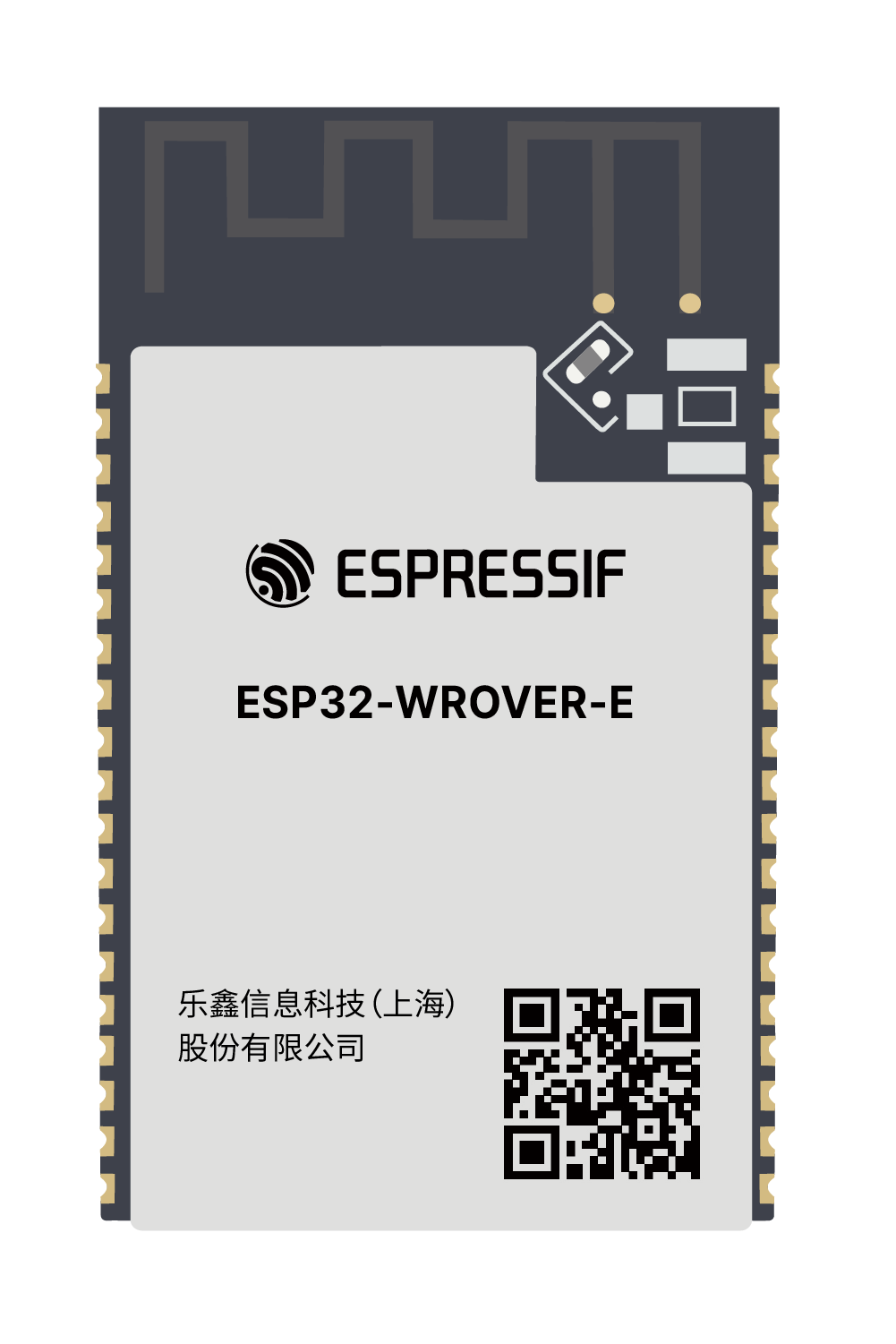
ESP32-WROVER-E
Display, audio, and devices that need larger runtime memory
- Available configs
- N4R8 / N8R8 / N16R8
- Package and antenna
- 18 x 31.4 x 3.3 mm · PCB antenna
- Operating temperature
- -40 to 85°C
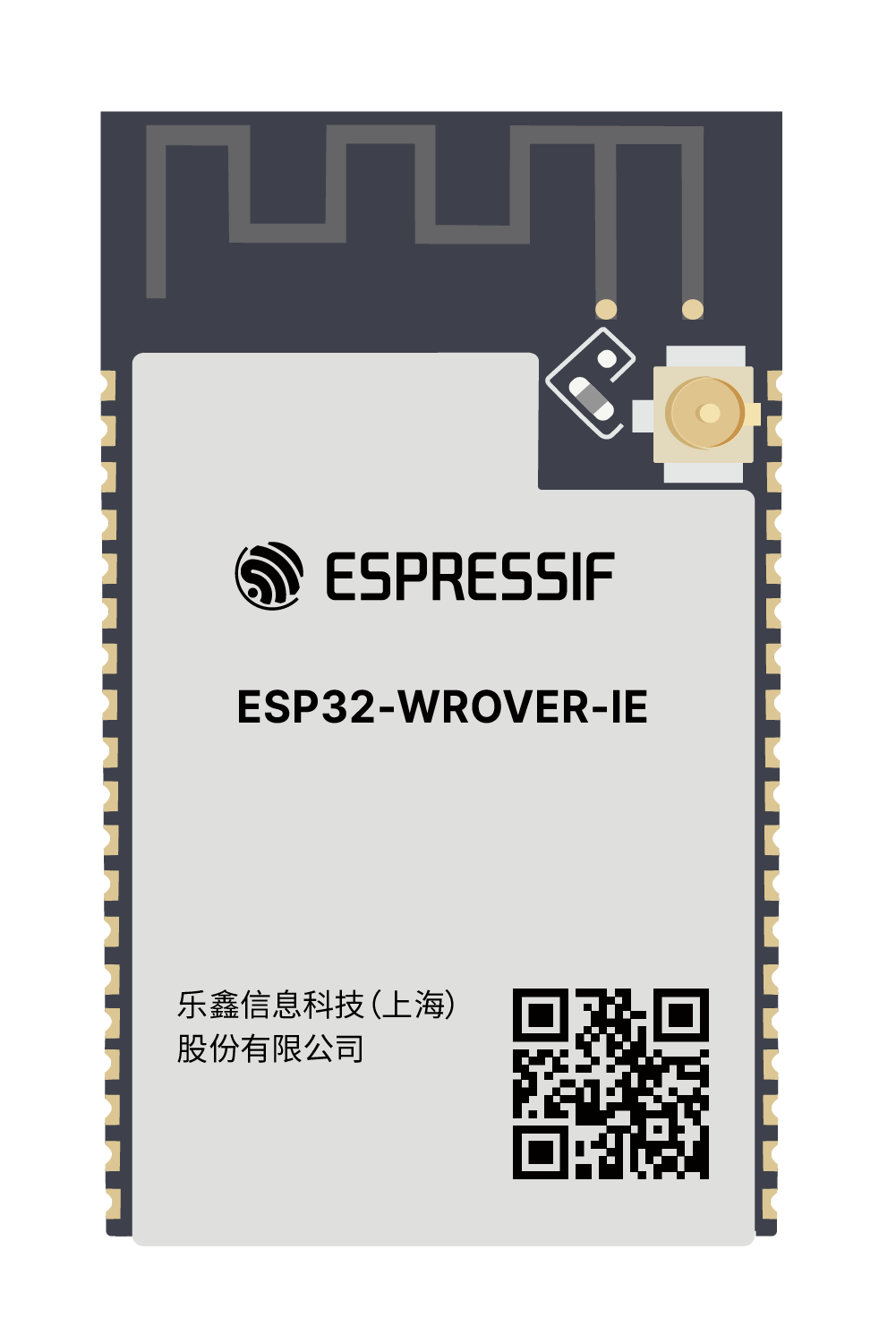
ESP32-WROVER-IE
Interactive terminals that need PSRAM and an external antenna
- Available configs
- N4R8 / N8R8 / N16R8
- Package and antenna
- 18 x 31.4 x 3.3 mm · external antenna connector
- Operating temperature
- -40 to 85°C
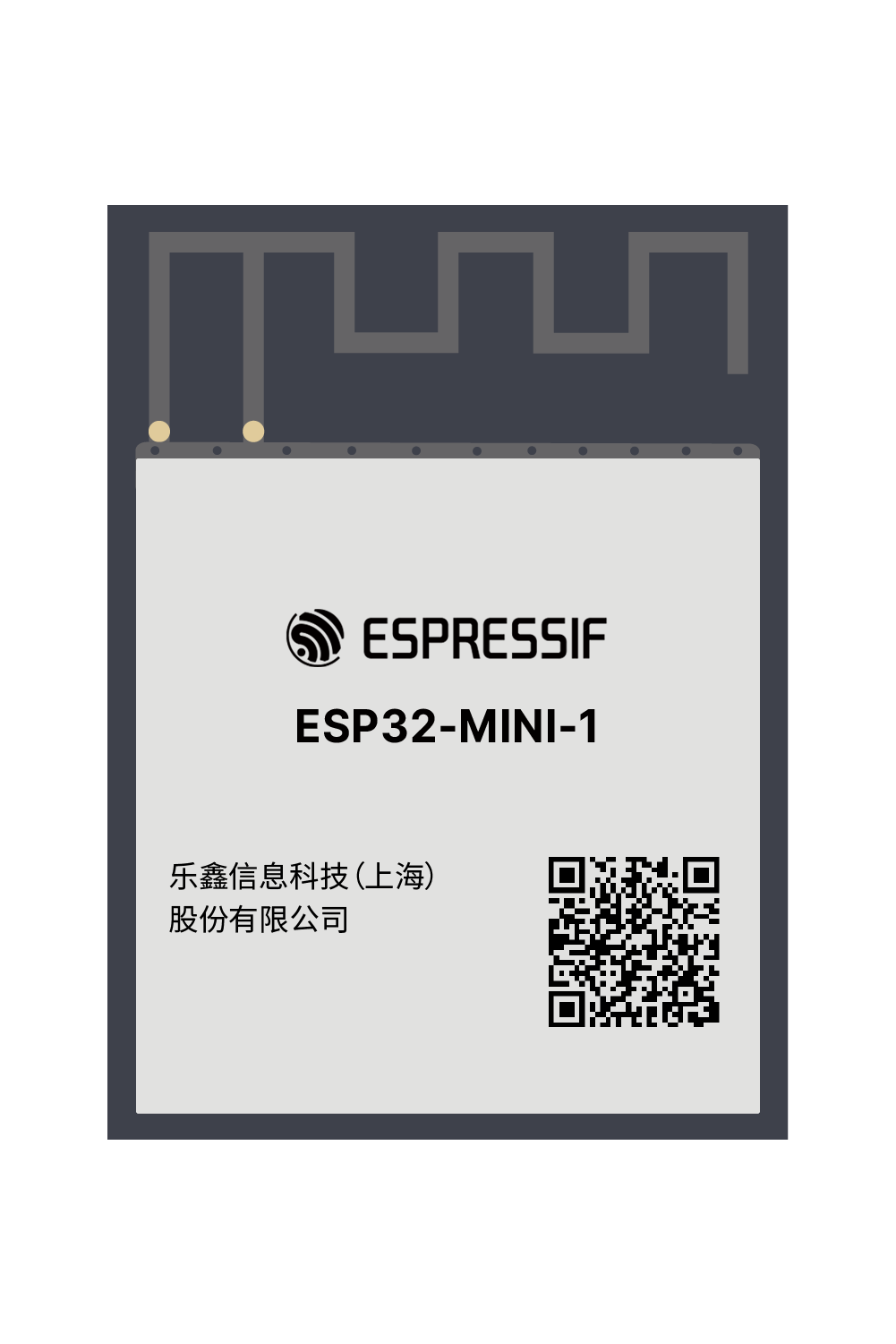
ESP32-MINI-1
Small general-purpose connected terminals
- Available configs
- N4 / H4
- Package and antenna
- 13.2 x 19 x 2.4 mm · PCB antenna
- Operating temperature
- -40 to 85°C; H4 is -40 to 105°C
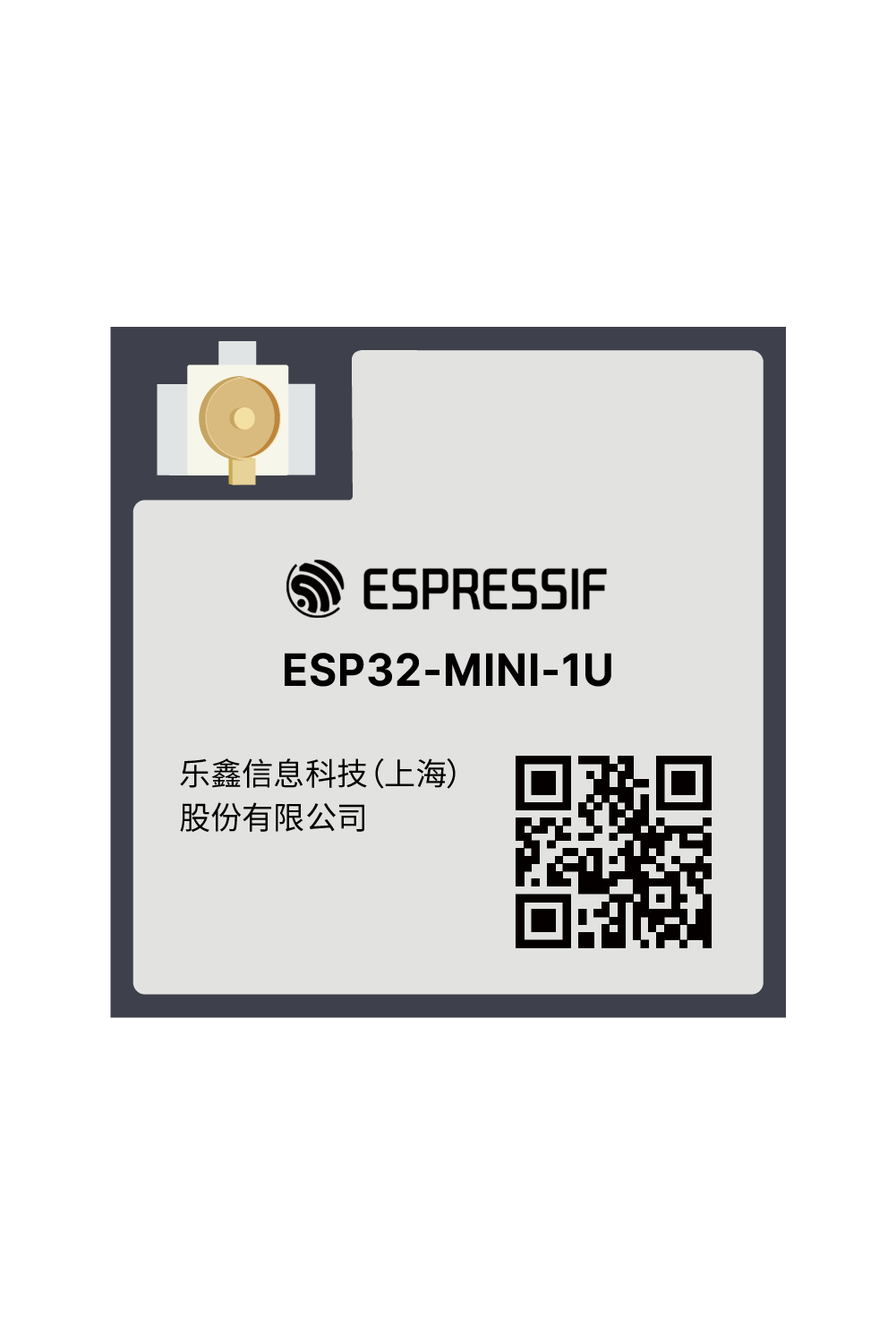
ESP32-MINI-1U
Compact terminals that need an external antenna
- Available configs
- N4 / H4
- Package and antenna
- 13.2 x 13.5 x 2.4 mm · external antenna connector
- Operating temperature
- -40 to 85°C; H4 is -40 to 105°C
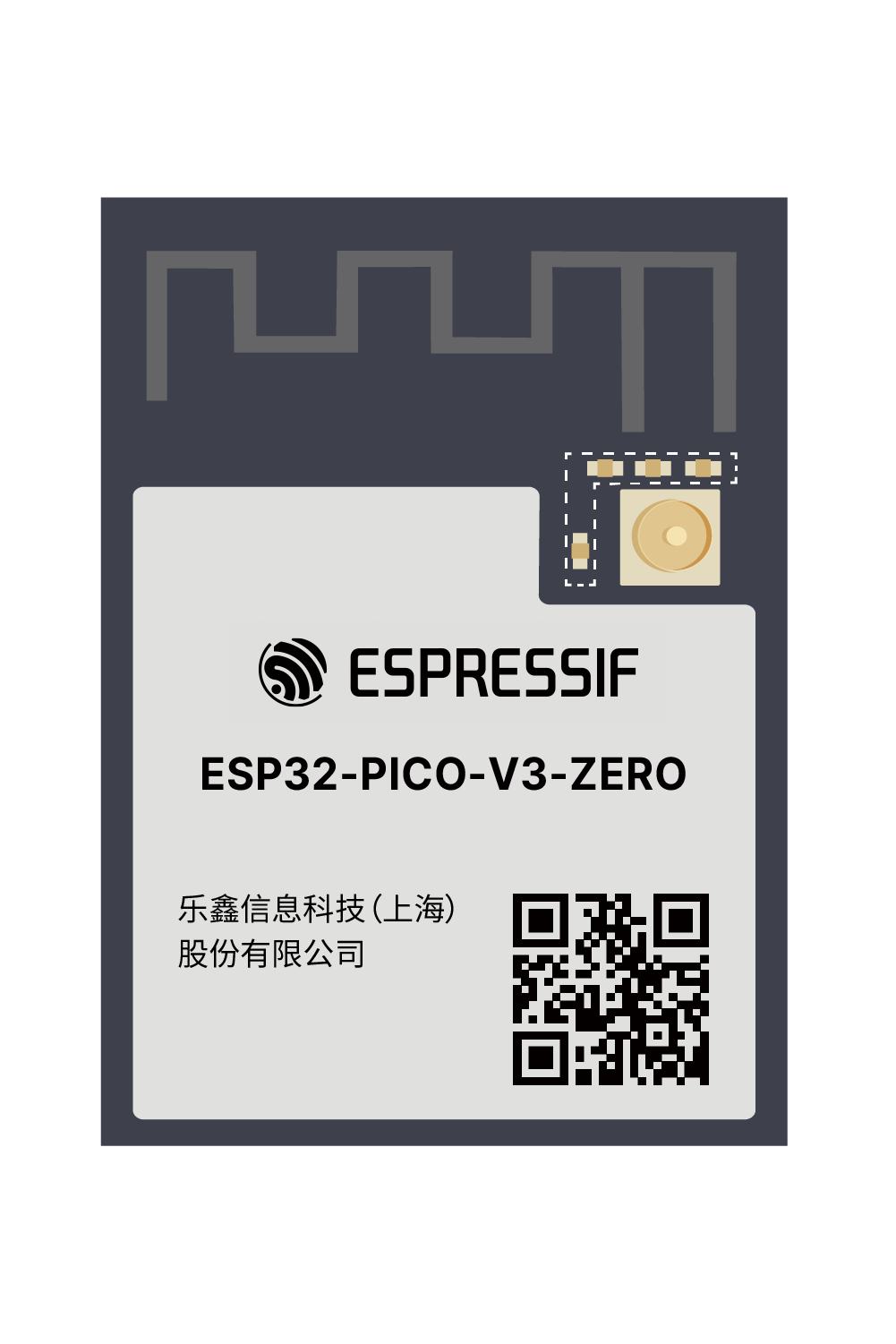
ESP32-PICO-V3-ZERO
Highly integrated compact connected designs
- Available configs
- Integrated 4 MB Flash
- Package and antenna
- 16 x 23 x 2.3 mm · PCB antenna
- Operating temperature
- -40 to 85°C
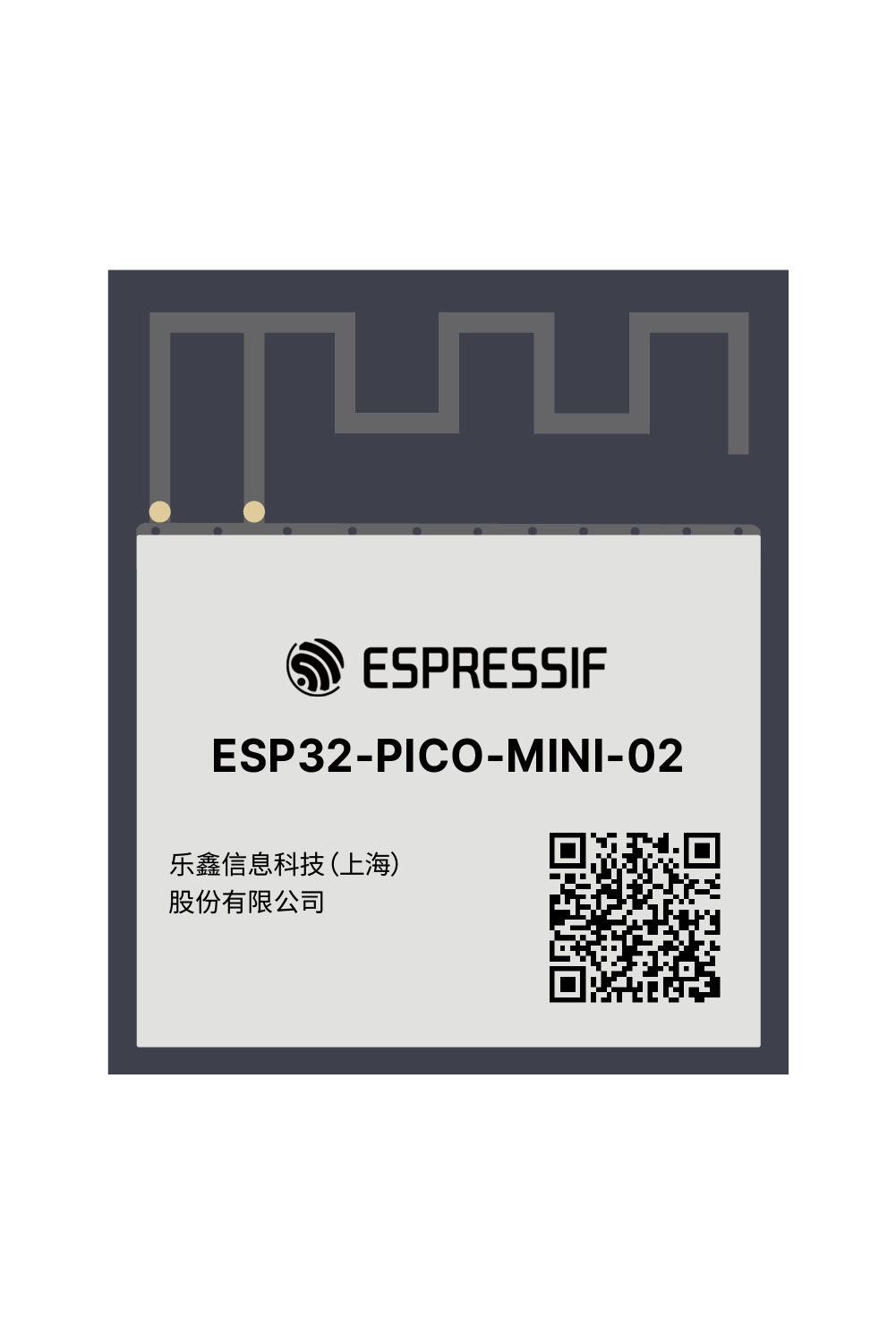
ESP32-PICO-MINI-02
Compact interactive products that need PSRAM
- Available configs
- N8R2
- Package and antenna
- 13.2 x 16.6 x 2.4 mm · PCB antenna
- Operating temperature
- -40 to 85°C
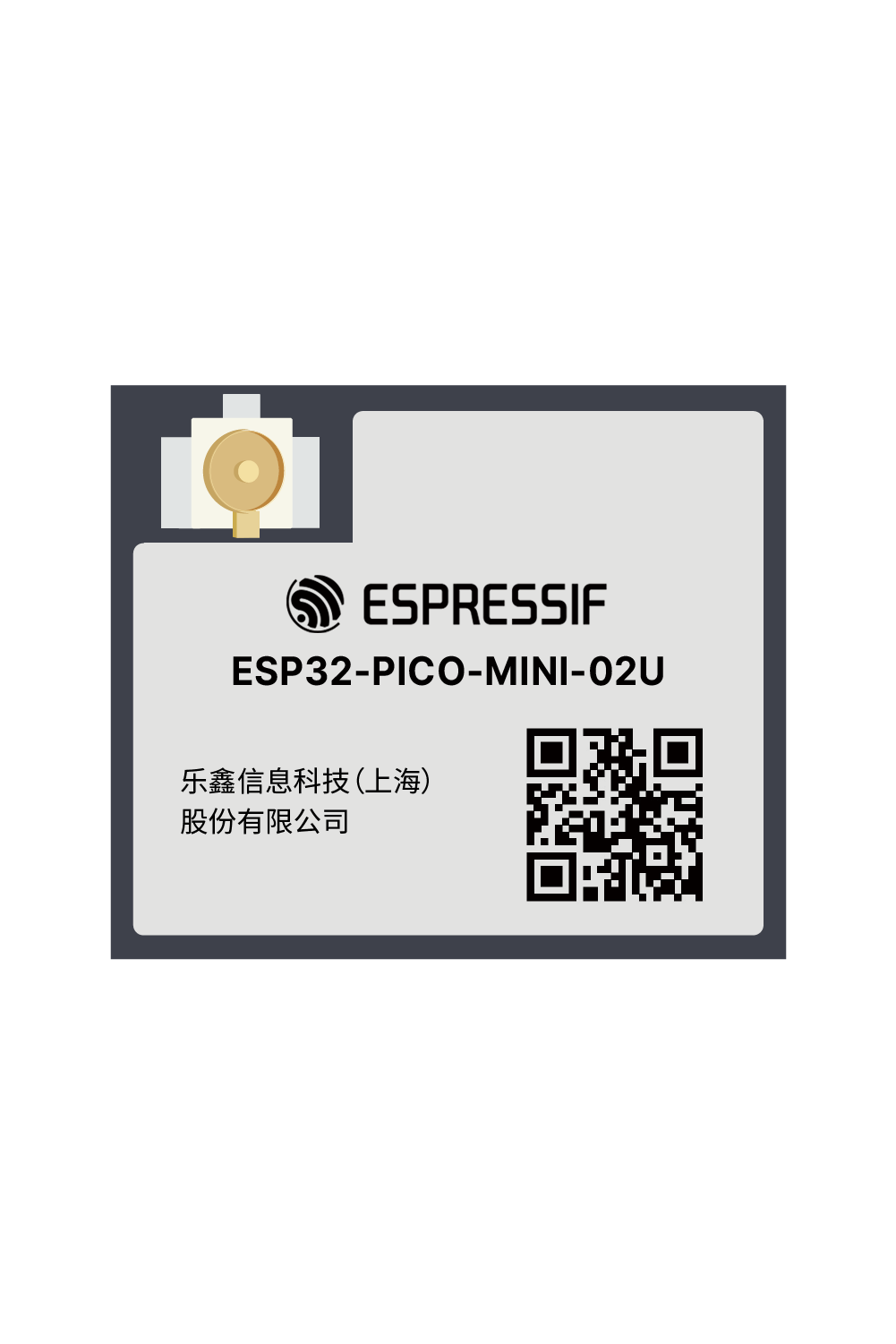
ESP32-PICO-MINI-02U
Compact products that need PSRAM and an external antenna
- Available configs
- N8R2
- Package and antenna
- 13.2 x 11.2 x 2.4 mm · external antenna connector
- Operating temperature
- -40 to 85°C
ESP32-S3
ESP32-S3 Series
Display, voice, USB, larger memory, and endpoint intelligence for interactive products.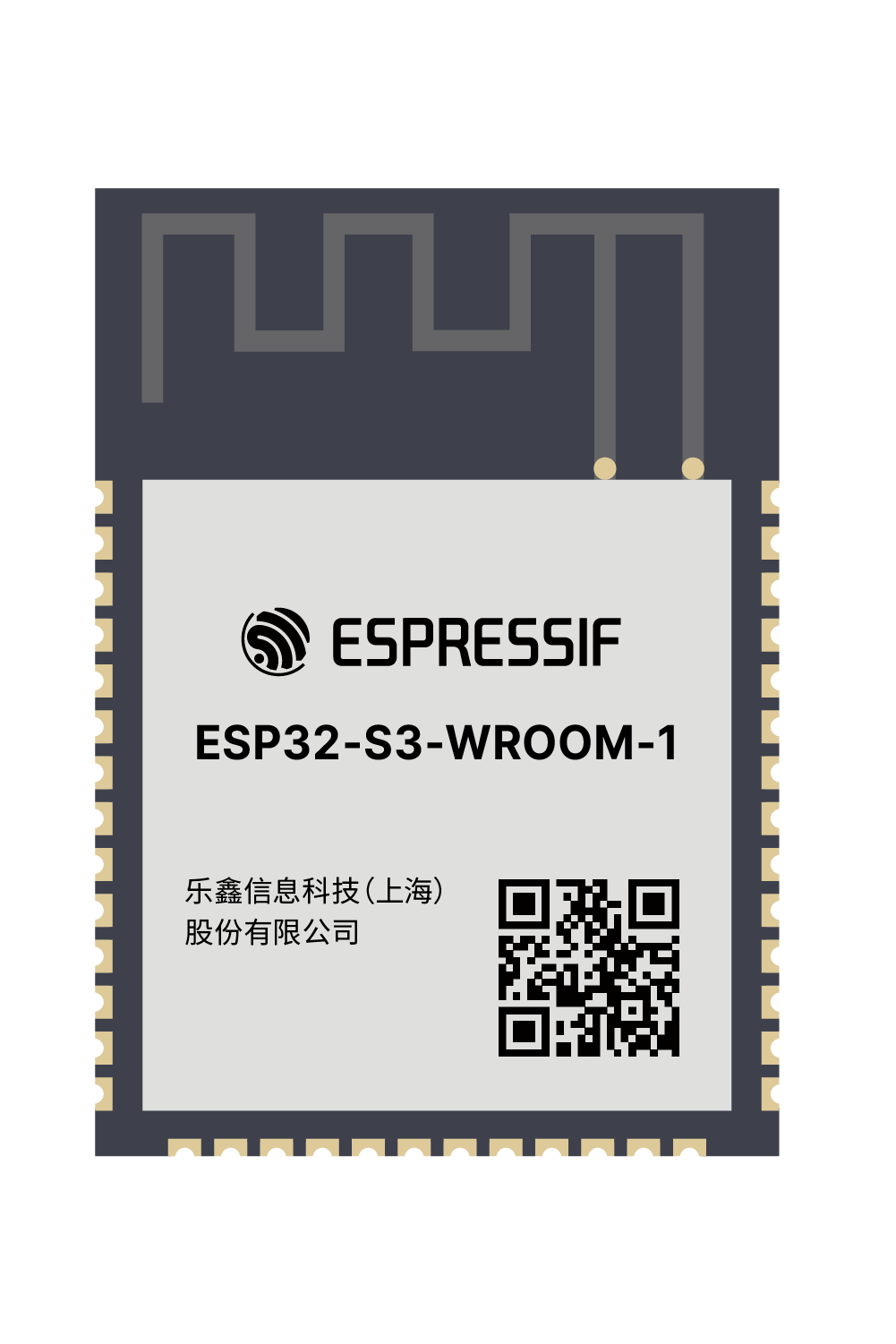
ESP32-S3-WROOM-1
Mainstream display, voice, USB, and endpoint intelligence products
- Available configs
- N4 / N8 / N16 / H4; N4R2 / N8R2 / N16R2; N4R8 / N8R8 / N16R8 / N16R16VA
- Package and antenna
- 18 x 25.5 x 3.1 mm · PCB antenna
- Operating temperature
- -40 to 85°C; R8 / R16 are -40 to 65°C
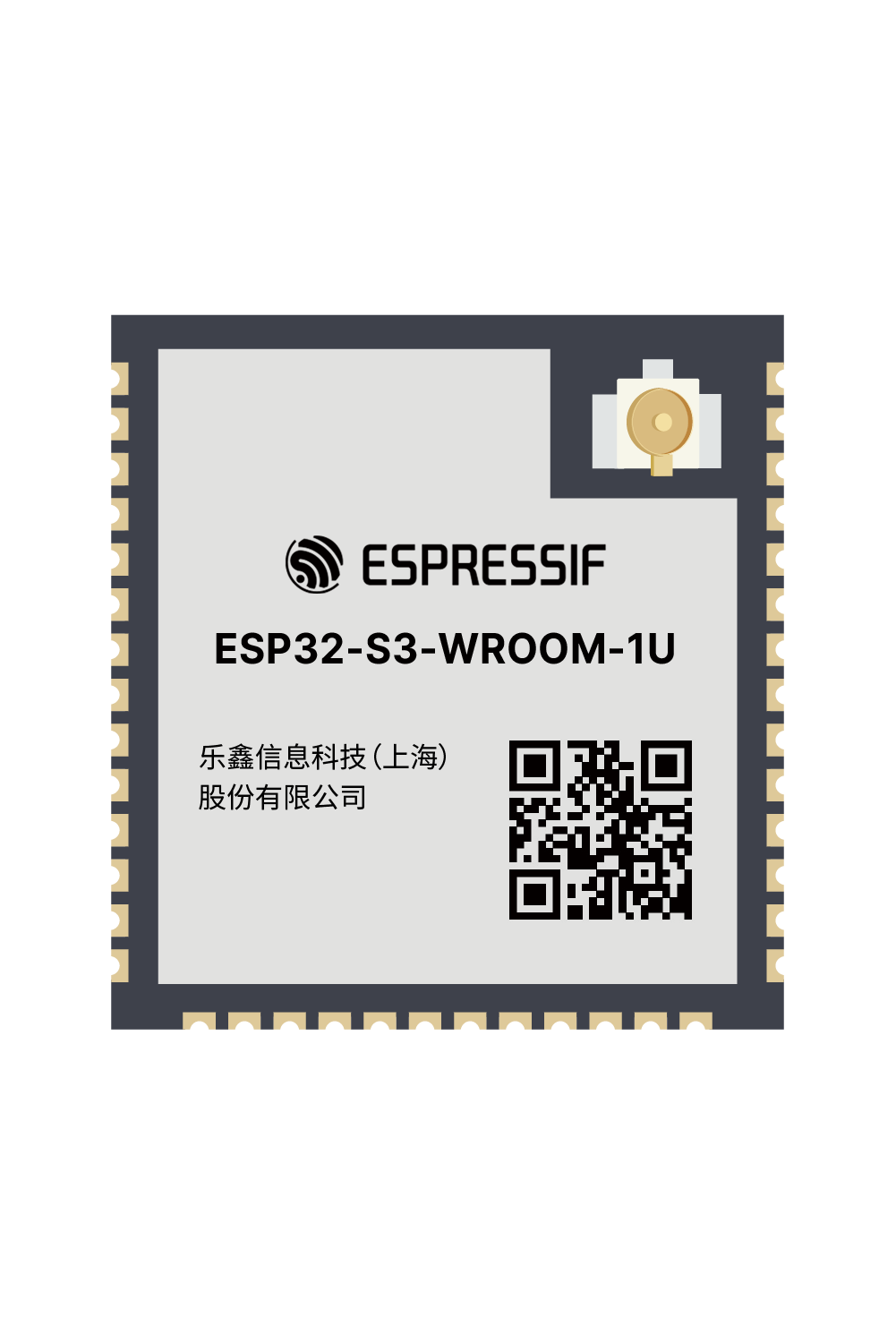
ESP32-S3-WROOM-1U
S3 devices with blocked antennas or constrained RF placement
- Available configs
- N4 / N8 / N16; N4R2 / N8R2 / N16R2; N4R8 / N8R8 / N16R8
- Package and antenna
- 18 x 19.2 x 3.2 mm · external antenna connector
- Operating temperature
- -40 to 85°C; R8 is -40 to 65°C
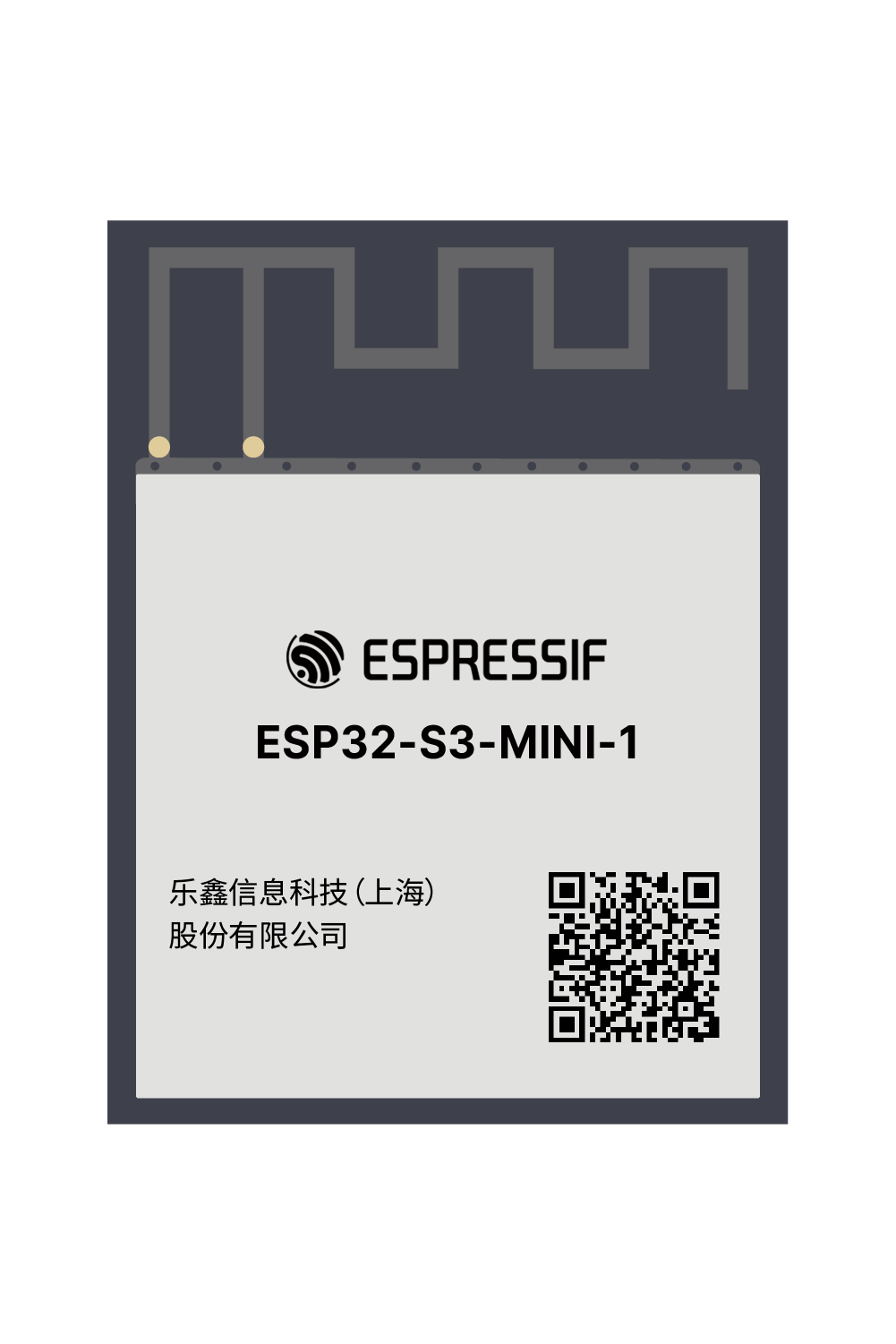
ESP32-S3-MINI-1
Small display, USB, and BLE devices
- Available configs
- N8 / N4R2
- Package and antenna
- 15.4 x 20.5 x 2.4 mm · PCB antenna
- Operating temperature
- -40 to 85°C
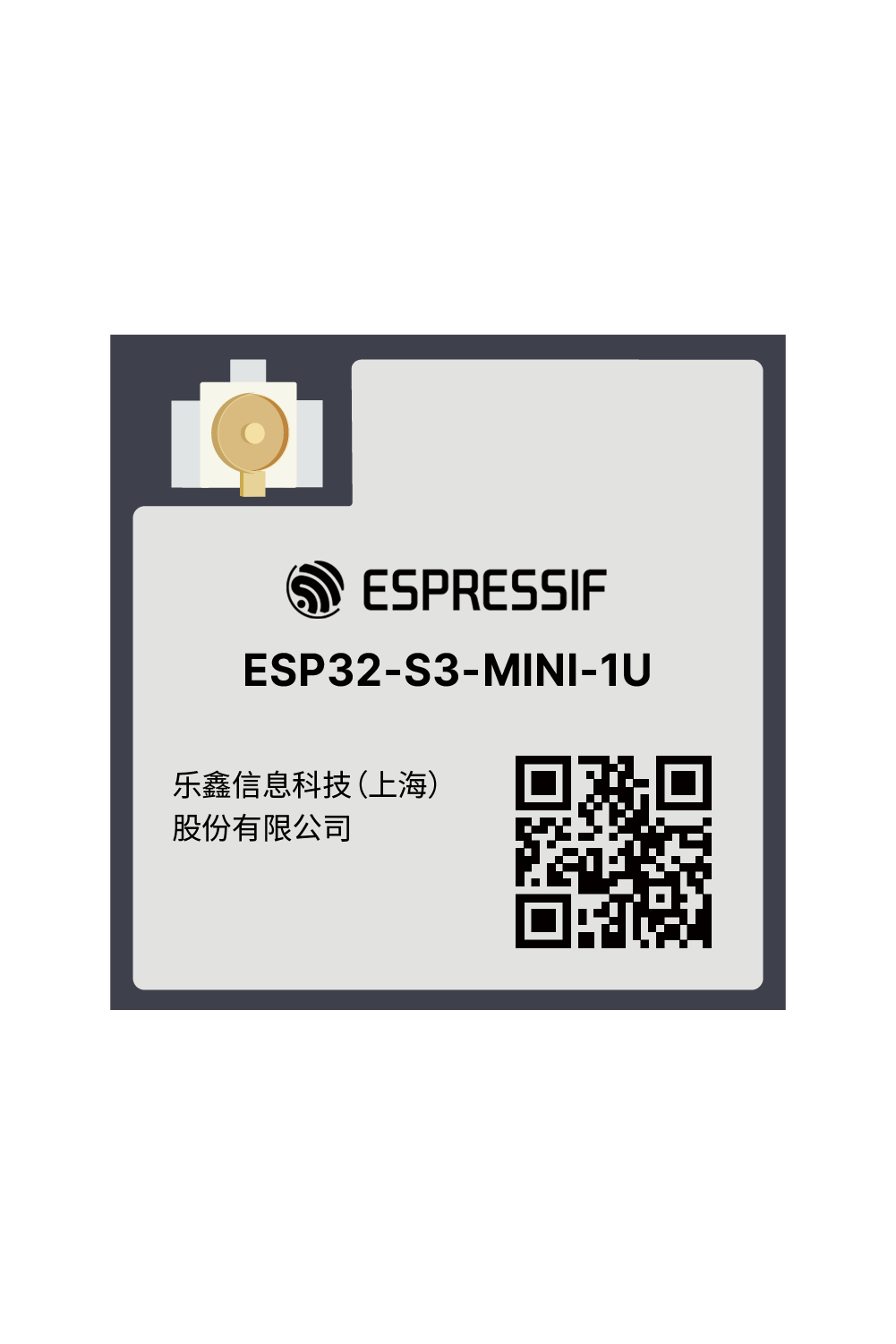
ESP32-S3-MINI-1U
Small S3 terminals that need an external antenna
- Available configs
- N8 / N4R2
- Package and antenna
- 15.4 x 15.4 x 2.4 mm · external antenna connector
- Operating temperature
- -40 to 85°C
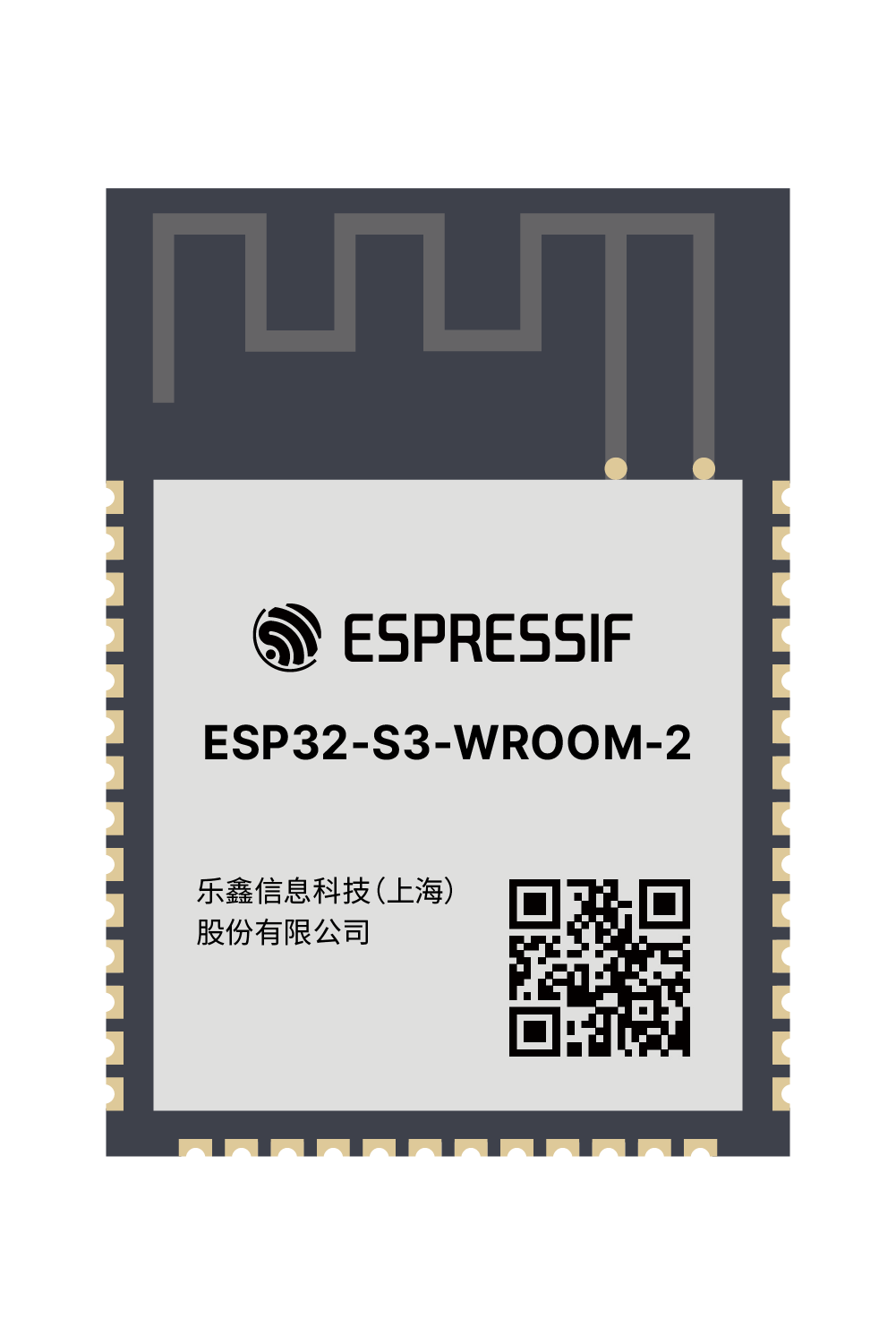
ESP32-S3-WROOM-2
S3 devices that need high Flash and PSRAM capacity
- Available configs
- N32R16V
- Package and antenna
- 18 x 25.5 x 3.1 mm · PCB antenna
- Operating temperature
- -40 to 65°C
ESP32-C3
ESP32-C3 Series
Compact RISC-V Wi-Fi + BLE modules for cost-sensitive connected terminals.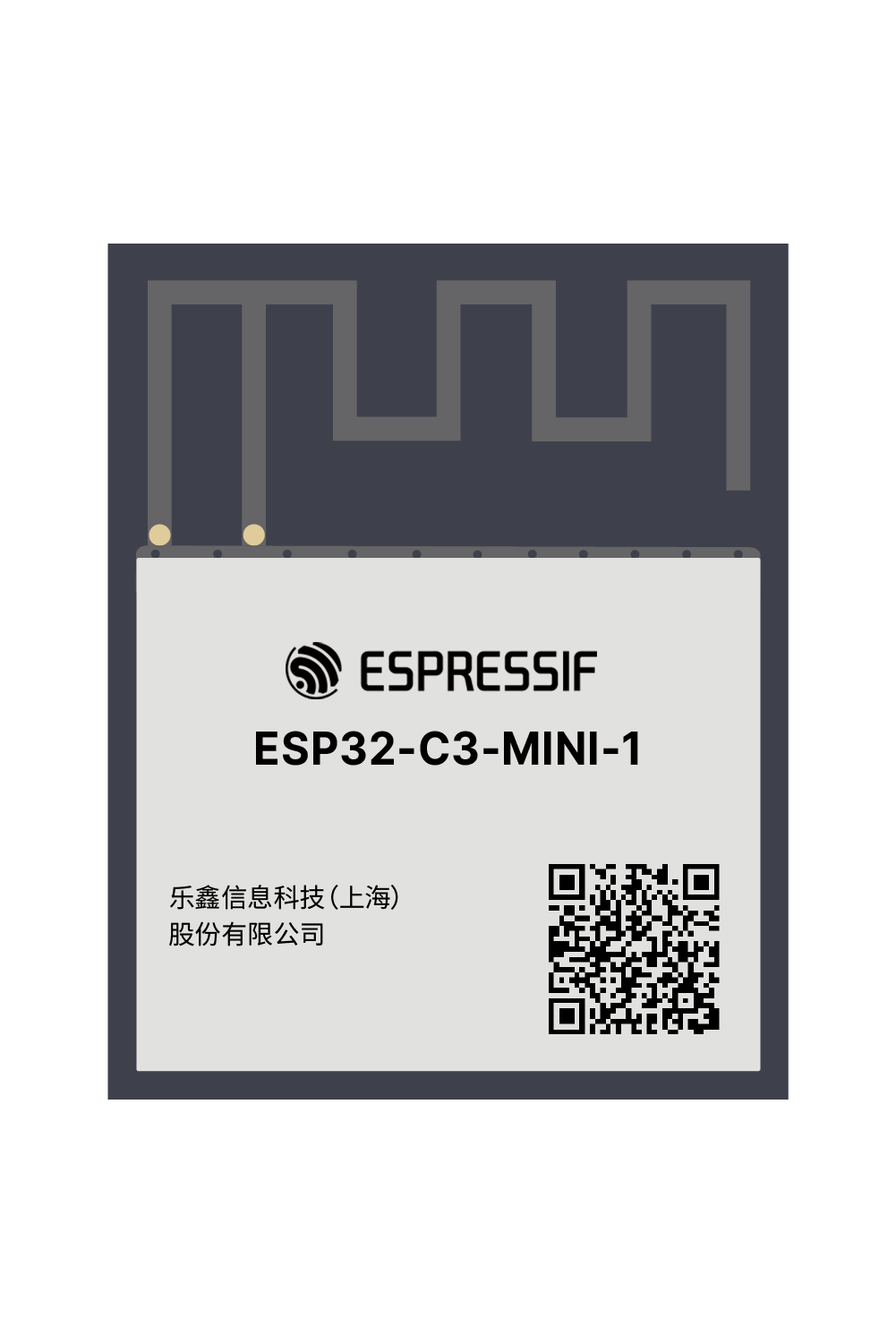
ESP32-C3-MINI-1
Cost-sensitive compact Wi-Fi + BLE terminals
- Available configs
- N4X / H4X / H8X
- Package and antenna
- 13.2 x 16.6 x 2.4 mm · PCB antenna
- Operating temperature
- -40 to 85°C; H series is -40 to 105°C
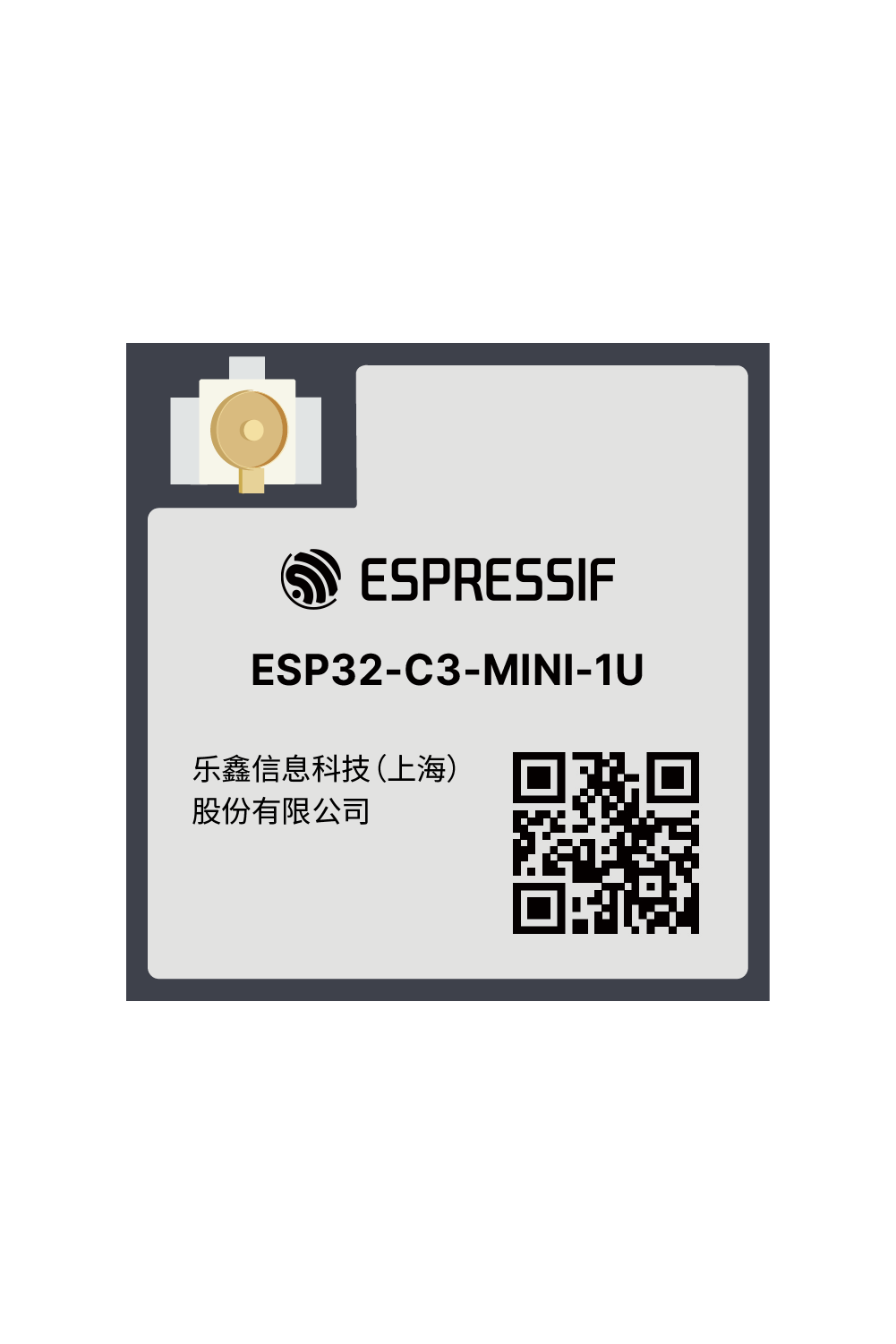
ESP32-C3-MINI-1U
Compact C3 terminals that need an external antenna
- Available configs
- N4X / H4X
- Package and antenna
- 13.2 x 12.5 x 2.4 mm · external antenna connector
- Operating temperature
- -40 to 85°C; H4X is -40 to 105°C
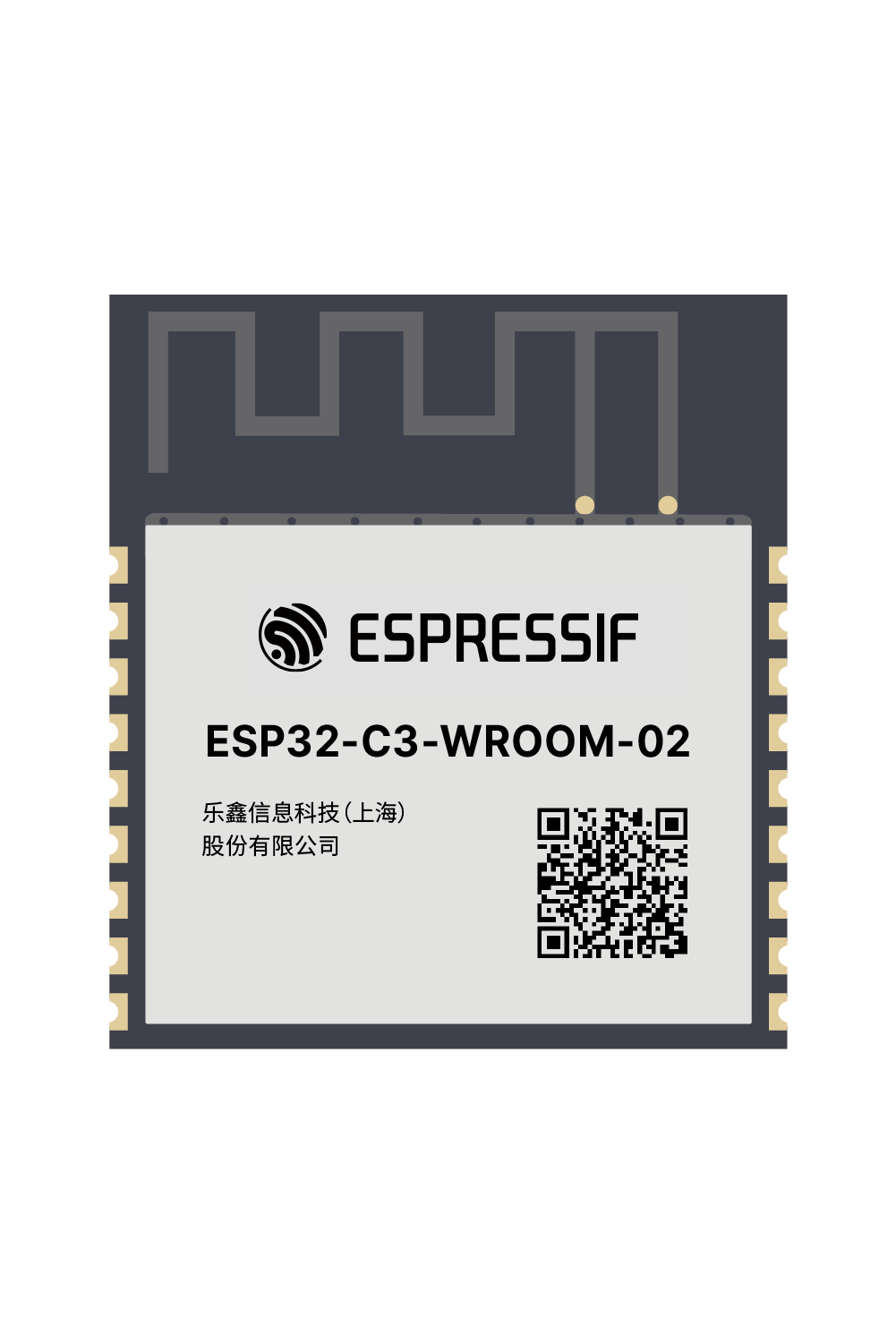
ESP32-C3-WROOM-02
General I/O and Wi-Fi + BLE production devices
- Available configs
- N4 / H4 / N8
- Package and antenna
- 18 x 20 x 3.2 mm · PCB antenna
- Operating temperature
- -40 to 85°C; H4 is -40 to 105°C
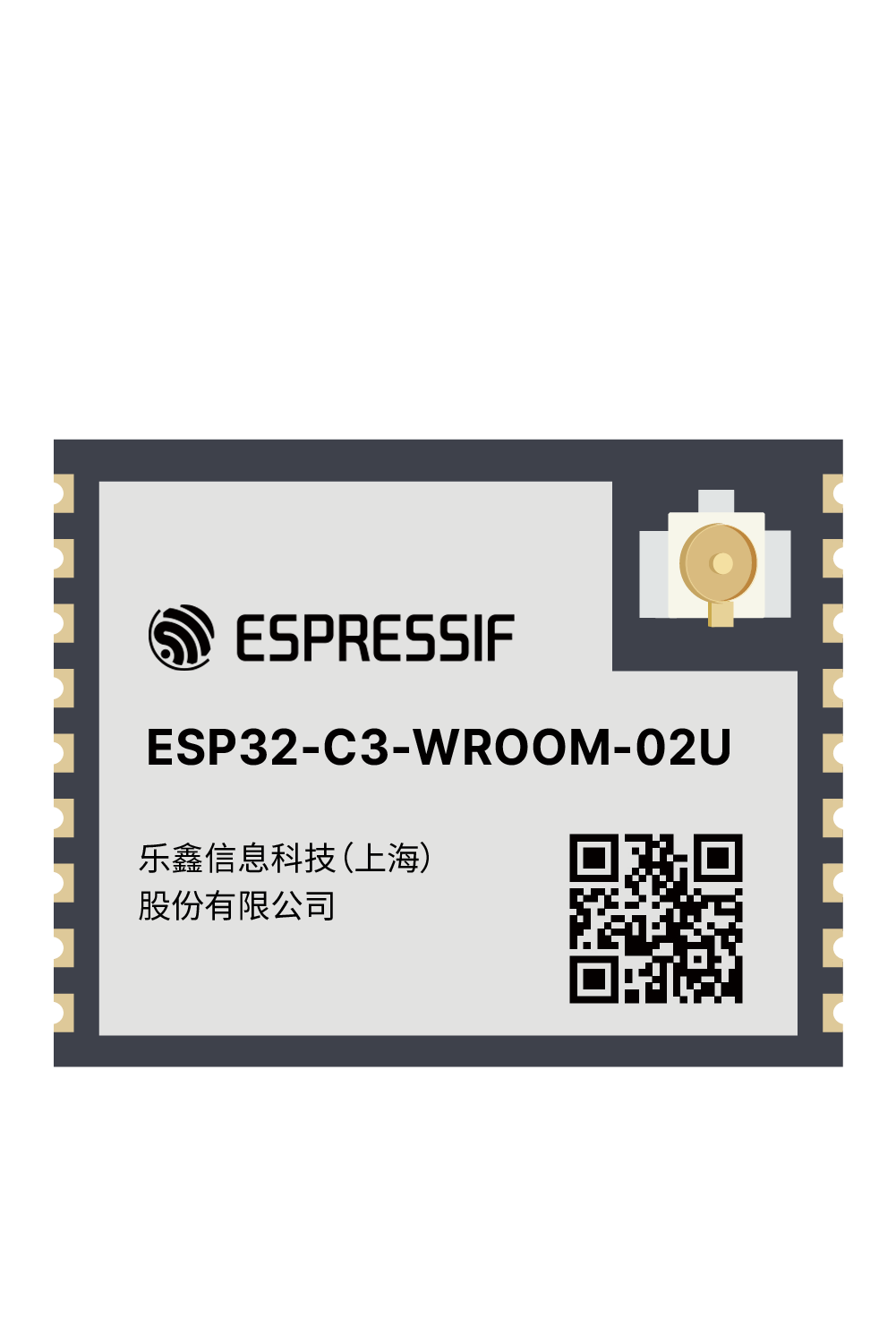
ESP32-C3-WROOM-02U
General C3 devices requiring an external antenna
- Available configs
- N4 / H4 / N8
- Package and antenna
- 18 x 14.3 x 3.2 mm · external antenna connector
- Operating temperature
- -40 to 85°C; H4 is -40 to 105°C
ESP32-C6
ESP32-C6 Series
Wi-Fi 6, BLE 5.3, and IEEE 802.15.4 modules for Matter, Thread, and Zigbee-oriented products.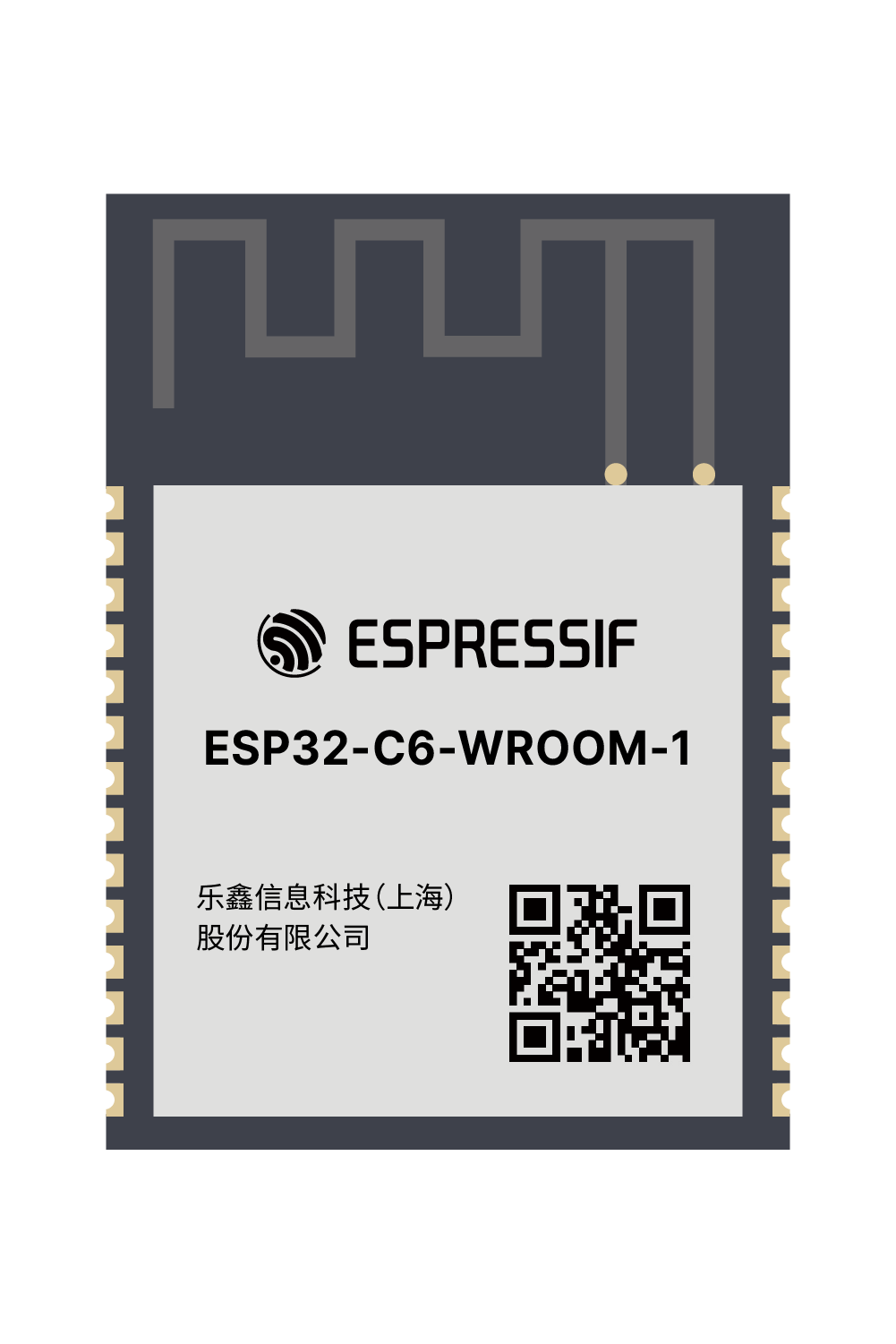
ESP32-C6-WROOM-1
Matter, Thread, Zigbee, and Wi-Fi 6 products
- Available configs
- N4 / N8 / N16
- Package and antenna
- 18 x 25.5 x 3.1 mm · PCB antenna
- Operating temperature
- -40 to 85°C
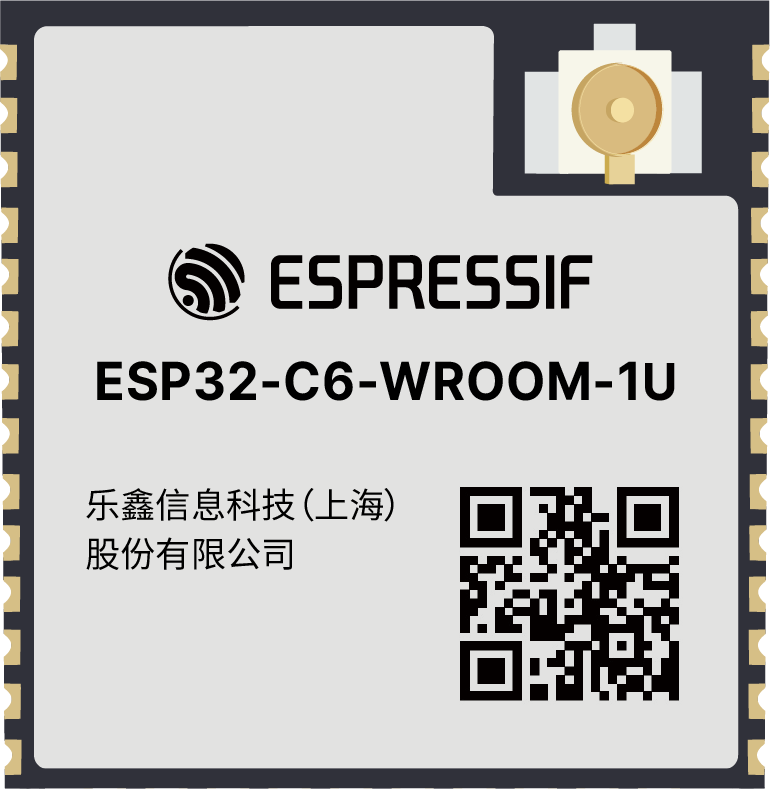
ESP32-C6-WROOM-1U
Multi-protocol smart-home terminals needing external antennas
- Available configs
- N4 / N8 / N16
- Package and antenna
- 18 x 19.2 x 3.2 mm · external antenna connector
- Operating temperature
- -40 to 85°C
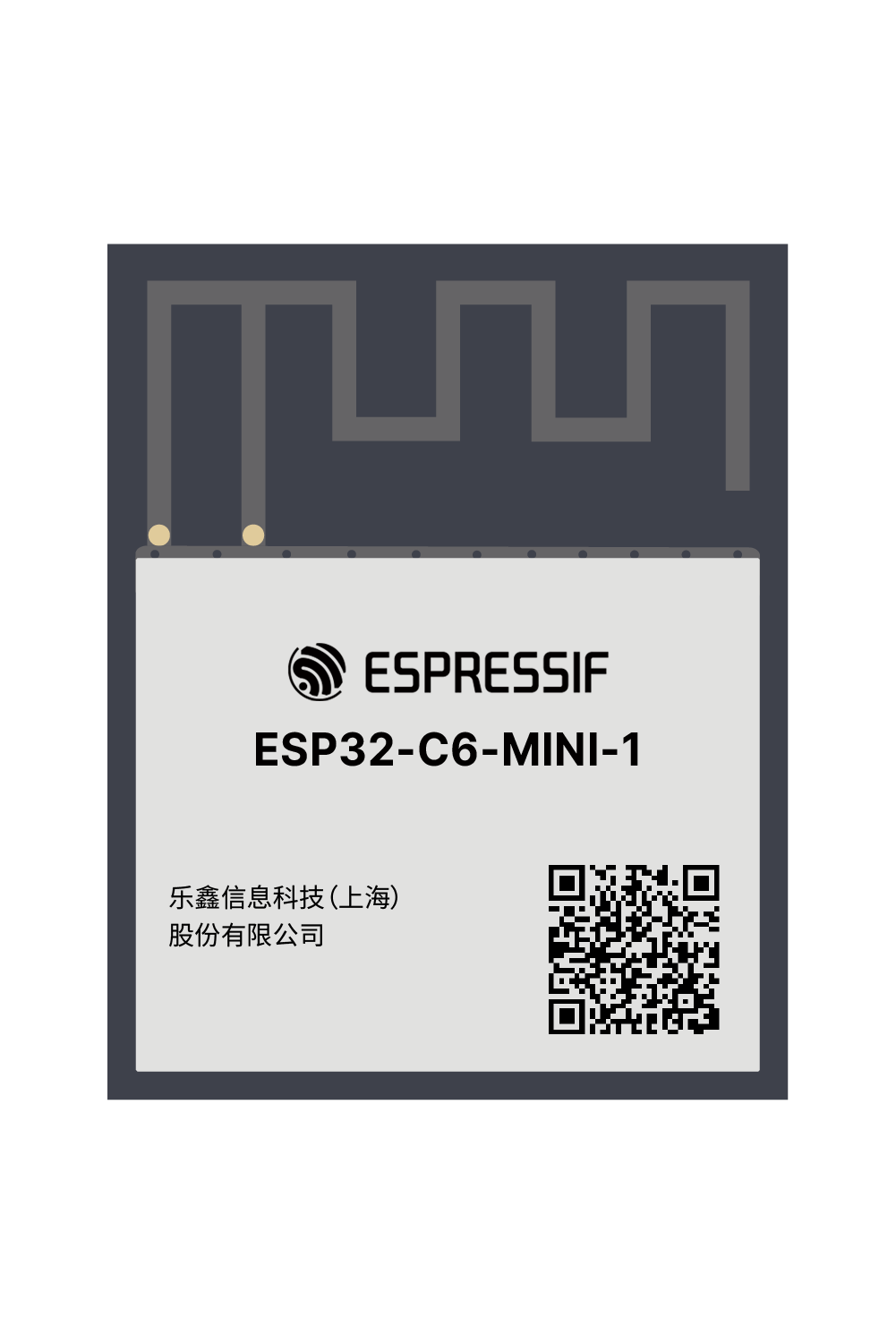
ESP32-C6-MINI-1
Compact Matter, Thread, and Zigbee terminals
- Available configs
- N4 / H4 / H8
- Package and antenna
- 13.2 x 16.6 x 2.4 mm · PCB antenna
- Operating temperature
- -40 to 85°C; H series is -40 to 105°C
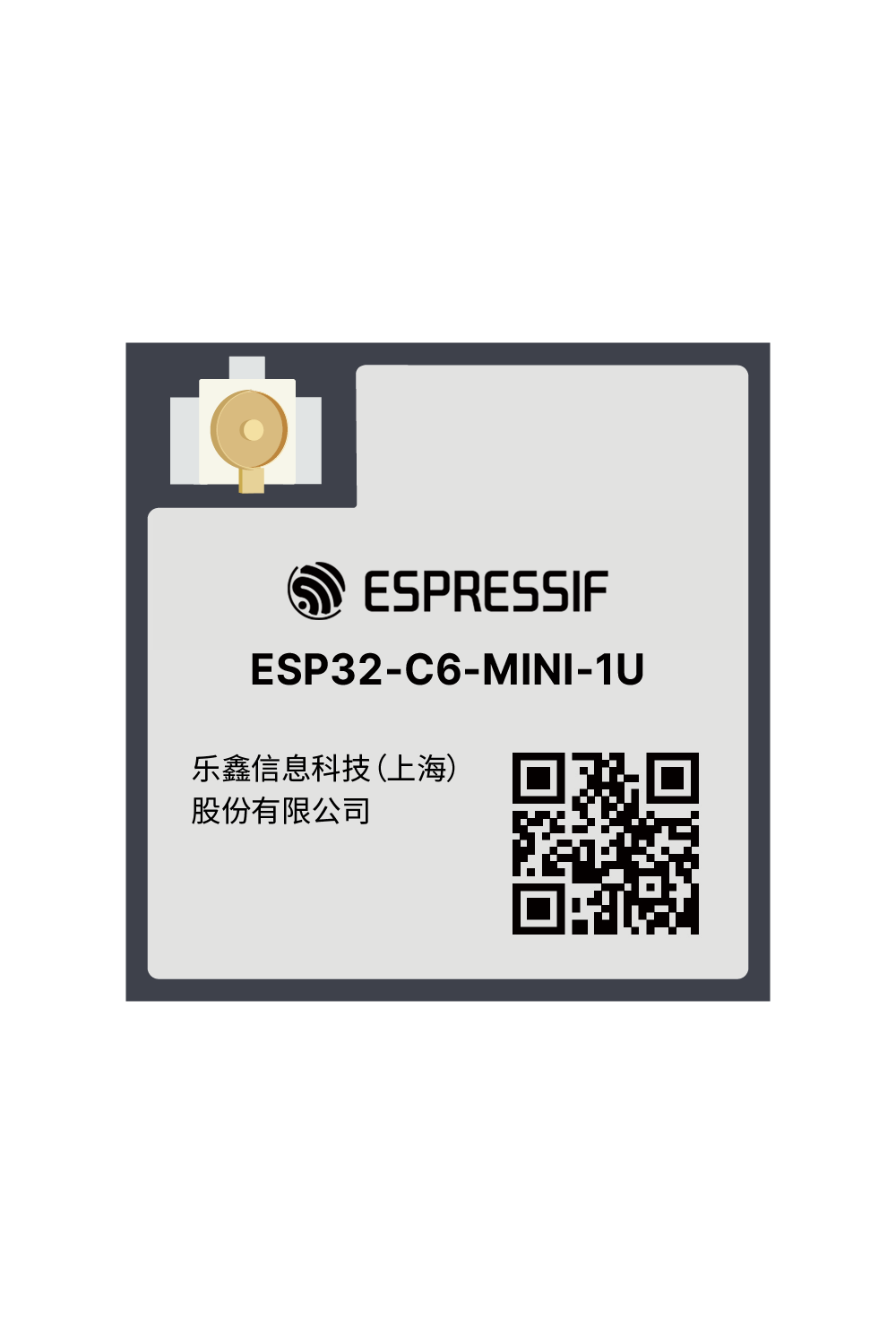
ESP32-C6-MINI-1U
Compact multi-protocol terminals requiring external antennas
- Available configs
- N4 / H4 / H8
- Package and antenna
- 13.2 x 12.5 x 2.4 mm · external antenna connector
- Operating temperature
- -40 to 85°C; H series is -40 to 105°C
ESP32-P4
ESP32-P4 Edge AI Option
Move vision, voice, or lightweight model processing to the device; P4 handles multimedia and compute while C6 / C5 handles wireless.
ESP32-P4NRW16X / NRW32X
Edge AI, multimedia, display, and camera controller designs
- Available configs
- P4NRW16X / P4NRW32X · integrated 16 / 32 MB PSRAM
- Package and antenna
- QFN 10 x 10 mm · no integrated Wi-Fi / Bluetooth; pair with C6 / C5
- Operating temperature
- -40 to 85°C
Five common upgrade scenarios from the source page
Use these scenarios as a first pass before requesting pricing or starting firmware work.
Low-cost device networking
Use ESP32-C3 when a product needs Wi-Fi + BLE with a compact, cost-conscious RISC-V module.
Display, voice, or lightweight AI
Use ESP32-S3 when USB, more memory, screen interaction, voice, or endpoint intelligence matters.
Matter and Thread projects
Use ESP32-C6 when Wi-Fi, BLE, and IEEE 802.15.4 connectivity must be evaluated together.
Classic Bluetooth or general connectivity
Use ESP32 modules when classic Bluetooth compatibility, general control, audio, or gateway behavior is needed.
Edge AI and multimedia upgrade
Evaluate ESP32-P4 plus ESP32-C6 / C5 when displays, cameras, local multimedia, or lightweight models are part of the product.
Next-generation smart hardware for AI model services
From voice interaction, screens, and cameras to remote device service and Matter ecosystems, first define what the terminal must sense, control, and report. Then choose the ESP controller, edge-compute path, and AI service boundary around the real product workflow.
Implementation boundary: ESP32 is usually the connectivity, interaction, and lightweight processing terminal. Complete LLM inference normally runs in the cloud or on edge-computing hardware such as AIHub. ESP32-P4 also needs a C5/C6 or another wireless module for connectivity.Device interaction layer
Sensors, buttons, microphones, speakers, screens, and cameras
ESP firmware and protocol layer
Provisioning, control, audio/video capture, OTA, and secure connectivity
AI and edge compute layer
Cloud models, knowledge bases, agents, or AIHub edge inference
Platform and operations layer
Apps, device management, alarms, data services, and continuous iteration
AI voice interaction terminals
For control panels, voice assistants, education devices, or service terminals that connect to selected LLM, knowledge-base, and agent services.
AI vision and display terminals
For inspection, recognition, and interactive devices where ESP hardware handles capture and lightweight processing while edge or cloud systems handle heavier inference.
Device operations terminals
Add status collection, alarms, OTA, diagnostics, and after-sales service entry points to controllers, commercial equipment, and sensing devices.
Matter and multi-ecosystem terminals
Evaluate Wi-Fi, BLE, Thread, Zigbee, and Matter combinations for smart-home, energy-management, and ecosystem-ready products.
Combine sourcing support with engineering only where the project needs it
The procurement path can stay focused on model, quantity, and delivery. If the product is still being designed, the same discussion can continue into prototype validation, firmware, and production preparation.
Submit model and quantity
Share the target module, estimated volume, company, and product context.
Quotation inputConfirm version and lead time
Validate the exact part number, antenna, memory, temperature grade, quantity, and schedule.
Supply suggestionComplete prototype validation
Check peripherals, onboarding, power, enclosure RF behavior, and firmware feasibility.
Selection evidenceConnect engineering support
Move into firmware, PCBA review, OTA, platform connection, or production planning when needed.
Project pathESP module bulk sourcing questions
How do we get a bulk quotation for ESP modules?
Submit your contact details, company, target model, and estimated quantity. We confirm pricing around the exact part number, configuration, quantity, and lead time instead of publishing unverified fixed prices on the page.
Does this page include discontinued or not-recommended-for-new-design modules?
The ESP32, ESP32-S3, ESP32-C3, and ESP32-C6 entries are organized around current mass-production module paths from the Chinese source page. ESP32-P4 is treated as an edge AI controller option. Final availability should still be confirmed before procurement.
How should we choose between ESP32, C3, S3, C6, and P4?
Start with the product constraint. General Wi-Fi and classic Bluetooth can start from ESP32. Cost-sensitive Wi-Fi + BLE terminals often fit ESP32-C3. Display, voice, USB, and more memory point to ESP32-S3. Wi-Fi 6, Matter, Thread, or Zigbee point to ESP32-C6. Local vision, multimedia, or lightweight AI may require ESP32-P4 paired with a wireless module.
Can ESP32-P4 connect directly to Wi-Fi or Bluetooth?
No. ESP32-P4 does not integrate Wi-Fi or Bluetooth. It is better treated as an edge AI and multimedia controller. If wireless connectivity is required, pair it with ESP32-C6, ESP32-C5, or another approved wireless module and confirm the interface and software plan.
Can ESP32 run a complete large language model locally?
ESP32 devices are better suited for connectivity, interaction, audio capture, device control, and lightweight local processing. Full LLM inference is usually handled in the cloud or on edge hardware such as AIHub. Confirm latency, privacy, offline behavior, and network constraints before choosing the architecture.
What is the difference between buying modules and commissioning smart hardware development?
If the hardware, firmware, and production process are already mature, procurement can focus on the complete module part number and quantity. If the product needs new connectivity, display, voice, Matter, device access, or AI services, evaluate hardware interfaces, firmware, platform integration, testing, and production preparation first.
What do N, R, H, and U usually mean in module names?
N usually indicates Flash capacity, R indicates PSRAM capacity, H indicates a wider temperature grade such as -40 to 105 degrees Celsius, and U indicates an external antenna variant. Always confirm the complete part number before bulk procurement.
Share the target model and quantity to get sourcing advice
Use the form when you already know the module. Choose "Need selection help" when the product goal is clear but the exact part number is not locked yet.
Confirm complete part number, antenna, memory, and temperature grade.
Use prototype validation before freezing the BOM for a new product.