

OEM smart refrigeration thermostat upgrade with Wi-Fi remote monitoring
Traditional digital thermostats can control cooling locally, but they rarely provide remote visibility, alarm evidence, OTA updates, or differentiated connected-product value. ZedIoT helps define Wi-Fi refrigeration controller hardware, display and panel behavior, probe and output logic, firmware, data points, Tuya or ZedIoT integration, and production handoff.
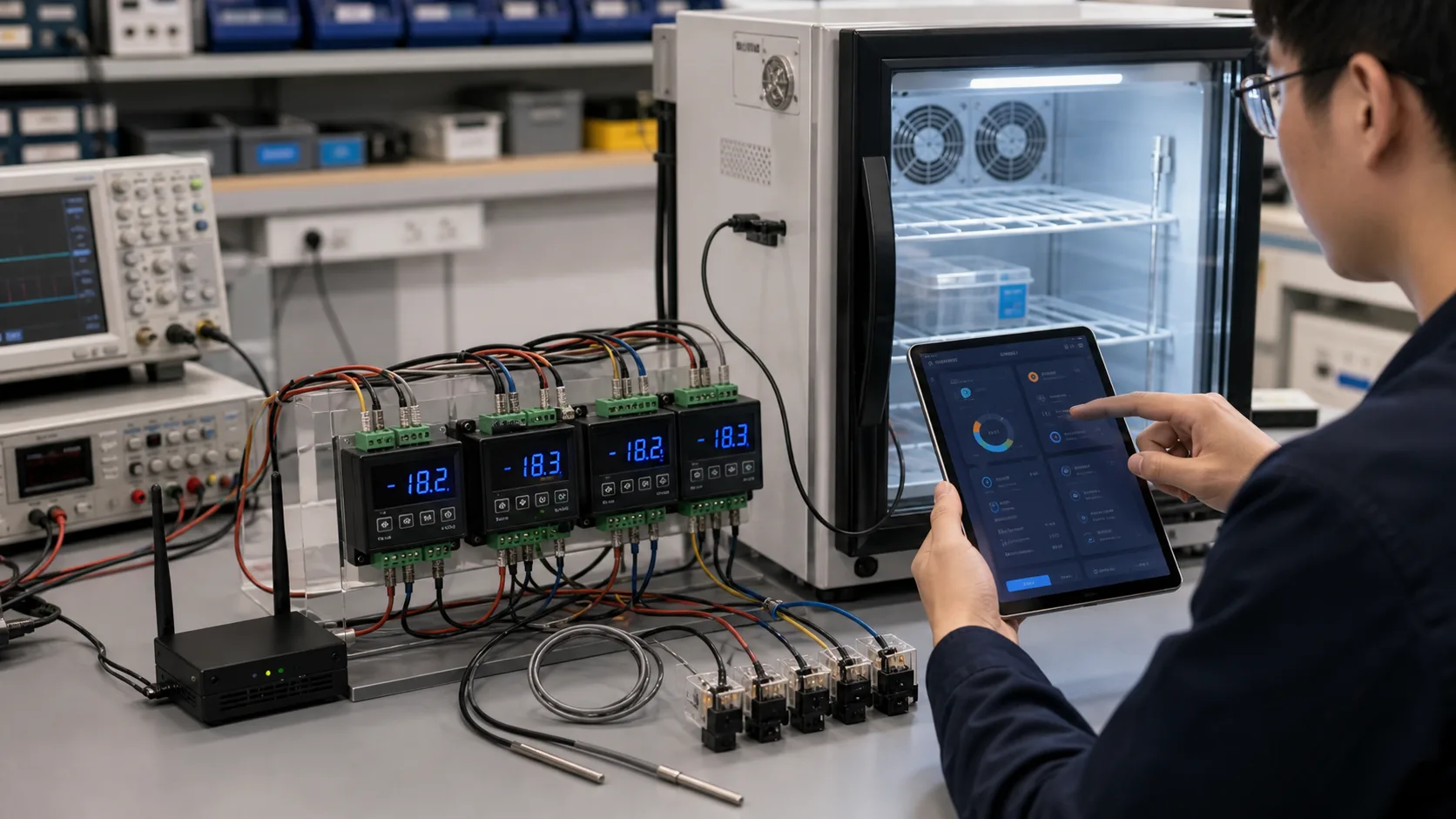
Best fit for refrigeration OEMs upgrading traditional thermostats
Commercial refrigeration OEMs, ODMs, controller manufacturers, beverage cooler brands, and smart equipment product teams
- Customer problem
- Traditional digital thermostats can control cooling locally, but they rarely provide remote visibility, alarm evidence, OTA updates, or differentiated connected-product value.
- ZedIoT delivery
- ZedIoT helps define Wi-Fi refrigeration controller hardware, display and panel behavior, probe and output logic, firmware, data points, Tuya or ZedIoT integration, and production handoff.
- Expected outcome
- The result is an OEM-ready connected thermostat path that preserves reliable local refrigeration control while adding remote monitoring and service value.
Turn a digital thermostat into a connected product line
Start from the existing cabinet control logic, then add Wi-Fi onboarding, data points, OTA, and monitoring workflows.
- Panel and display behavior
- Probe and relay logic
- Wi-Fi and BLE onboarding
- Tuya, ZedIoT, or private cloud path
How a thermostat upgrade becomes a connected refrigeration product
The upgrade combines local refrigeration control, Wi-Fi connectivity, data-point design, OTA, and platform workflows into one OEM-ready product path.
Cabinet control
Local cooling, defrost, fan, light, and alarm logic stays reliable inside the controller.
Connectivity
Wi-Fi and BLE onboarding add remote visibility, mobile setup, and update paths to the thermostat product.
Data model
Temperature, state, parameters, faults, firmware, and cabinet identity become clear platform objects.
Production handoff
Test scripts, installation guides, parameter sheets, and version records support repeatable OEM rollout.
What the solution includes
The scope is shaped around the scenario, existing devices, required integrations, operating team, and rollout stage.
Thermostat replacement planning
Compare current panel size, wiring, probes, relay outputs, cabinet safety logic, and installation constraints.
Firmware and data points
Define cooling, defrost, fan, light, alarm, probe, parameter, and status data points before platform integration.
OEM customization
Adapt display, button logic, enclosure, branding, terminal definition, firmware behavior, and production documentation.
Cloud and app integration
Connect through Tuya, ZedIoT, or a customer-owned platform with OTA, alarms, roles, and fleet dashboards.
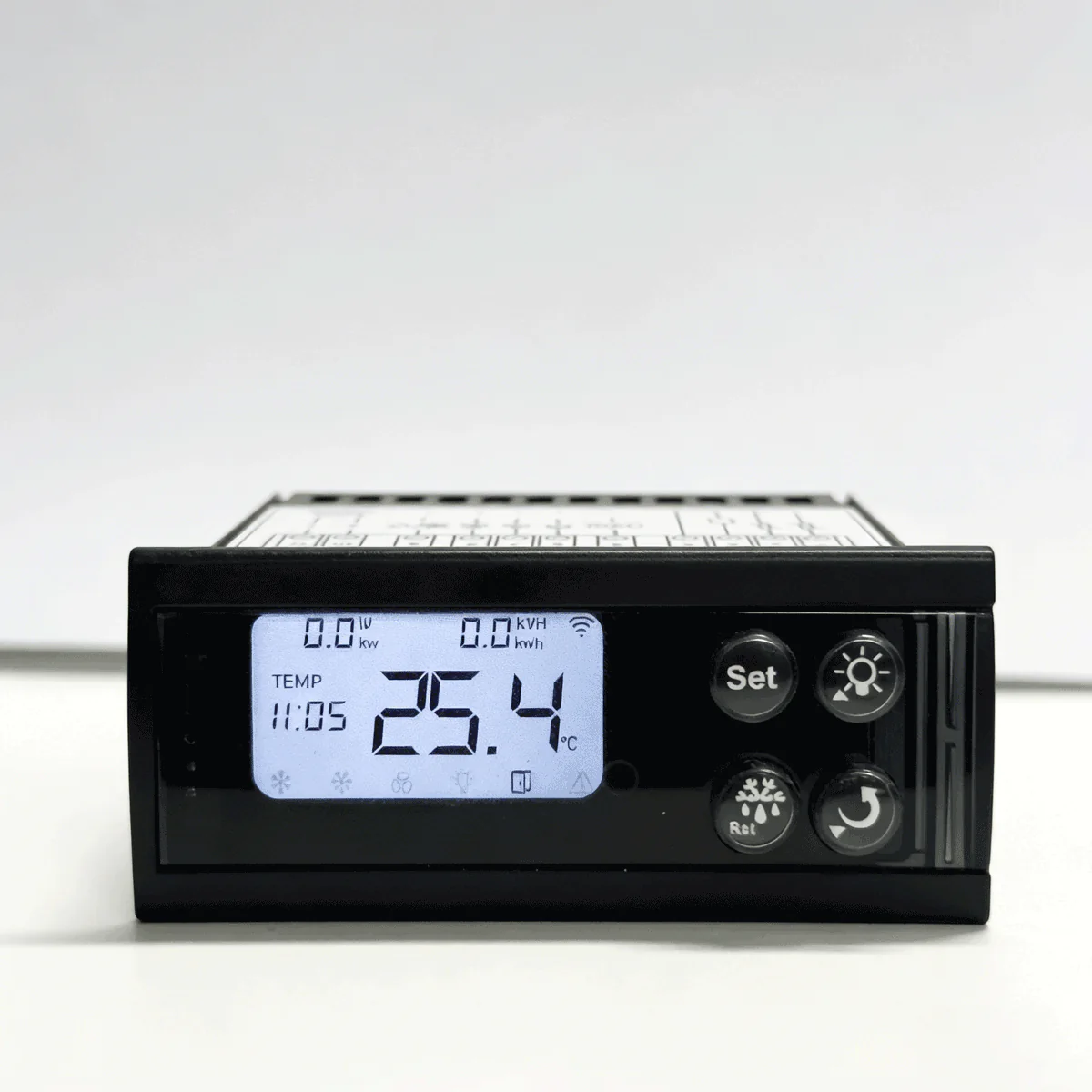
Controller, firmware, and platform should be designed together
The panel, probes, relay outputs, data model, and cloud workflow need one product definition before pilot and production.
- Do not replace a thermostat by dimensions alone; confirm wiring, probes, relays, safety limits, and cabinet electrical design.
- Freeze the data-point model before app, platform, firmware, and production-test work diverge.
- Clarify whether the OEM project uses Tuya, ZedIoT, private cloud, or a hybrid integration path.
- Plan EVT/DVT/PVT evidence, OTA policy, and production version records before bulk deployment.
Questions to answer before a solution pilot
Can the controller replace our existing digital thermostat?
Possibly, but replacement depends on panel size, terminal definition, relay outputs, probe type, power supply, cooling and defrost logic, and cabinet safety requirements.
Can the panel, buttons, firmware, and data points be customized?
Yes. OEM projects can define display behavior, button logic, parameter menus, data points, alarm rules, firmware, branding, documentation, and production test requirements.
Can it connect to Tuya or our own cloud?
Yes. The integration path can use Tuya, ZedIoT, or a customer-owned platform. The right option depends on app ownership, data control, certification, OTA, and operating workflow.
What information is needed for an OEM evaluation?
Prepare the current thermostat model, wiring diagram, probe type, relay outputs, cabinet types, target regions, expected quantity, platform preference, and required app or dashboard behavior.
Talk to an AI-IoT engineering team
Share your product idea, current hardware, target workflow, or integration challenge. We will help you evaluate the fastest path to a working prototype and production-ready system.
- AI + IoT product architecture review
- Hardware, firmware, cloud, and application integration
- Prototype planning and production support