
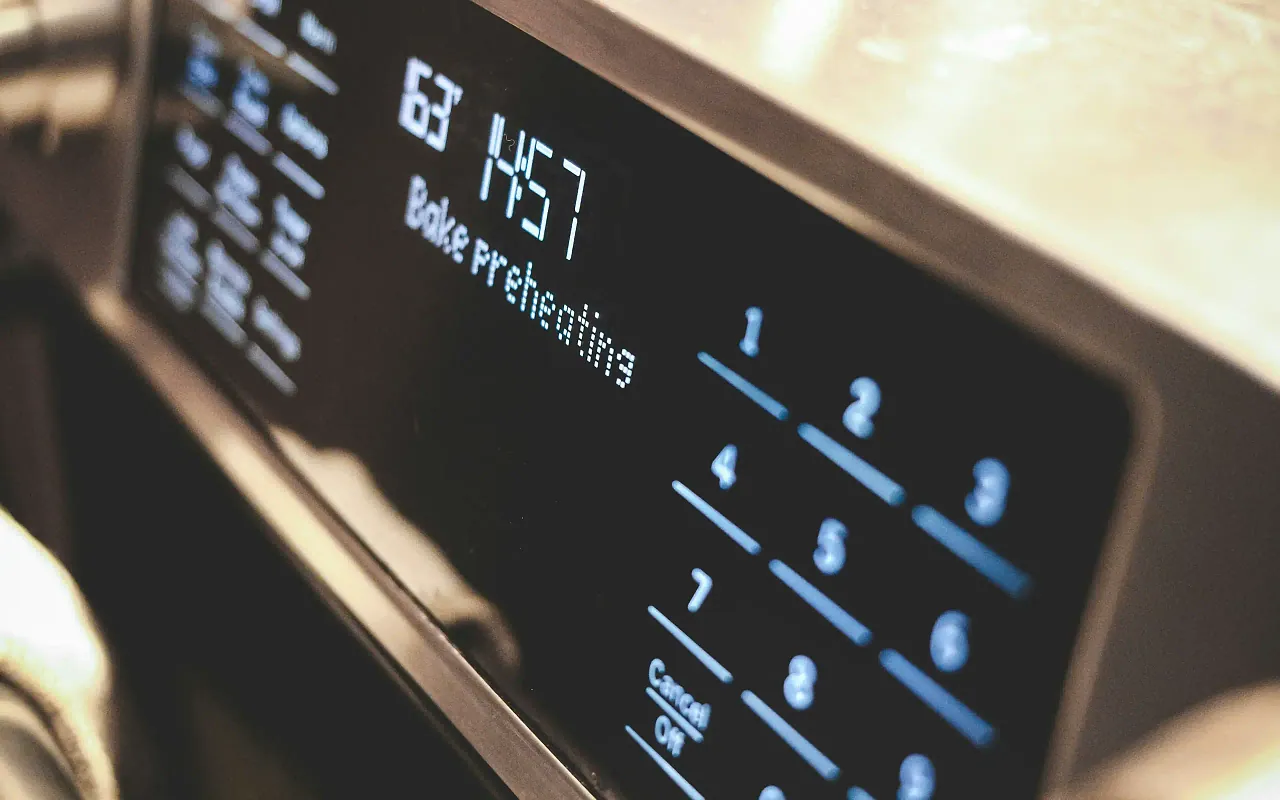
ESP32 Display Interface for an Industrial Embedded Device
An industrial device needed a stable local display that could present live measurements, equipment states, and alarms without compromising the control loop.
Keep the interface responsive while the device continues real-time work
Display refresh, SPI traffic, sensor acquisition, input handling, and fault reporting had to share limited embedded resources and remain understandable to operators.
- Project focus
- ESP32 industrial display interface
- Delivery scope
- Display bring-up + UI state model
- Operating goal
- Stable live display
Hardware, firmware, and product behavior had to be validated together
- 01
Integrate the TFT controller and board-level interface
- 02
Avoid flicker, blocking refresh, and inconsistent screen state
- 03
Translate measurements and faults into a legible operator workflow
- 04
Recover the display cleanly after communication or power faults
Separate acquisition, state, rendering, and input handling
ZedIoT implemented the display driver, rendering model, screen navigation, device-state binding, and fault recovery as distinct firmware responsibilities.
Display bring-up
SPI timing, controller initialization, orientation, color, and backlight behavior.
UI state model
Screens reflect validated device state rather than reading hardware ad hoc.
Responsive rendering
Dirty regions and bounded updates reduce unnecessary display work.
Fault handling
Communication errors and restarts return the UI to a known state.
A deterministic path from measurement to screen
Acquire
The control layer validates measurements and device events.
Model
A stable UI state exposes only information the screen needs.
Render
The display task updates bounded regions without blocking control.
Operate
Inputs and alarms move through explicit states and feedback.
A working display firmware baseline for device integration
The project produced a usable interface and a firmware structure that could be extended as the industrial product matured.
Stable live display
Measurements and device states update without coupling every screen to hardware timing.
Operator-focused workflow
The interface prioritizes status, alarms, and actions over decorative screens.
Maintainable firmware
Display drivers, screen logic, and device behavior remain separable for future revisions.
Final readability, touch or key behavior, EMC tolerance, boot time, and display lifetime must be validated on production hardware and in the target environment.
ESP32 industrial display interface questions
What did ZedIoT deliver for this esp32 industrial display interface project?
ZedIoT implemented the display driver, rendering model, screen navigation, device-state binding, and fault recovery as distinct firmware responsibilities. The final scope depended on the customer's devices, interfaces, operating workflow, and acceptance criteria.
Can this project pattern be adapted to another product or site?
Yes. The reusable pattern is the way acquire, model, render are connected. Device protocols, deployment topology, data ownership, and operating rules are validated for each new project.
What should be confirmed before starting a pilot?
A useful pilot starts with representative hardware, interface documentation, real operating conditions, expected users, failure cases, and measurable acceptance criteria. Final readability, touch or key behavior, EMC tolerance, boot time, and display lifetime must be validated on production hardware and in the target environment.
Planning a related AI + IoT project?
Share the current device or system, the operating problem, available interfaces, intended users, and the result you need to validate. ZedIoT can help define a focused prototype and production path.
- AI + IoT product architecture review
- Hardware, firmware, cloud, and application integration
- Prototype planning and production support