
Medical Instrument Software and Connectivity Modernization
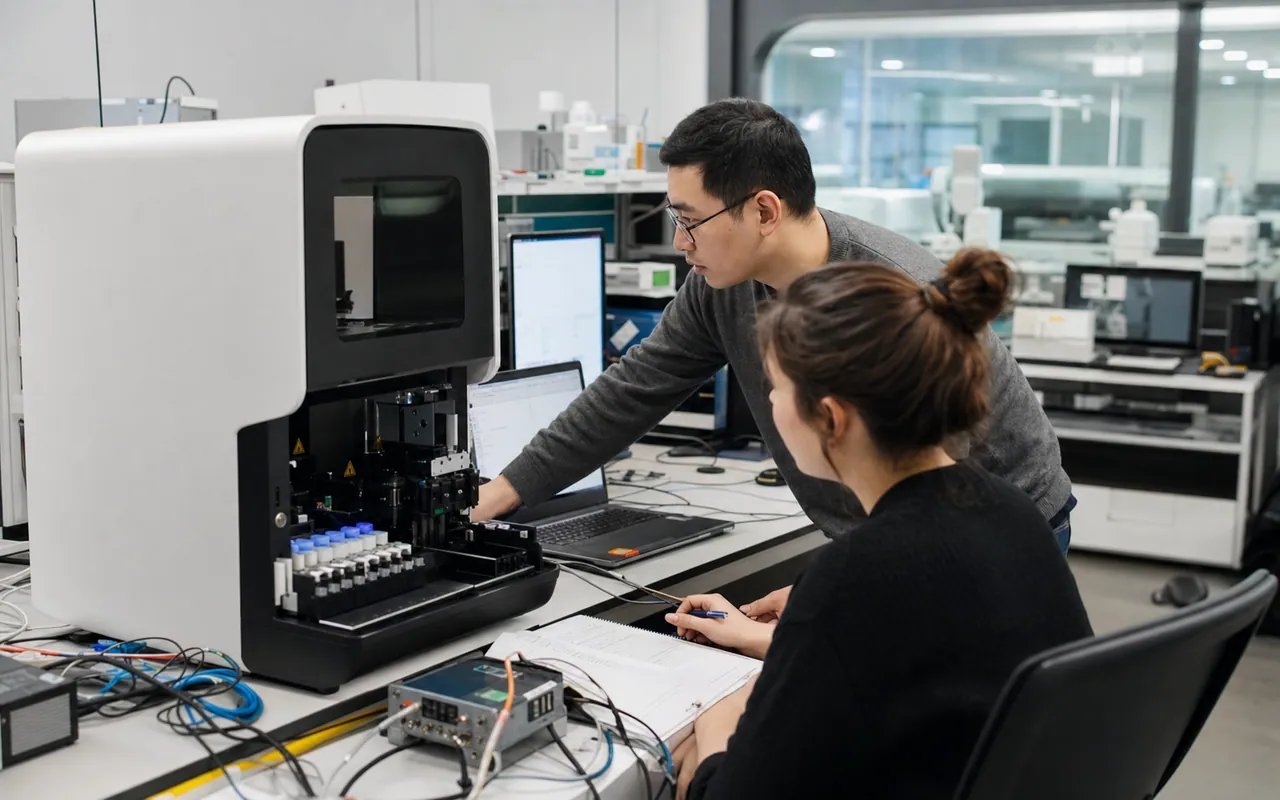
A medical-equipment program needed to modernize instrument analysis, control software, reagent algorithms, middleware, and the path from device data to managed applications.
Modernize the software chain without weakening instrument behavior
The work had to respect existing control logic and data formats while making the application, algorithms, connectivity, and service workflow easier to evolve and support.
- Project focus
- medical instrument modernization
- Delivery scope
- Instrument interface + Analysis software
- Operating goal
- Separated responsibilities
Hardware, firmware, and product behavior had to be validated together
- 01
Understand instrument states, tests, and error conditions
- 02
Separate control logic from presentation and data management
- 03
Maintain traceability across samples, reagents, results, and device versions
- 04
Create a safe path to middleware and private platform integration
Treat the instrument, host application, and middleware as one product system
ZedIoT organized the work around instrument communication, analysis and control, reagent-related algorithms, operator software, data middleware, and controlled integration with customer systems.
Instrument interface
Device commands, states, results, errors, and recovery are modeled explicitly.
Analysis software
Operator workflows connect tests, samples, reagents, results, and maintenance.
Data middleware
Validated records move between instruments and approved information systems.
Lifecycle support
Versioning, diagnostics, logs, and acceptance evidence support future releases.
From instrument action to governed result
Control
The host application coordinates instrument states and test actions.
Analyze
Algorithms process measurements with versioned parameters.
Review
Operators inspect results, errors, and quality information.
Integrate
Approved records move through middleware to downstream systems.
A clearer software architecture for an evolving instrument family
The case shows how device control, algorithms, user workflow, and data integration can be modernized without treating the instrument as a generic cloud endpoint.
Separated responsibilities
Instrument communication, analysis, UI, and data integration could evolve with clearer boundaries.
Traceable records
Results and operating evidence remained associated with device, sample, parameter, and version context.
Integration path
Middleware created a controlled route toward customer laboratory or private platform systems.
Clinical claims, regulated validation, cybersecurity submissions, and market authorization remain product- and jurisdiction-specific responsibilities requiring qualified customer and regulatory teams.
medical instrument modernization questions
What did ZedIoT deliver for this medical instrument modernization project?
ZedIoT organized the work around instrument communication, analysis and control, reagent-related algorithms, operator software, data middleware, and controlled integration with customer systems. The final scope depended on the customer's devices, interfaces, operating workflow, and acceptance criteria.
Can this project pattern be adapted to another product or site?
Yes. The reusable pattern is the way control, analyze, review are connected. Device protocols, deployment topology, data ownership, and operating rules are validated for each new project.
What should be confirmed before starting a pilot?
A useful pilot starts with representative hardware, interface documentation, real operating conditions, expected users, failure cases, and measurable acceptance criteria. Clinical claims, regulated validation, cybersecurity submissions, and market authorization remain product- and jurisdiction-specific responsibilities requiring qualified customer and regulatory teams.
Planning a related AI + IoT project?
Share the current device or system, the operating problem, available interfaces, intended users, and the result you need to validate. ZedIoT can help define a focused prototype and production path.
- AI + IoT product architecture review
- Hardware, firmware, cloud, and application integration
- Prototype planning and production support