
Build a custom IoT SaaS platform faster
Launch a maintainable platform for device onboarding, telemetry, remote control, rules, alarms, dashboards, APIs, tenant roles, and service operations without rebuilding every layer from zero.
Platform product, custom build, or focused engineering service?
The right path depends on how much of the operating model is already defined. Start with a reusable foundation, commission a custom platform, or validate one technical loop before making the larger platform decision.
Start from the ZedAIoT Platform
Use the existing device, rules, dashboard, tenant, API, and operations foundation when speed and maintainability matter more than rebuilding every module.
Review the platform product →Build a custom IoT SaaS platform
Choose custom platform development when your device model, workflows, commercial model, user experience, integrations, or deployment boundary are product differentiators.
View platform development →Solve one device-to-cloud problem first
Start with firmware, gateway, protocol, cloud, app, or business-system integration when a complete platform decision would be premature.
Choose an engineering service →Still deciding? Share the device, user roles, and first operating workflow, and we will recommend the smallest useful starting scope.
Operate the complete device lifecycle, not only a dashboard
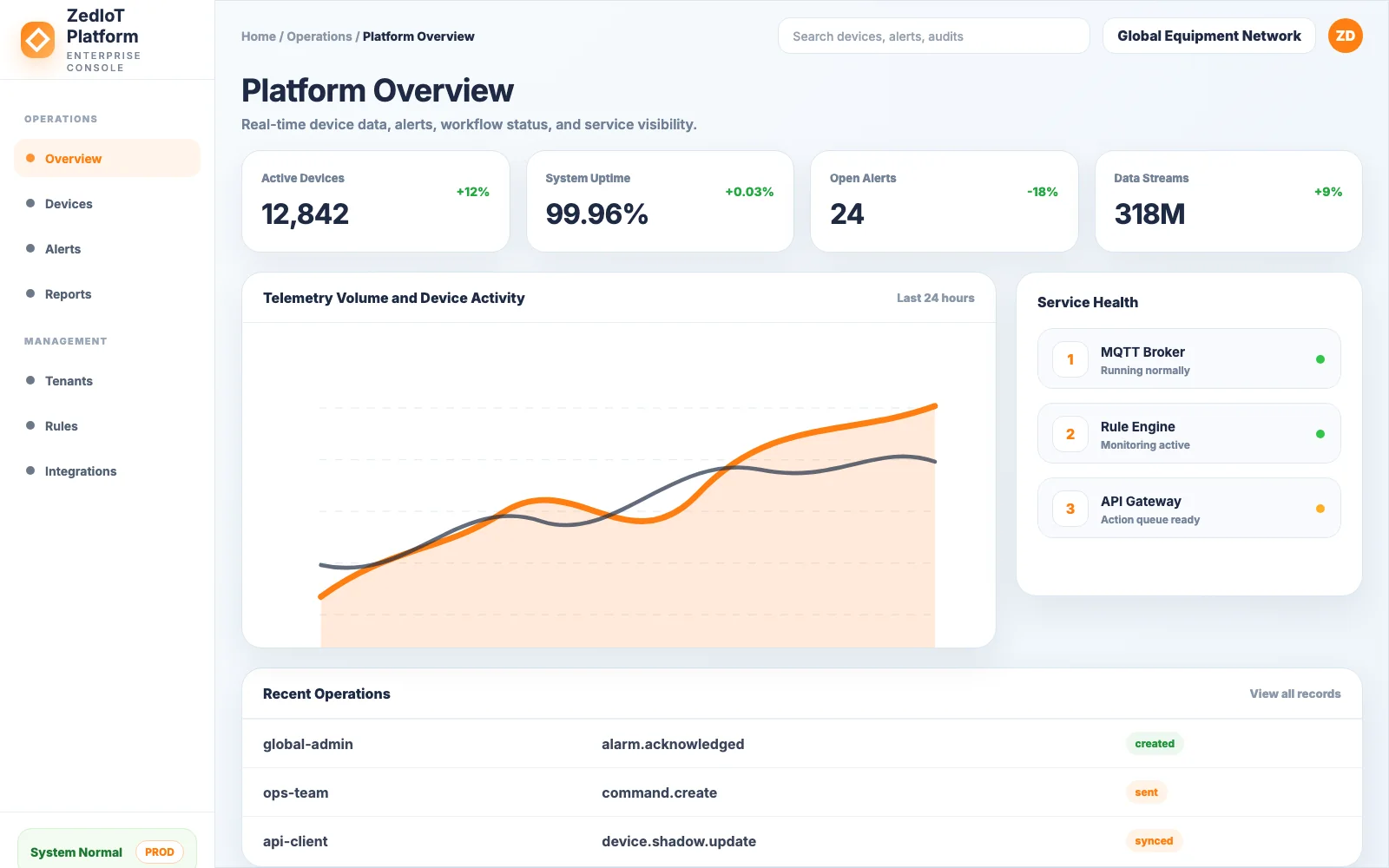
A useful AIoT platform keeps device identity, data, commands, service actions, customer access, and external systems connected.
Onboard
Register devices, ownership, product models, credentials, and commissioning state.
Observe
Collect telemetry, health, location, alarms, logs, and lifecycle history.
Control
Issue remote commands, settings, schedules, firmware actions, and guarded workflows.
Automate
Turn device events into rules, alerts, work orders, AI actions, and integrations.
Operate
Manage tenants, roles, sites, reports, service records, and customer portals.
Integrate
Connect apps, ERP, CRM, WMS, CMMS, data services, and customer APIs.
From field event to accountable action
The platform model is designed around an operating loop: connect a trusted device, normalize its data, decide what should happen, record the action, and integrate the result.
Connect
Devices, controllers, gateways, mobile onboarding, and protocol adapters establish a trusted device identity and data path.
Model
Product models normalize telemetry, commands, configuration, firmware, ownership, and lifecycle state.
Act
Rules, alarms, remote actions, work orders, and AI workflows turn device events into accountable operations.
Integrate
APIs and event streams connect the platform with apps, portals, ERP, CRM, WMS, CMMS, and analytics.

Build only the platform modules the product and operation require
Start with one representative workflow, then expand the shared platform capabilities as the device fleet and customer model become clear.
Device onboarding and product models
Model device types, identifiers, capabilities, data points, commands, firmware, and customer ownership before connecting a fleet.
Telemetry and remote operations
Collect status and telemetry, issue controlled commands, manage configuration, and preserve an auditable device history.
Rules, alarms, and service workflows
Turn events into alerts, escalation, work orders, maintenance records, and business-system actions.
Dashboards, reports, and tenant roles
Give operators, customers, distributors, and service teams the views and permissions required for daily work.
APIs and enterprise integration
Connect ERP, CRM, WMS, CMMS, data platforms, mobile apps, and customer portals through documented interfaces.
Cloud, private, and hybrid deployment
Choose managed cloud, customer-owned infrastructure, or hybrid edge and cloud deployment based on security and operating constraints.
Choose the ownership boundary before implementation
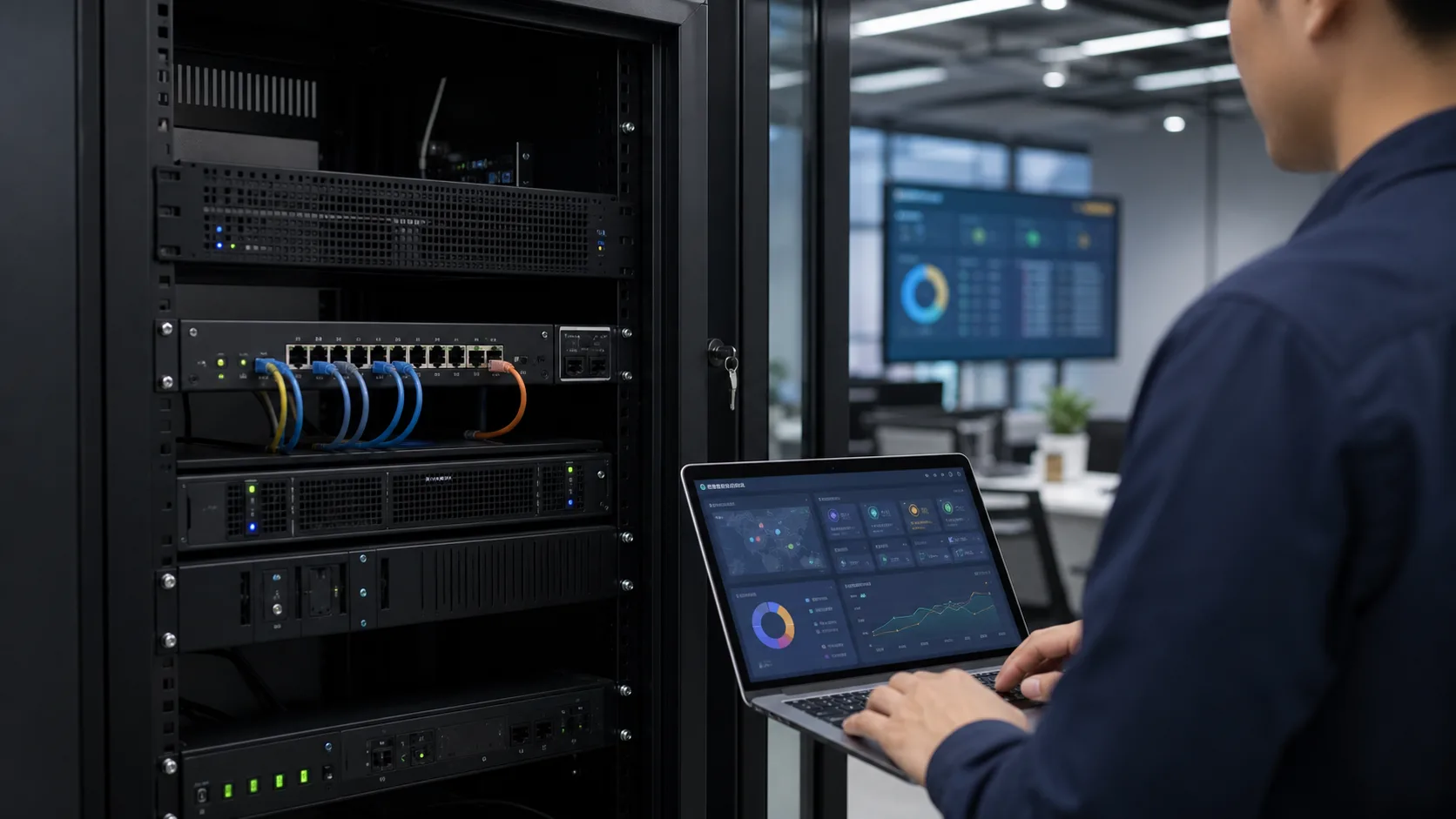
Infrastructure location is only one decision. Identity, monitoring, backup, upgrades, data retention, support access, and failure recovery must be defined with it.
Managed cloud
A practical route for fast delivery, centralized upgrades, and lower infrastructure overhead.
Customer-owned cloud
Deploy into the customer cloud account with agreed identity, observability, backup, and upgrade boundaries.
Private or hybrid
Keep sensitive workloads, local response, or field continuity inside owned infrastructure while coordinating with cloud services.
Use the same platform foundation across different operating models
The interface and workflows change by industry, but the device lifecycle, permissions, events, and integration responsibilities remain explicit.
Equipment fleet operations
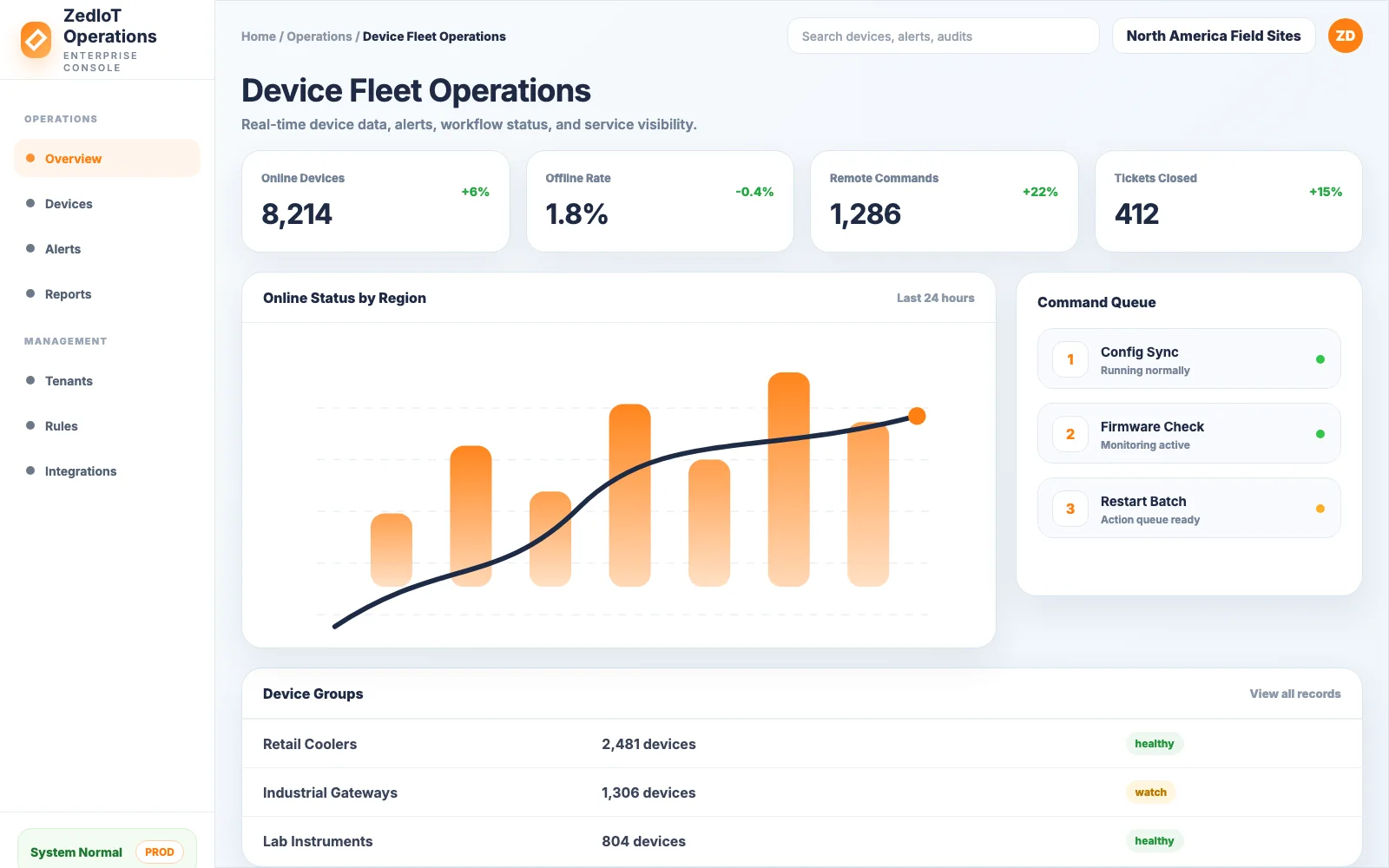
Manage device status, alarms, remote actions, maintenance evidence, and service workflows across customers and sites.
Review the implementation path →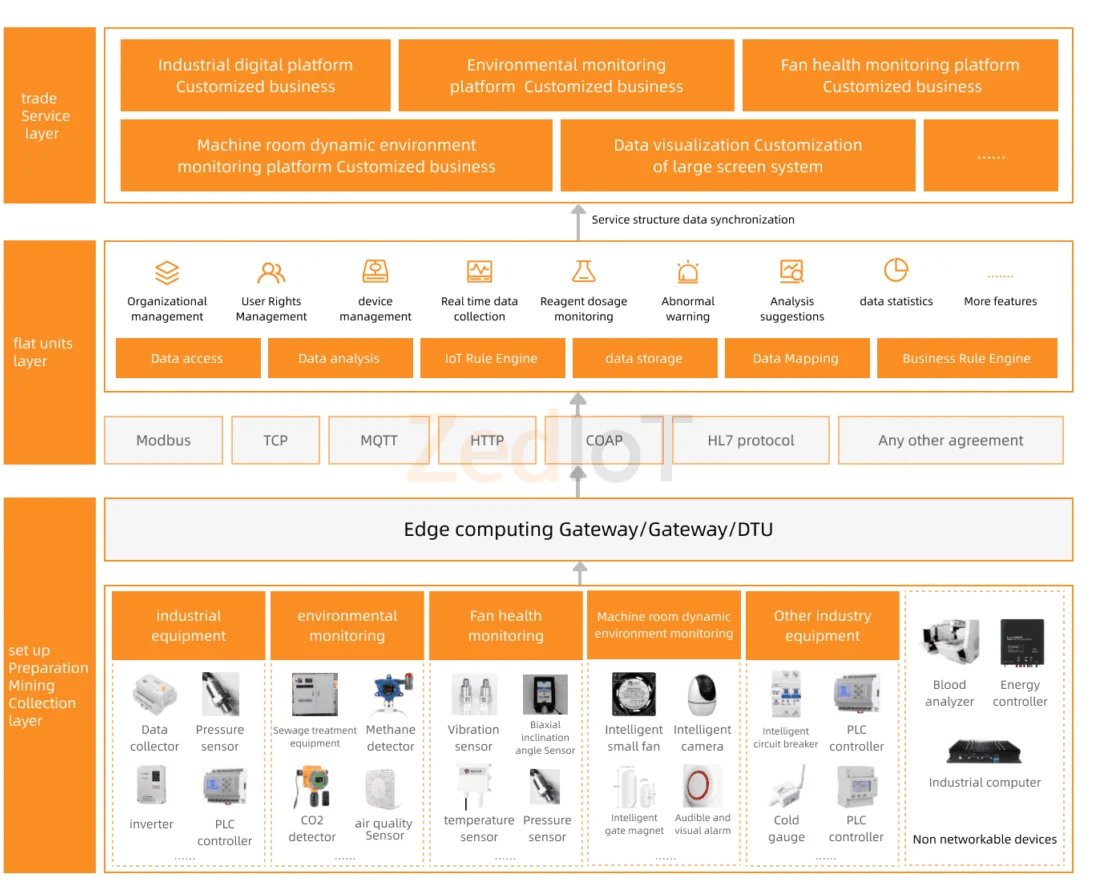
Industrial and edge integration
Connect controllers, gateways, protocols, local rules, buffered data, and cloud operations without losing field diagnostics.
Review the implementation path →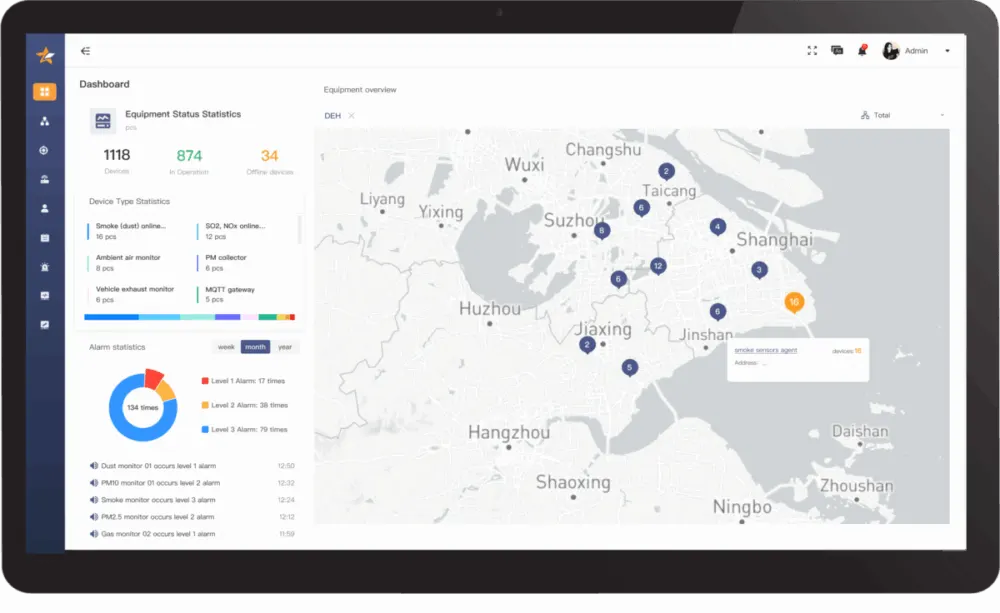
Customer-facing IoT SaaS
Deliver branded portals, mobile workflows, tenant roles, reports, subscriptions, and APIs on a maintainable platform base.
Review the implementation path →Prove the device operations loop before scaling the fleet
A pilot should validate the highest-risk device, workflow, and integration assumptions, not only render a dashboard.
- 01
Define the operating model
Clarify device types, customer roles, workflows, integrations, deployment, and the first measurable outcome.
- 02
Validate one device loop
Prove identity, telemetry, command, alarm, and service action with a representative device before broad rollout.
- 03
Build the platform scope
Implement product models, dashboards, rules, roles, APIs, reports, and operational tooling around the approved loop.
- 04
Roll out with observability
Add fleet onboarding, monitoring, release controls, documentation, support handoff, and iteration evidence.
Questions to resolve before platform scope is locked
Clarify device ownership, operating workflows, deployment constraints, and system integrations before committing to a platform architecture.
Is ZedAIoT a ready-made platform or a custom development service?
It is a reusable platform foundation combined with engineering services. We configure and extend device models, workflows, dashboards, APIs, deployment, and customer-facing features around the product and operating model.
Can the platform run in our own cloud or private infrastructure?
Yes. Deployment can be planned for managed cloud, customer-owned cloud, on-premises infrastructure, or hybrid edge and cloud operation. The choice affects identity, observability, backup, upgrade, and support design.
How are existing devices connected?
Existing devices can connect through MQTT, HTTP, TCP, serial protocols, Modbus, gateways, embedded SDKs, or customer APIs. A pilot normally validates one representative device and its highest-risk workflow first.
Can ZedAIoT integrate with our ERP, CRM, WMS, or service system?
Yes. We define the event semantics, ownership, retries, permissions, audit records, and API boundaries required to connect device operations with customer-owned business systems.
Plan the first AIoT platform operating loop
Share your device type, current protocol or cloud, required user roles, deployment constraints, and the first workflow that must become observable and controllable.
- AI + IoT product architecture review
- Hardware, firmware, cloud, and application integration
- Prototype planning and production support