
Deciding on the right esp32 microcontroller for a high-performance project involves more than just looking at the clock speed. With the rapid evolution of esp32 versions—from the AI-capable S3 to the connectivity-focused C6—developers often face a "connectivity dilemma". This ESP32 chip series comparison provides a technical deep dive into architecture, power consumption, and protocol support to help you navigate the 2025 AIoT landscape. Whether you are debating esp32-S3 vs C3 for your next HMI or a simple sensor node, this guide simplifies the selection process.
1. The Original Intent and Technical Positioning of ESP32 Chips Series
1.1 The Common Dilemma of Embedded Systems Before ESP32
Before ESP32, embedded projects often faced an awkward dilemma:
Either choose an MCU—simple system, good power efficiency, but networking becomes complicated; or go with a Linux board—feature-rich, but with slow boot times, high power consumption, and high system maintenance costs.
In many projects, "whether it can stably connect to the network" becomes a technical challenge rather than a default assumption. Wi-Fi modules, protocol stacks, and task scheduling were scattered across multiple components, making the system more complex and error-prone.
This wasn’t a problem with a particular platform, but rather the lack of a middle ground between traditional MCUs and Linux SBCs.
1.2 How ESP32 Solves the Problem — In a Very Direct Way
The ESP32’s approach is not complicated, but it is very pragmatic.
Instead of trying to “push MCU performance to the limit,” it integrates Wi-Fi and Bluetooth directly into the SoC, making connectivity a default feature of embedded systems.
From an engineering perspective, this change is significant:
- Networking is no longer an external module—it becomes part of the system design
- Real-time and network tasks can be scheduled collaboratively within a single chip
- The system structure becomes more fixed and predictable
In other words, ESP32 isn’t about being “more powerful”—it’s about making embedded systems easier to use and maintain.
2. ESP Chip Series and Their Application Domains
Espressif has developed the ESP32 family into a large SoC ecosystem with different models targeting different application needs.
2.1 ESP Chips Roadmap(SoC Evolution Perspective)
Below is the ESP chip series roadmap (time × technical direction):
| Series | Typical Model | Core Features | Notes |
|---|---|---|---|
| ESP8266 Series | ESP8266 | Wi-Fi single-core MCU, low-cost IoT | The first low-cost Wi-Fi MCU by Espressif, still used in many simple IoT scenarios. |
| ESP32 Main Series | ESP32 Classic | Wi-Fi + BLE, mature and stable | A broad category with multiple models like ESP32-D0WD, covering Wi-Fi, Bluetooth, low power, and local intelligence. |
| ESP32-S Series | ESP32-S2 | Wi-Fi + USB support | Focused on Wi-Fi and vector computing support |
| ESP32-S3 | Wi-Fi + BLE + Vector Instructions | Added BLE and vector instruction expansion | |
| ESP32-C Series | ESP32-C2 | Low power Wi-Fi + BT5 LE | Focused on low power, security, and modern connectivity |
| ESP32-C3 | RISC-V core, low power, compliance-friendly | ||
| ESP32-C5 | Wi-Fi 6 + BT5 + Zigbee/Thread support | ||
| ESP32-H Series | ESP32-H2 | BLE + Zigbee | For BLE/IEEE 802.15.4 applications |
| ESP32-P Series | ESP32-P4 | High-integration HMI/Security | Next-gen with HMI and security focus |
2.2 Mainstream ESP32 Chips Application Scenarios
2.2.1 Classic ESP32: Fully Featured But Leaning Toward Mature Solutions
The earliest ESP32 is still used widely—not because it has the strongest performance, but because it's mature.
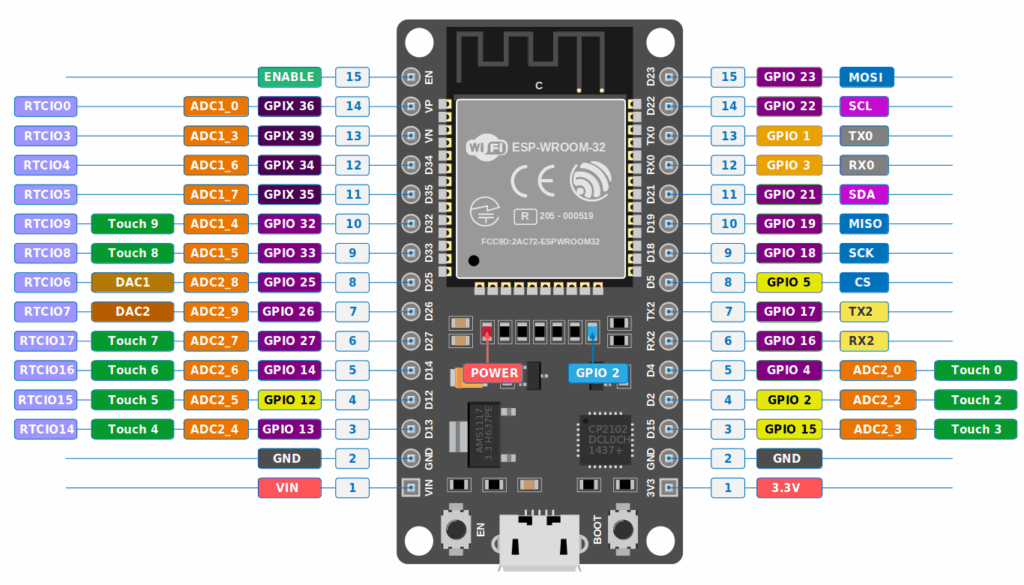
In engineering, maturity often means: more documentation for troubleshooting, and predictable behavior.
With a dual-core design and support for Wi-Fi, Bluetooth Classic, and BLE, plus rich interfaces, it became a default choice for smart homes, industrial IoT, and control devices.
However, it’s not optimized for new low-power or edge-computing needs. When demands for security, power, or instruction set capability increase, it feels “good enough, but not cutting edge.”
Best for:
- Mature IoT products in mass production
- Devices depending on Bluetooth Classic
- Complex functionality but modest computational needs
2.2.2 ESP32-S2: Tailored for USB and Security Features
ESP32-S2 doesn’t aim to replace the classic ESP32 but targets specific needs.
It’s single-core and removes Bluetooth, trading that for better USB support and enhanced security.
Often used where USB connection or firmware security matters—e.g., direct USB host communication or systems with high cybersecurity sensitivity.
It’s not a “downgraded ESP32” but a model with a different direction.
2.2.3 ESP32-C3: RISC-V Solution Prioritizing Power and Security
ESP32-C3 is the most distinctive variant.
Built on RISC-V, it’s designed to lower power, enhance security, and meet regulatory standards.
It’s not meant for high concurrency or complexity but is ideal for:
- Battery-powered devices
- Secure boot and encryption-centric products
- Cost/power-sensitive mass deployments
But not suited for high processing demands or complex logic.
2.2.4 ESP32-S3: The Most Discussed “Edge Intelligence” Model
ESP32-S3 is currently the most talked-about model, and for good reason.
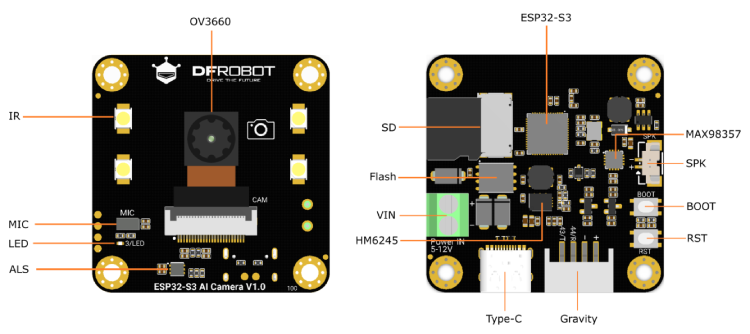
It adds vector instructions and wider memory bandwidth without changing ESP32’s core position, enhancing local compute capacity.
It doesn’t support heavy AI inference, but it can handle lightweight intelligence, like:
- Voice wake and basic command recognition
- Simple image or sensor classification
- Enhanced rule-based edge logic
Its value isn’t just in “running models,” but in running them reliably with low power and controlled complexity.
Curious how far ESP32-S3 can go with edge AI?
We tested TensorFlow Lite Micro on ESP32-S3 for real-world inference.
Read the in-depth S3 AI case study →
2.3 Quick Matching of ESP32 Comparison Table to Scenarios
| Model | Design Orientation | Best Fit Scenarios |
|---|---|---|
| ESP32 | Full features, mature and stable | Smart home, industrial control, classic IoT |
| ESP32-S2 | USB/Security-enhanced | USB devices, security-sensitive systems |
| ESP32-C3 | Low power, secure-first | Battery-powered, mass deployments |
| ESP32-S3 | Lightweight edge AI | Voice, simple AI, local logic |
The goal isn’t to pick “the strongest,” but to avoid picking the wrong one.
Not sure which chip fits your product and production plan? Our engineers validate your selection based on real deployment scenarios.
Avoid Costly ESP32 Selection Mistakes — Get Expert Validation
3. ESP32 Versions Capability Boundaries and System Characteristics
3.1 To Be Clear: ESP32 Is Still an MCU
No matter the model, ESP32 is still an MCU—not a Linux processor. This should be clear from the start to avoid poor system design.
From a hardware standpoint, it’s very consistent:
- Single or dual-core at 160–240 MHz
- Limited on-chip SRAM—careful program/data budgeting required
- Software architecture is RTOS-based, not multiprocess
This makes ESP32 ideal for clear, stable tasks, not complex, dynamic systems.
3.2 Defined Boundaries Are a Good Thing
Many engineering problems arise from unclear platform boundaries.
ESP32’s strength lies in how clearly its limits are defined.
Within these bounds, ESP32 is reliable for:
- Long-running control logic
- Power-sensitive networked terminals
- Real-time systems with predictable logic
If pushed beyond its design (e.g., complex UI or modular loading), issues will arise quickly.
3.3 From IoT to Lightweight Edge Intelligence
With models like ESP32-S3, ESP32’s scope now includes more local computing—vector instruction support, higher bandwidth, and basic support for inference frameworks.
Still, it’s not a high-performance AI platform. It now supports simple, controlled edge intelligence, like:
- Wake-on-voice
- Basic classification
- Enhanced rule logic
4. Application Scenarios: When ESP32 Is or Isn't the Right Fit
4.1 When ESP32 Is a “Suitable and Stable” Choice
Real-world success with ESP32 tends to come from clear boundaries and long-term deployment, not complexity.
Typical traits:
- Large device numbers
- Cost-constrained units
- Harsh environments
- Stable logic
Best applications:
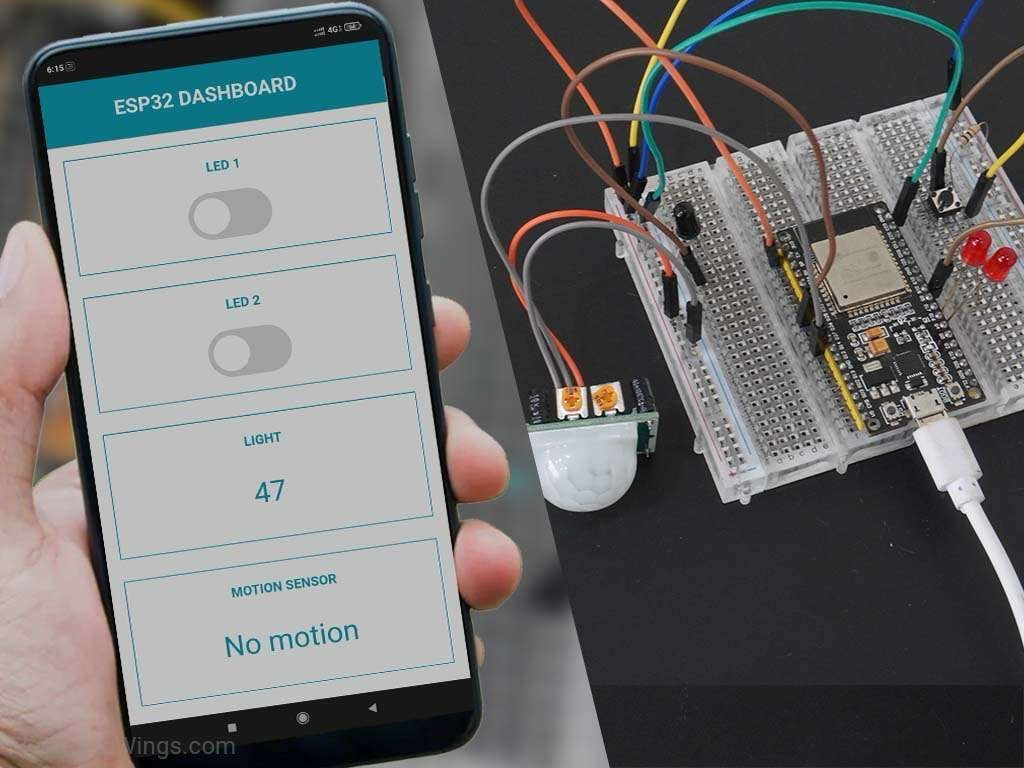
- Smart home/building devices (switches, sensors, gateways)
- Industrial data acquisition and control
- IoT main controllers needing reliable connectivity
These don’t strain ESP32’s performance and benefit from simplicity and predictability.
4.2 When ESP32 Should Not Be Considered
In some projects, ESP32 gets picked not for being ideal, but because it “seems to do everything,” increasing risk.
Avoid ESP32 if the project requires:
- Complex GUIs or high-res displays
- Linux ecosystem or multiprocessing
- Heavy, evolving local AI models
Even if the system runs, you’ll face costs in performance, maintenance, and scalability.
4.3 Application Suitability Quick Table
| Application Trait | ESP32 Fit |
|---|---|
| Long runtime, stable logic | ✅ Suitable |
| Power-sensitive, cost-limited | ✅ Suitable |
| Large-scale deployments | ✅ Suitable |
| Complex UI/graphics | ❌ Not suitable |
| High compute/AI needs | ❌ Not suitable |
| Linux dependency | ❌ Not suitable |
The goal is to eliminate bad choices, not promote a one-size-fits-all.
5. Future Trends and Predictions for ESP32 Chips Series
Espressif’s direction is clear: ESP32 will not evolve into a general-purpose high-performance platform, but deepen its strengths in low-power, high-connectivity, and system integration.
It will enhance:
- Security
- Power control
- Protocol support
And models like ESP32-S3 will modestly increase local compute for lightweight edge intelligence, prioritizing usability over brute force.
ESP32 will continue to serve connected endpoints, edge nodes, and embedded controllers, focusing on stable, long-term, low-cost operation—not speed.
Need help selecting or building with the right ESP32 chip version for your companies building ESP32-based products?
ZedIoT offers custom ESP32 development services for production-ready, power-optimized, and edge AI-capable systems.
Build Your ESP32 Product with Production-Ready Engineering →
FAQ
What is the main difference between ESP32-C3 and ESP32-S3?
ESP32-C3 is a RISC-V MCU focused on low power and security; ESP32-S3 uses Xtensa and adds vector instructions for edge AI tasks.
Does ESP32-S2 support USB natively?
Yes. ESP32-S2 includes native USB OTG support and enhanced security features for device identity or provisioning.
Which ESP32 chip supports edge AI workloads?
ESP32-S3 is the only ESP32 variant with vector instructions, making it suitable for voice wake, keyword spotting, and basic ML inference.
Is there a visual comparison of ESP32 chip versions by use case?
Yes. This article includes a table comparing ESP32-C3, S3, S2, and classic ESP32 for AI, power, security, and USB use cases.
Can ESP32 be used for secure, scalable IoT deployments?
Yes. ESP32-C3 supports secure boot and flash encryption, making it suitable for cost-sensitive, secure IoT nodes.