

Intelligent Wind Farm Structural and Equipment Monitoring
A wind-energy monitoring program needed to combine turbine vibration, tower settlement and movement, blade condition, edge processing, cloud analysis, and inspection evidence.
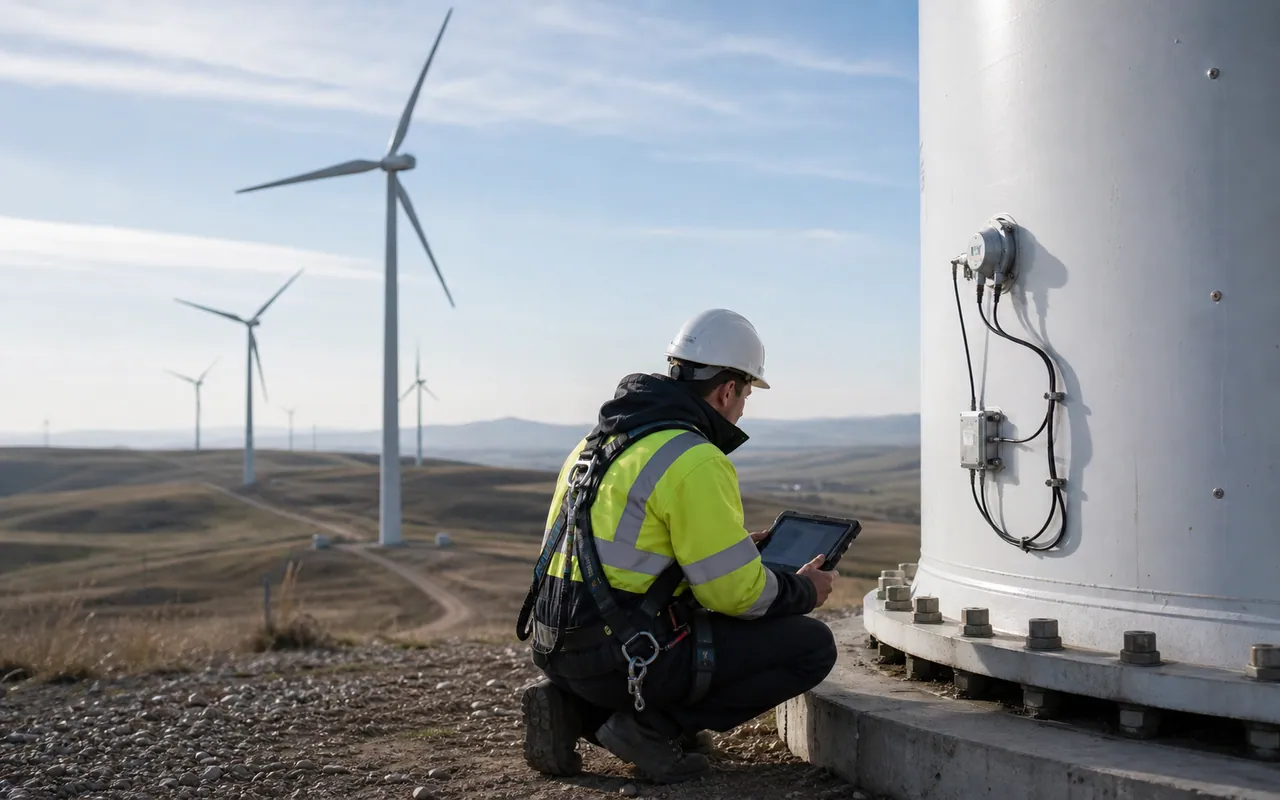
Detect developing structural and equipment conditions in a harsh remote environment
Sensor placement, wind load, operating state, weather, tower dynamics, communication, power, and inspection context all affect whether an alert represents a real issue.
- Project focus
- wind farm monitoring system
- Delivery scope
- Structural sensing + Edge processing
- Operating goal
- Layered condition evidence
The monitoring loop had to end in a real response
- 01
Measure vibration, settlement, tilt, sway, and blade-related signals
- 02
Separate operating and weather effects from abnormal behavior
- 03
Process and buffer data near remote turbines
- 04
Connect automatic alerts with inspection and expert diagnosis
Use layered sensing and review instead of one opaque condition score
ZedIoT combined field sensors, edge computers, feature processing, turbine and component models, cloud trends, configurable alarms, inspection records, and expert review.
Structural sensing
Sensors capture vibration, settlement, tilt, sway, and relevant environmental context.
Edge processing
Local filtering, features, buffering, and health checks reduce remote-data fragility.
Condition platform
Turbines, towers, blades, sensors, trends, and events remain associated.
Expert workflow
Alerts lead to review, inspection, diagnosis, and documented follow-up.
From remote sensor to inspected condition
Sense
Field instruments capture structural and equipment behavior.
Process
Edge services validate, compress, and buffer condition features.
Evaluate
Cloud trends and rules identify meaningful deviations.
Inspect
Experts and field teams review evidence and close actions.
A condition-monitoring loop that includes field inspection
The solution connected automatic sensing with configurable alarms, expert diagnosis, and onsite hardware work rather than treating analytics as a replacement for inspection.
Layered condition evidence
Structural, operational, environmental, and inspection data could be reviewed together.
Remote continuity
Edge buffering and health monitoring supported distributed wind assets.
Actionable diagnosis
Alerts entered an expert and field follow-up process with supporting trends.
Condition and structural conclusions require validated sensors, installation, turbine context, engineering thresholds, qualified experts, and an approved inspection and safety program.
wind farm monitoring system questions
What did ZedIoT deliver for this wind farm monitoring system project?
ZedIoT combined field sensors, edge computers, feature processing, turbine and component models, cloud trends, configurable alarms, inspection records, and expert review. The final scope depended on the customer's devices, interfaces, operating workflow, and acceptance criteria.
Can this project pattern be adapted to another product or site?
Yes. The reusable pattern is the way sense, process, evaluate are connected. Device protocols, deployment topology, data ownership, and operating rules are validated for each new project.
What should be confirmed before starting a pilot?
A useful pilot starts with representative hardware, interface documentation, real operating conditions, expected users, failure cases, and measurable acceptance criteria. Condition and structural conclusions require validated sensors, installation, turbine context, engineering thresholds, qualified experts, and an approved inspection and safety program.
Planning a related AI + IoT project?
Share the current device or system, the operating problem, available interfaces, intended users, and the result you need to validate. ZedIoT can help define a focused prototype and production path.
- AI + IoT product architecture review
- Hardware, firmware, cloud, and application integration
- Prototype planning and production support