

ZigBee Refrigeration Controller
A ZigBee smart thermostat upgrade for commercial refrigeration. It supports local cooling and defrost control, temperature probes, compressor/fan/light outputs, remote temperature monitoring, energy insight, and exception alerts for beverage coolers, fresh cabinets, low-temperature cabinets, freezers, and small cold rooms.
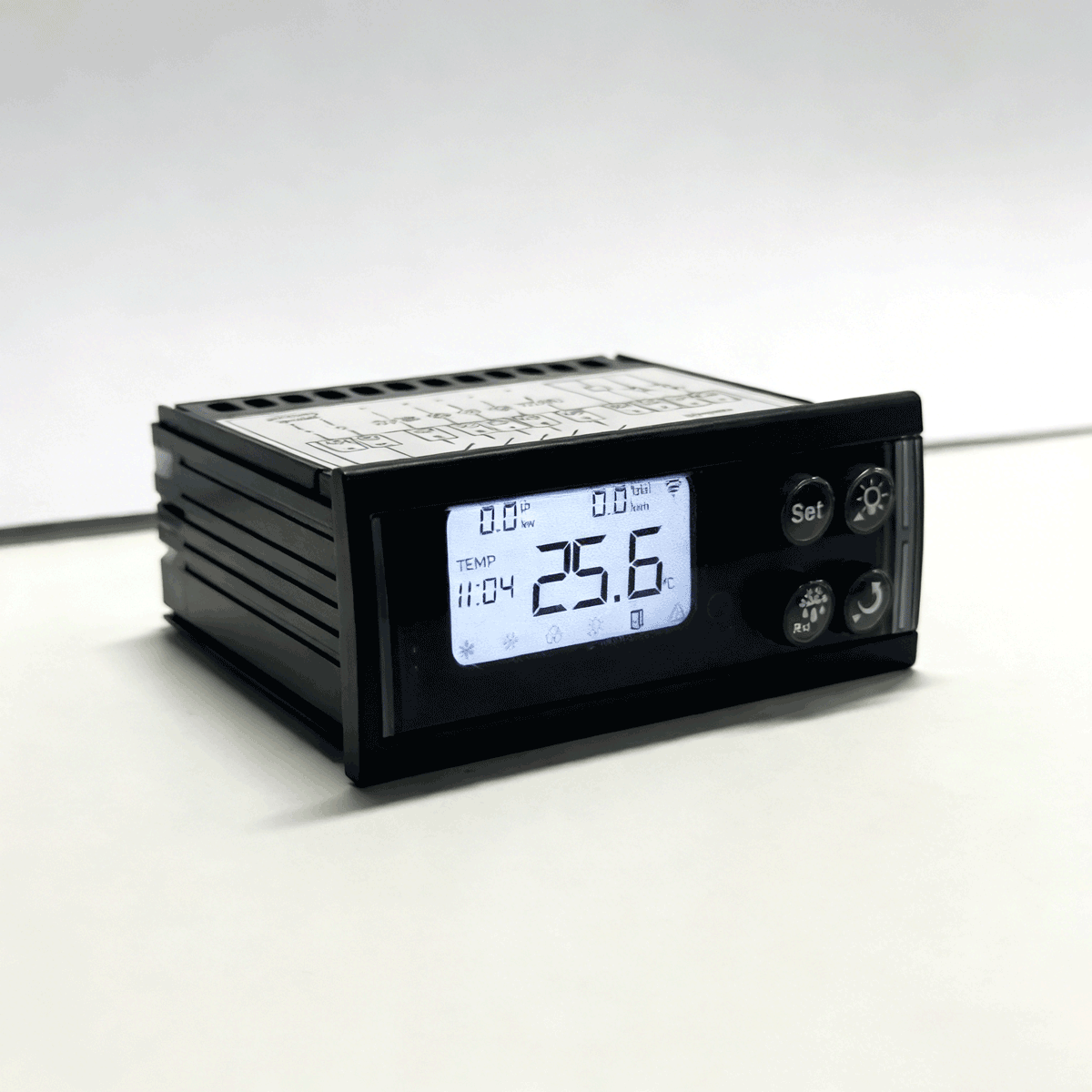
A connected thermostat upgrade for commercial refrigeration fleets
Traditional digital thermostats can control a single cabinet locally, but they do not solve remote supervision, fleet alarms, historical traceability, or service efficiency. The ZigBee version keeps local refrigeration logic while connecting multiple coolers through a store gateway into ZedIoT or a customer platform.
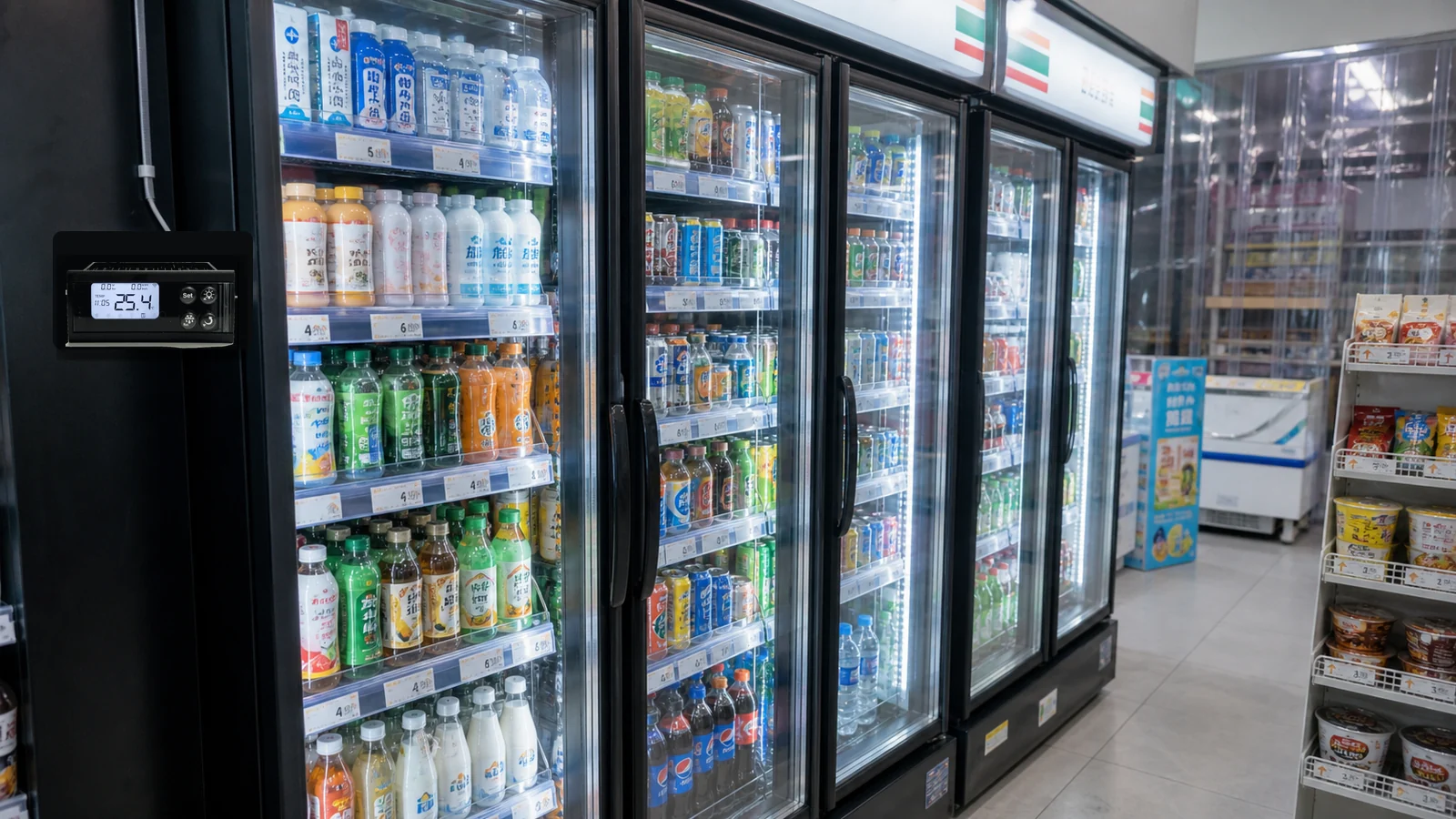
- Beverage coolers
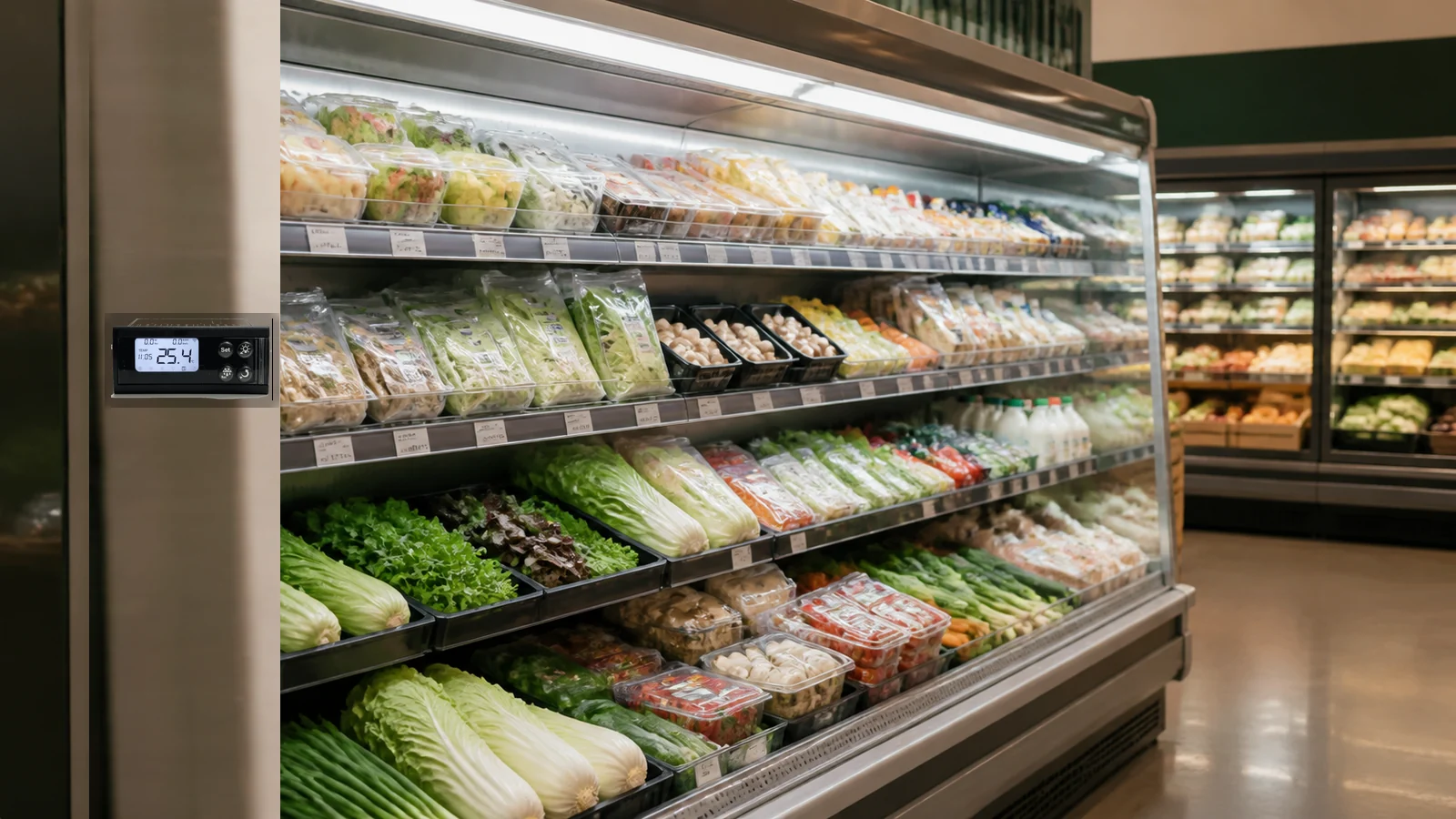
- Fresh food cabinets
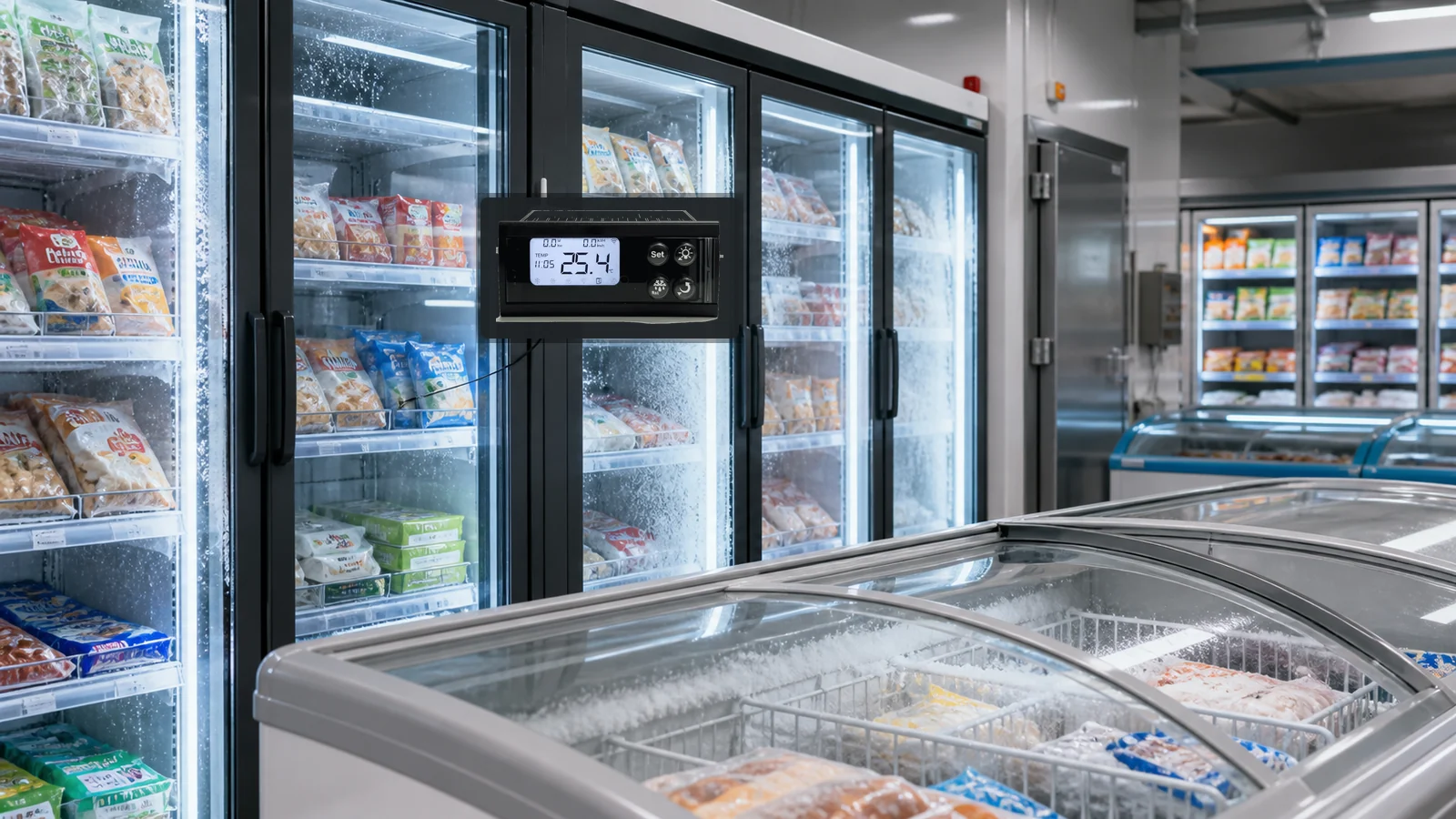
- Low-temperature cabinets and freezers
- Small cold rooms
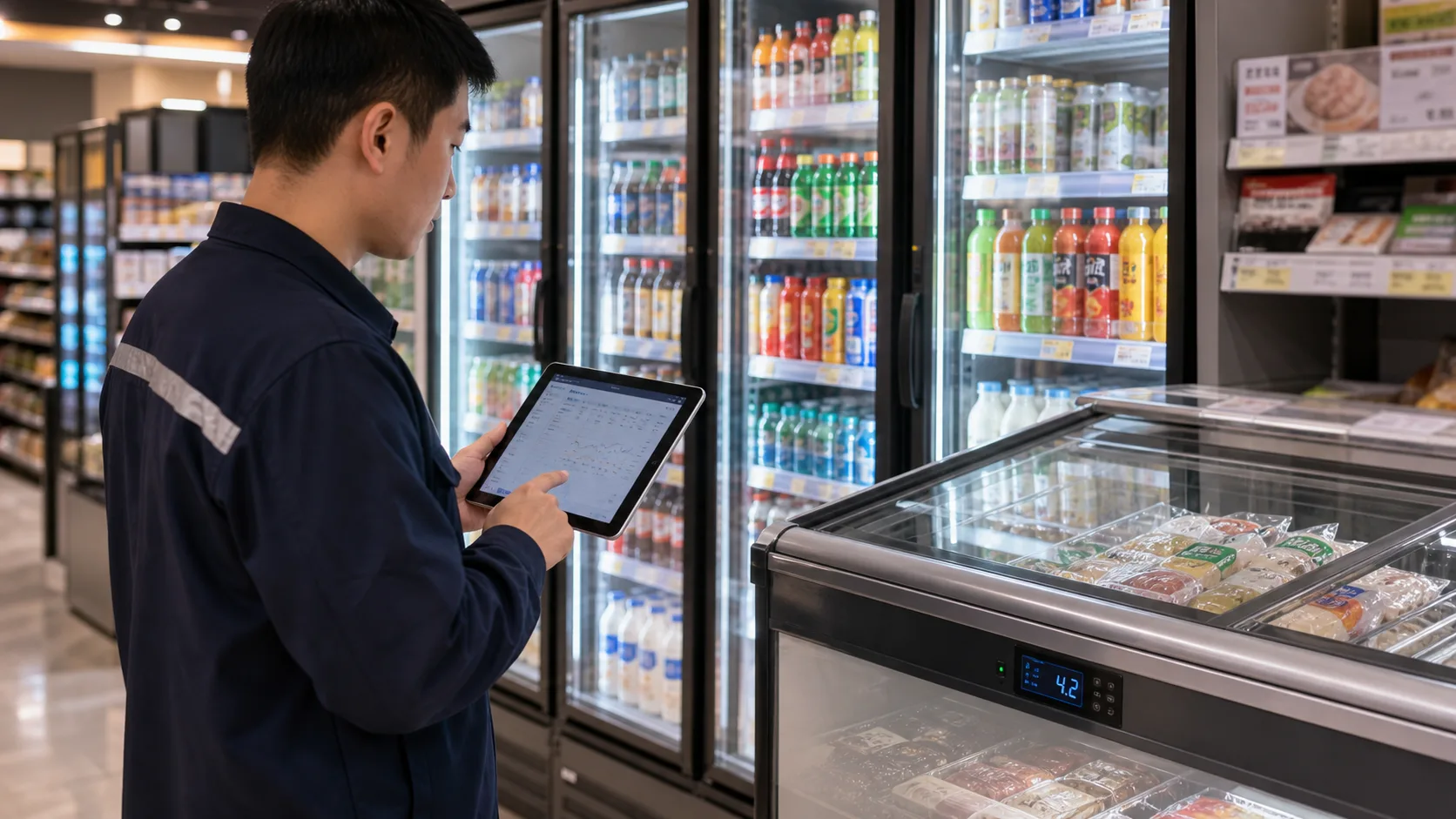
Upgrade traditional digital thermostats into connected refrigeration controllers
The controller first needs to keep local cooling, defrost, probe, and output logic reliable. ZigBee then lets many cabinets connect through a store gateway so temperature, compressor, defrost, door, and energy data become visible to operations teams.
- Local refrigeration logic remains primary
- Multiple cabinets connect through a store gateway
- Temperature and alarm history support food-safety and service workflows
What this product looks like in a real workflow
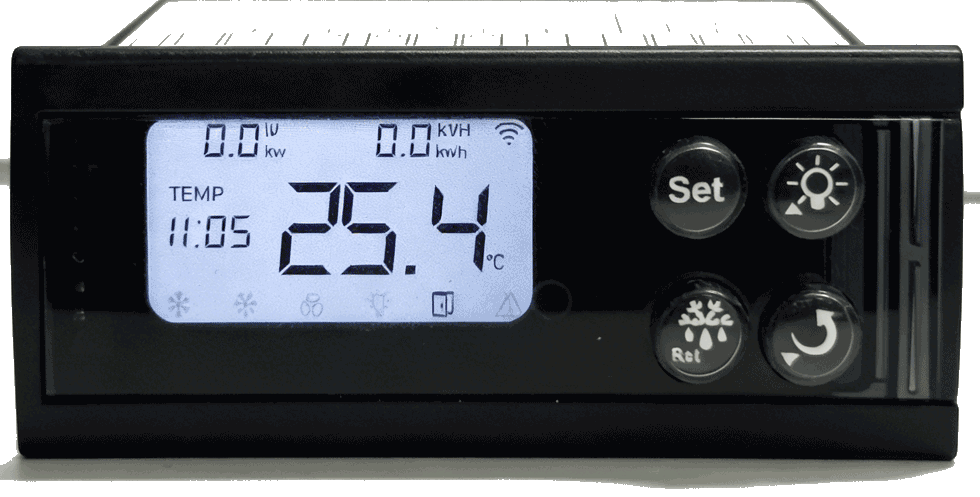
Cabinet control loop
Confirm compressor, defrost, fan, light, door switch, and probe wiring before connecting the cabinet to a platform.
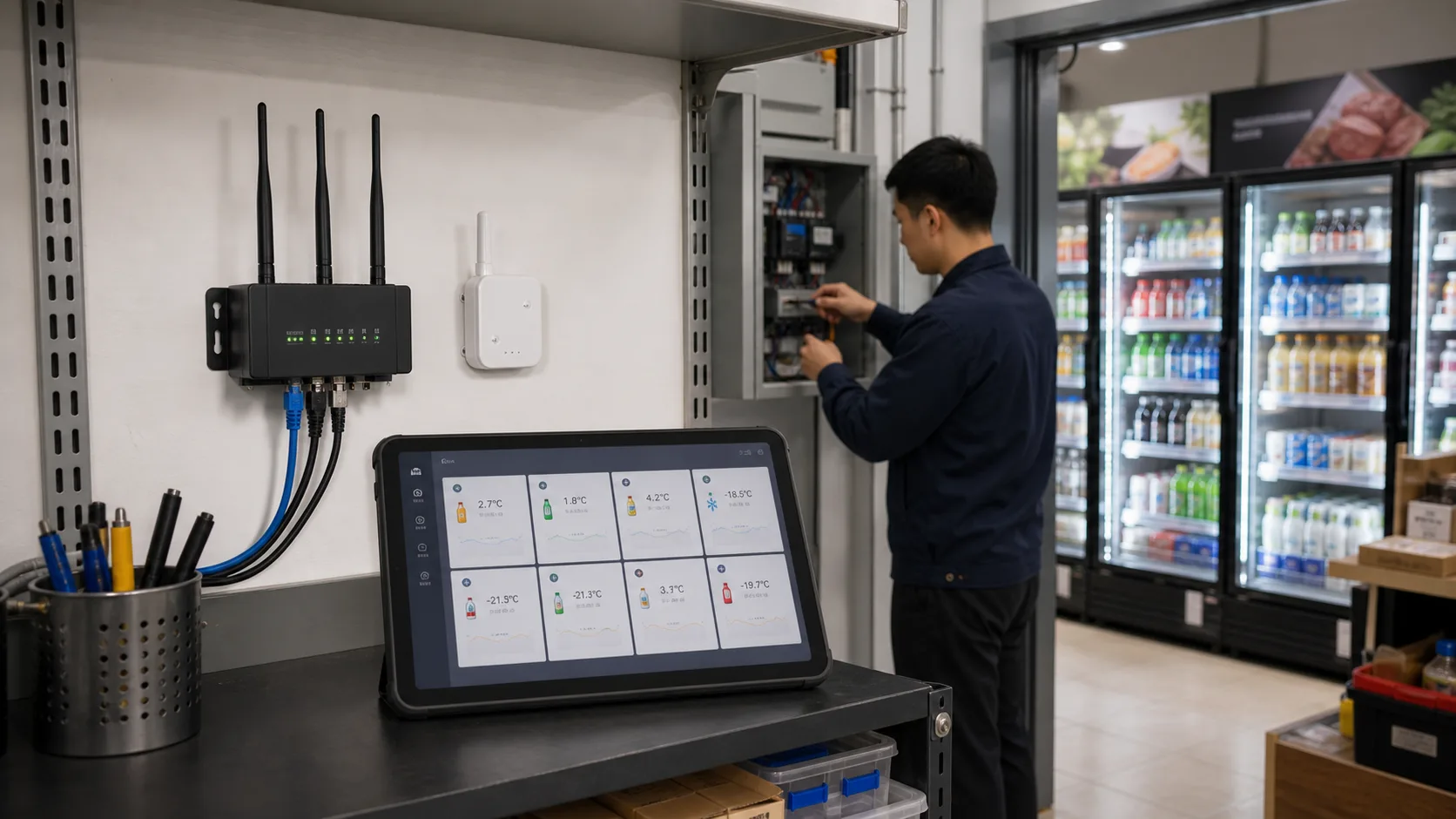
Store gateway access
Multiple cabinets connect by ZigBee to a store gateway and are organized by site, cabinet, and alarm priority.
Product capabilities that matter in deployment
Each capability is designed around real operating conditions, not isolated hardware parameters.
Local digital thermostat
Support local display, keys, state icons, and service actions.
Cooling and defrost control
Configure compressor, defrost, fan, lighting, and alarm outputs by cabinet type.
ZigBee gateway access
Connect multiple cabinets through one store gateway instead of pairing every cabinet to Wi-Fi.
Temperature and device alarms
Bring high/low temperature, probe faults, door events, defrost exceptions, and communication alerts into the platform.
Controller selection starts from cabinet type, wiring, probes, and connectivity
A thermostat upgrade must validate compressor, defrost, fan, lighting, probe, door switch, power, and opening size before finalizing the ZigBee data model.
- Check old controller wiring and cabinet logic
- Define temperature, defrost, alarm, and platform data points
- Deliver installation template, parameter sheet, and site acceptance checklist
From local digital thermostat to connected refrigeration controller
The upgrade starts by preserving reliable local refrigeration control, then uses ZigBee to connect cabinet data to ZedIoT platform for remote supervision, alarm closure, and fleet maintenance.
Traditional thermostat
Temperature and parameters are checked at the cabinet.
Control works locally, but operating history is hard to centralize.
Faults may be visible on the panel but are difficult to track across stores.
Food-safety and maintenance checks depend heavily on local staff.
Connected thermostat
Operations teams can view temperature, online state, output state, and alarms remotely.
Cooling, defrost, and alarm parameters can be updated with permission controls.
Cabinets can be grouped by brand, store, region, cabinet type, and service priority.
Temperature risk, probe failure, energy data, and service response can be tracked in one workflow.
From field data to a managed product workflow
Local control layer
Temperature acquisition, compressor control, defrost, display, and local alarm logic.
ZigBee gateway layer
AIHub or store gateway aggregates cabinet data for dense multi-cabinet sites.
Platform data layer
Model cabinets by store, type, device, probe, and alarm priority.
Operations loop
Route alerts to service tickets, messaging, dashboards, or customer systems.
Product configuration, capabilities, and deployment details
These sections collect the practical information customers need for selection, integration, installation planning, and rollout evaluation.
Smart Thermostat Upgrade Notes
This product direction upgrades traditional digital refrigeration thermostats while preserving local cooling, defrost, sensor, and panel-display behavior. ZigBee connectivity brings cabinet temperature, device state, alarms, and service events into ZedIoT platform.
Product Advantages
The cabinet can still execute cooling, defrost, and alarm logic locally when the network is unavailable.
Designed around beverage coolers, fresh food cabinets, air-cooled cabinets, freezers, low-temperature cabinets, and small cold rooms.
Authorized users can view temperature, device state, alarms, and key parameters from a platform or mobile workflow.
Panel, terminal definition, firmware logic, data points, and brand appearance can be adapted for product lines.
Core Functions
Control compressor start/stop using set point, differential, and cabinet-specific safety logic.
Support time-based, temperature-based, or project-defined defrost strategies.
Use cabinet, evaporator, return-air, or auxiliary temperature probes for control and diagnostics.
Control compressor, fan, defrost, lighting, alarm, or other output loops based on cabinet design.
View status and update permitted parameters through a role-based workflow.
Support high/low temperature, probe fault, defrost exception, door event, power event, and communication alerts.
Display and Status Logic
The local LCD or digital display should show priority alarms, cooling/defrost/fan/light states, network status, and sensor exceptions clearly for store operators and service teams.
Where this product direction is a good fit
Convenience-store beverage coolers
View temperature, online status, and alarms by store and cabinet.
Grocery fresh cabinets
Retain temperature, defrost, and alarm records for operational review.
Freezers and low-temperature cabinets
Close risk loops around high/low temperature and probe failure.
Refrigeration OEM products
Add connected service and fleet diagnostics to existing thermostat product lines.
Define the business goal before finalizing the hardware list
These items help teams turn a product idea into an engineering brief that can be estimated and prototyped.
How we turn this into a deployable product
Old controller and cabinet assessment
Confirm opening size, wiring, probes, control loops, and safety constraints.
Hardware and firmware customization
Build panel, terminal, ZigBee, display, control, and exception logic.
Platform integration
Configure device model, alarms, store grouping, and reports.
Real-cabinet pilot
Validate control, defrost, connectivity, alarm accuracy, and installation workflow.
Build this product direction with ZedIoT
Tell us your target device, equipment scenario, current technical constraints, and the business workflow you want to support.
- AI + IoT product architecture review
- Hardware, firmware, cloud, and application integration
- Prototype planning and production support