

Smart medical solutions for connected equipment and device operations
Modernize medical and health-monitoring products through device connectivity, embedded software, host applications, middleware, remote operations, and approved data integration.
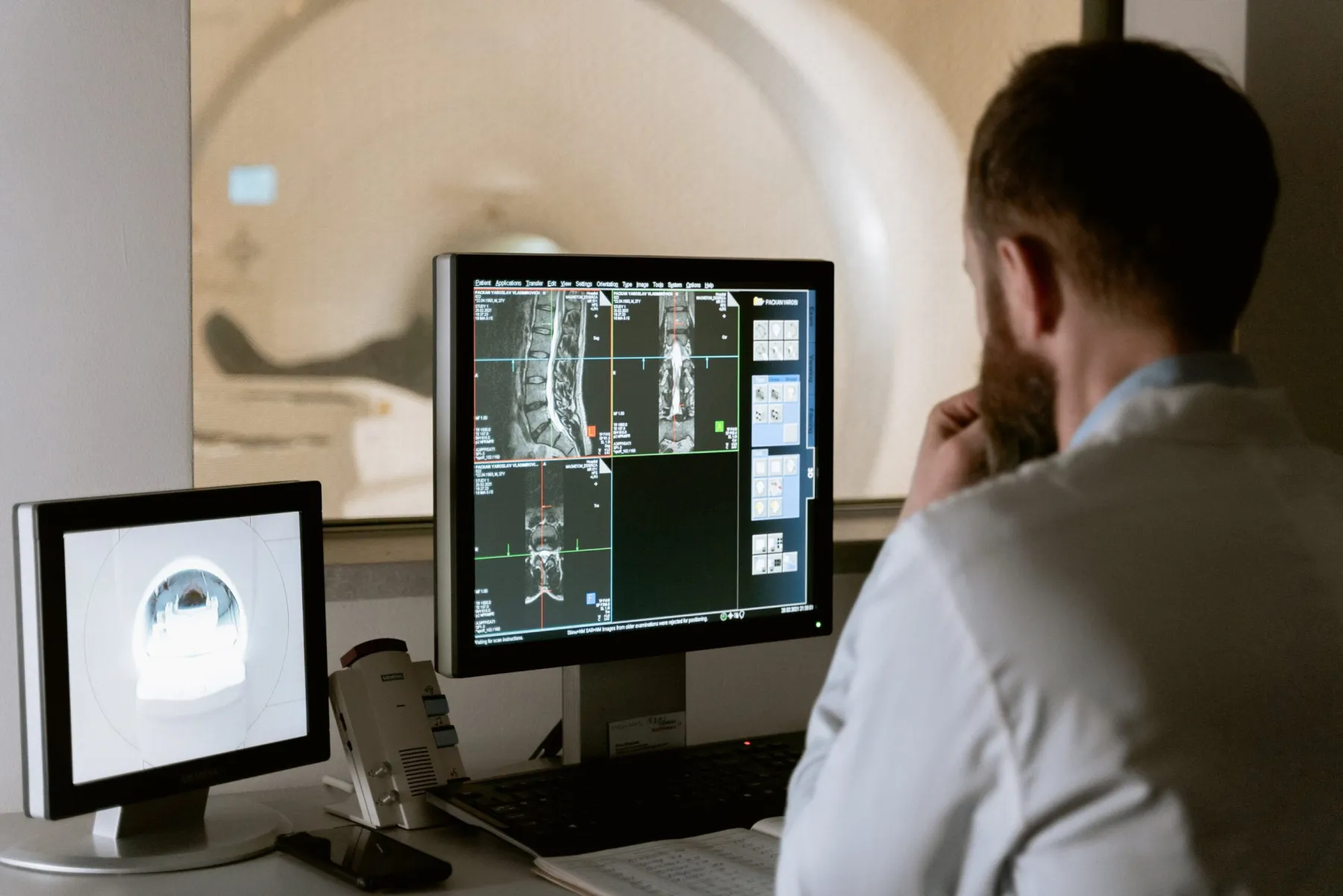
Choose the engineering path around the existing equipment and data workflow
The work may begin inside a device, at a host computer, in middleware, or at the platform layer. The right boundary depends on the equipment interface, operating responsibility, and approved data flow.
Equipment connectivity retrofit
Connect analyzers, monitors, controllers, and existing equipment through documented interfaces, gateways, or embedded upgrades.
Interfaces, protocol adapter, device modelHost software and middleware
Build instrument-control software, desktop middleware, data acquisition, result transfer, service tools, and controlled local workflows.
Host application, middleware, integration recordsRemote device operations
Add fleet status, alarms, logs, parameter records, service evidence, dashboards, and controlled remote-support workflows.
Operations platform, alerts, service workflowClinical-system integration
Connect approved equipment data to LIS, HIS, customer platforms, APIs, and reporting systems with explicit mapping and ownership.
Data mapping, APIs, acceptance evidenceKeep equipment, gateways, platform services, and hospital integration separate and accountable
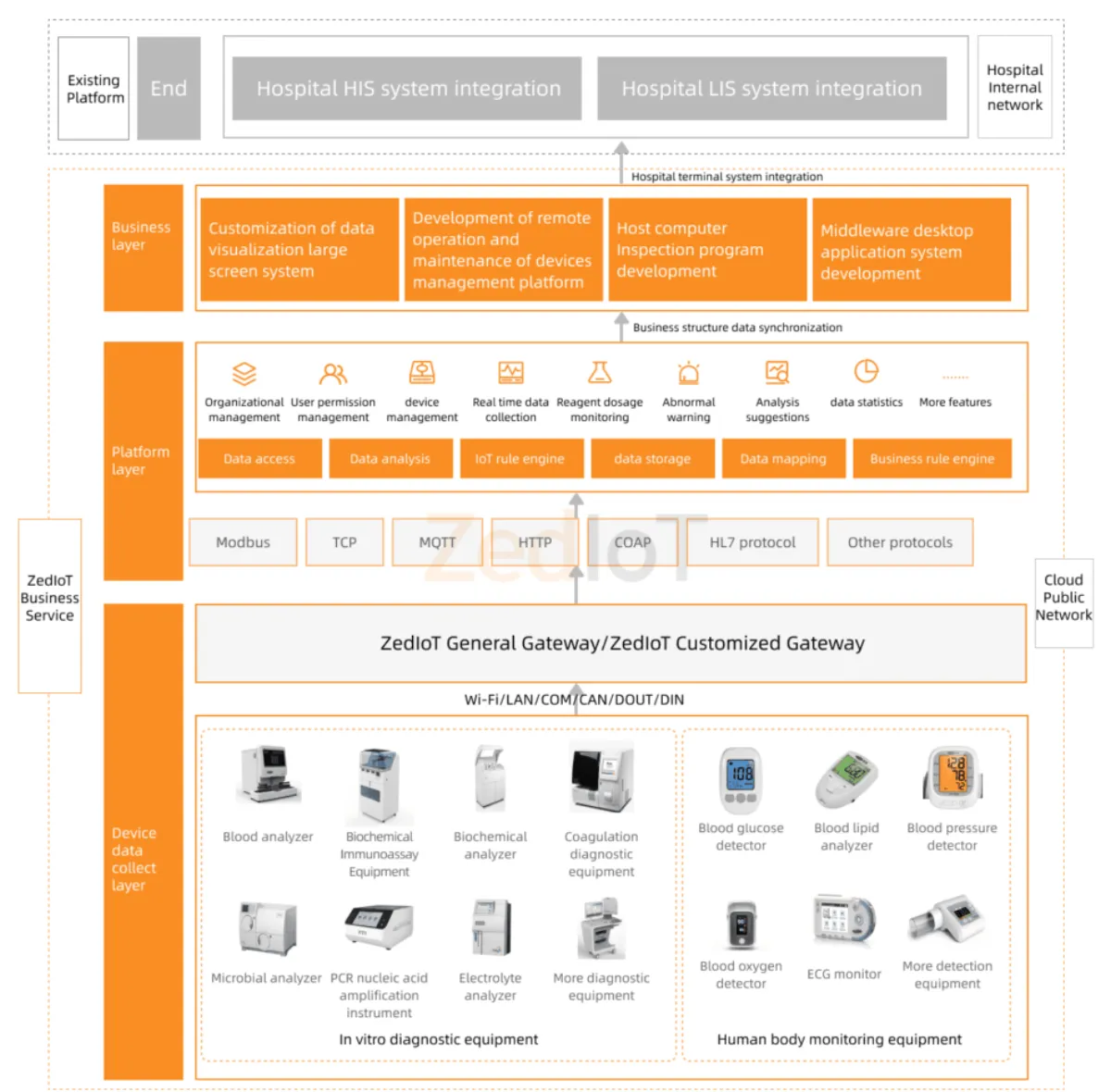
The source architecture shows how in-vitro diagnostic and human-monitoring equipment can connect through a gateway and platform into host applications, remote service, dashboards, and approved HIS or LIS integration.
- Protocol and device data remain explicit.
- Business applications do not hide equipment failures.
- Remote support, permissions, and data ownership are defined before rollout.
Real device workflows behind the solution scope
These source cases demonstrate connected medical equipment, instrument middleware, and wearable monitoring work. They are engineering references, not claims of clinical efficacy.

Home-use smart endoscope
A camera device and application support real-time viewing for an at-home inspection workflow, combining device operation, image transfer, and product-side interaction.
Read source case
Blood analyzer data middleware
Instrument operation software and middleware coordinate analyzer data and centralized management through a private network or cloud-connected environment.
Read source case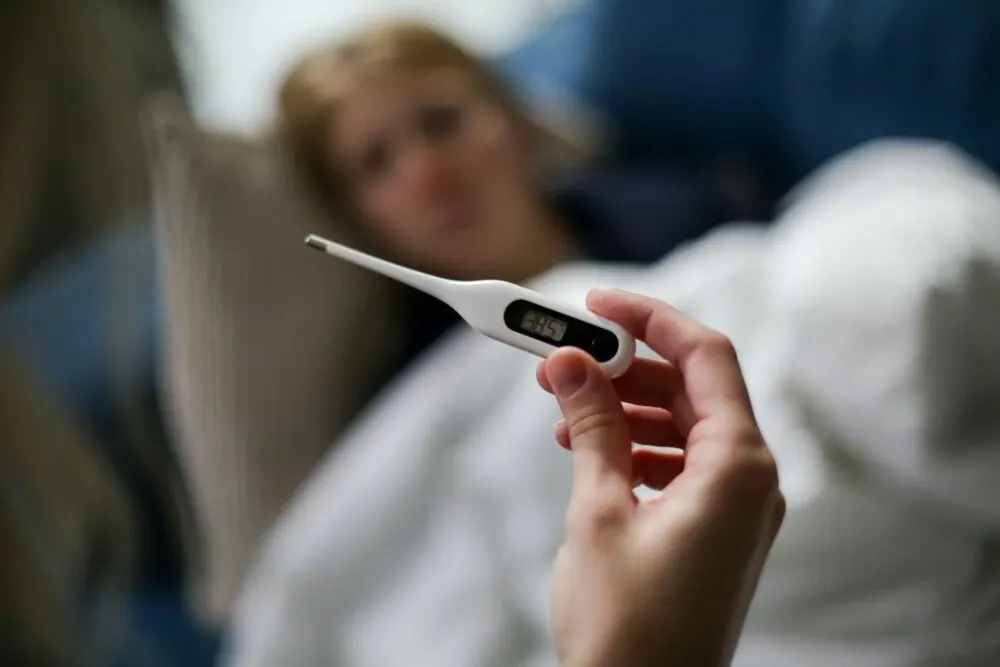
Wearable temperature monitoring
A low-power sensing product combines temperature acquisition, wireless transmission, application records, and remote visibility around comfort and battery constraints.
Read source caseEngineering evidence first, unsupported healthcare claims never
ZedIoT can build the connected-product and software layers. Clinical, regulatory, privacy, cybersecurity, and quality-system obligations must be defined with the responsible customer and qualified domain parties.
Engineering scope
Device connectivity, embedded software, host applications, middleware, IoT platforms, remote service, dashboards, and approved system integration.
Customer and domain ownership
Clinical use, diagnostic interpretation, regulatory classification, quality-system obligations, data governance, and site acceptance remain with the responsible customer and qualified domain parties.
Evidence before scale
Representative equipment, interfaces, abnormal states, network conditions, user roles, and data mapping should be validated before wider deployment.
Validate one representative device and one complete data workflow
Medical equipment projects should not scale from a slide deck. The pilot must produce device behavior, data quality, integration, failure, and handoff evidence.
Device and workflow inventory
Confirm equipment types, interfaces, users, data fields, operating steps, network, site boundaries, existing software, and the acceptance owner.
Data and integration contract
Define point tables, identifiers, units, timestamps, status, results, errors, commands, retention, system mapping, and responsibility boundaries.
Representative device pilot
Connect one real instrument or monitoring device, prove data quality, failure handling, user workflow, support evidence, and one approved integration path.
Validation and handoff
Document deployment, test evidence, known limits, recovery, diagnostics, cybersecurity responsibilities, training, and the controlled rollout plan.
Connected medical equipment questions
Clarify device interfaces, middleware, remote service, data integration, validation, and responsibility boundaries before implementation.
What medical equipment engineering can ZedIoT support?
The engineering scope can include device connectivity, embedded firmware, host computer software, desktop middleware, gateways, remote device operations, dashboards, approved data integration, and connected health-monitoring products.
Can existing medical equipment be connected without replacing the controller?
Sometimes. The first step is to review serial, Ethernet, USB, CAN, digital IO, existing host software, vendor protocols, enclosure constraints, and service responsibilities. A gateway, middleware adapter, or controlled embedded upgrade may be sufficient.
Can ZedIoT build host software or middleware for an analyzer?
Yes. Scope can include instrument communication, data acquisition, device status, result transfer, user workflow, logs, local database, service tools, and controlled integration with customer systems.
Can the solution integrate with HIS or LIS systems?
Yes, when the customer and responsible domain parties define the approved interface, identifiers, data mapping, security, privacy, validation, and operating ownership. The integration may use approved APIs, middleware, files, or healthcare data protocols.
Does this service include clinical or regulatory approval?
No clinical efficacy, diagnostic, regulatory, HIPAA, FDA, CE, or other certification claim is made by this page. Regulatory classification, quality-system obligations, clinical validation, privacy, cybersecurity, and site acceptance remain with the responsible customer and qualified domain parties unless a specific verified scope states otherwise.
What should a connected medical equipment pilot prove?
A pilot should prove one representative device interface, data accuracy and timing, abnormal states, recovery, user roles, logs, remote-support evidence, one approved integration path, and a documented acceptance owner.
Review a connected medical equipment project
Share the equipment type, interfaces, current software, expected data flow, operating users, deployment environment, and validation owner. We will help define a practical engineering pilot.
- AI + IoT product architecture review
- Hardware, firmware, cloud, and application integration
- Prototype planning and production support