
If a company only needs to connect a small number of standard devices to a hosted dashboard, a SaaS IoT platform is usually faster. If the company needs device onboarding, permissions, alerts, work orders, data analytics, and industry-specific workflows inside its own system boundary, a private IoT platform becomes a better fit. ZedIoT is designed for that second case: mixed device types, inconsistent protocols, controlled data boundaries, and future AIoT application development.
This article is not a generic product introduction. It answers a narrower question: which companies should consider private deployment of an IoT device management platform, and when should they stay with SaaS, a lightweight gateway, or a single-purpose tool?
The Short Answer: Who Should Consider ZedIoT
ZedIoT fits companies that have moved from "device connectivity" to "device operations." Four conditions matter most:
| Decision factor | ZedIoT is a good fit when | Private deployment is premature when |
|---|---|---|
| Device scale | The fleet will grow across projects, stores, factories, or customer sites | There are only a few pilot devices |
| Protocol complexity | Devices use Modbus, MQTT, HTTP, TCP, PLC links, or vendor-specific protocols | All devices already use one cloud platform and one stable API |
| Data boundary | Device, customer, or operational data must stay inside the company or private cloud | Public cloud hosting is acceptable |
| Business customization | The platform must support alerts, work orders, dashboards, customer portals, AI analytics, or system integration | The team only needs online status and simple trends |
The practical rule is simple: when IoT must become operable, maintainable, analyzable, and customizable, a private platform such as ZedIoT starts to make sense.
Why Not Every Project Should Use a Private Platform
A private platform gives control, but control also creates delivery and maintenance responsibility. The company or implementation partner must manage servers, networking, security policies, upgrades, backups, and permission governance. For a short proof of concept, or when a device vendor already provides a good SaaS backend, a private deployment may add too much early complexity.
The better starting point is the system boundary. Does device data need to land in the company's own platform? Does it need to connect with ERP, MES, WMS, CRM, ticketing systems, or a custom app? Do different customers, regions, roles, and device groups require separate permissions? If most answers are no, SaaS or a lightweight gateway may be enough.
If most answers are yes, the benefit becomes clearer. A private platform is not just another dashboard. It is the controllable base for device onboarding, device models, data permissions, alert rules, operations workflows, and AIoT application development.
The Core Problem Is Device Operations, Not Having a Backend
The value of an IoT device management platform is not the number of screens it offers. The value is whether the operations loop works. A production-ready platform must cover at least five jobs:
- Device onboarding: connect sensors, controllers, PLCs, gateways, meters, and other equipment while handling protocol differences.
- Device registry: record model, location, ownership, status, parameters, maintenance records, and lifecycle state.
- Real-time monitoring: show telemetry, status, events, and key metrics by device group, project, or customer.
- Alerts and work orders: turn exceptions into assignable tasks with owners, status, and history.
- Data analytics and extension: use long-term data for energy analysis, predictive maintenance, device health, or AI applications.
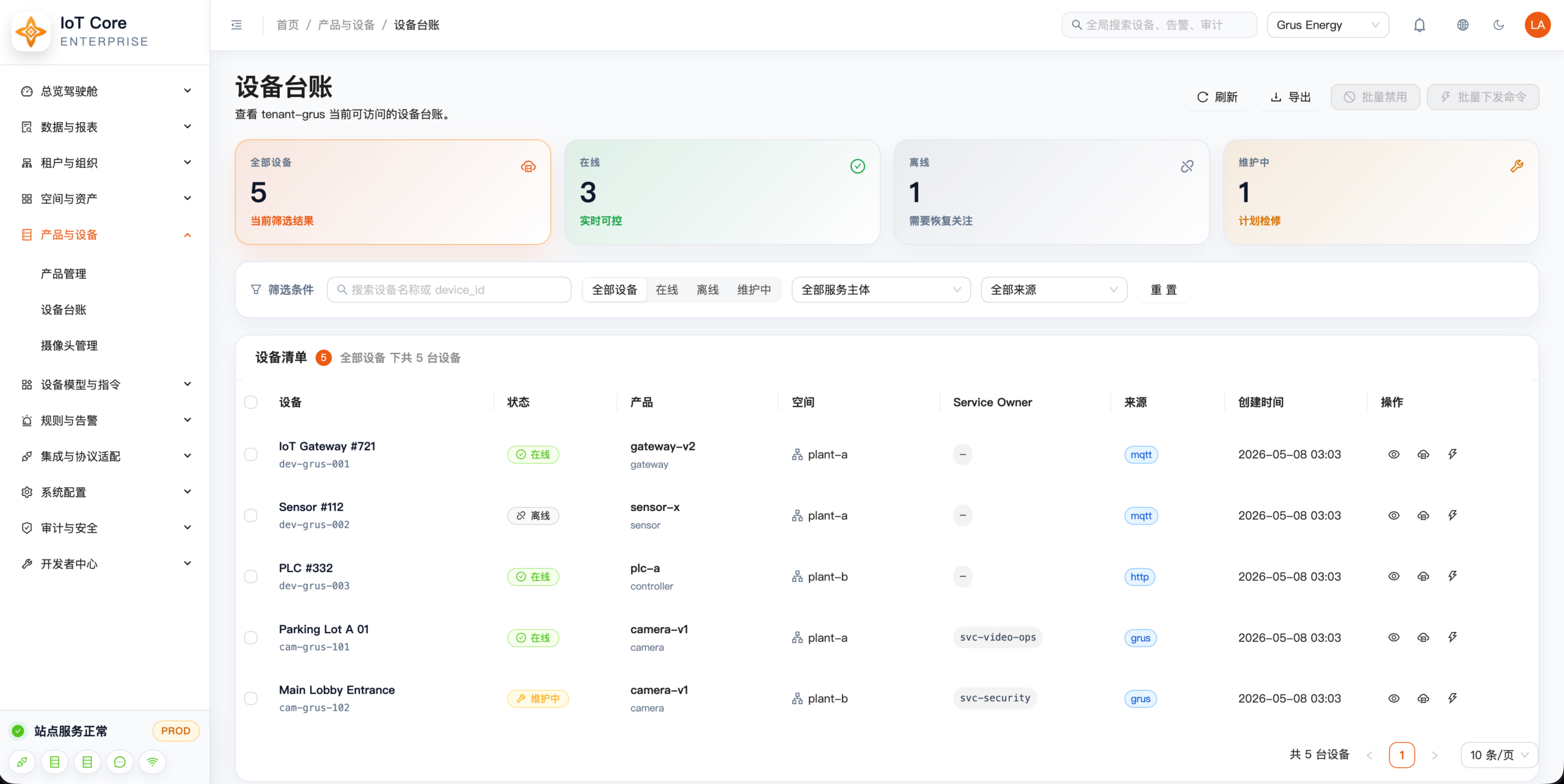
If a platform only solves the first job, teams still scatter the rest across spreadsheets, chat messages, manual notes, and temporary scripts. ZedIoT is a better fit when the company wants those actions to return to one controlled system.
The Real Value of Private Deployment: Data, Permissions, and Process Control
Many companies choose private deployment not simply because they dislike public cloud. The stronger reason is control over three areas:
- Data control: device data, customer data, process data, and operational data can stay on internal servers or private cloud infrastructure.
- Permission control: organizations, customers, projects, roles, and device groups can follow the company's real business structure.
- Process control: alerts, work orders, reports, dashboards, remote control, and business-system integration can be shaped around existing operations.
For device manufacturers, this can become a service and lifecycle management platform. For energy, campus, cold-chain, environmental monitoring, medical equipment, or industrial equipment operators, it turns device data into operations, compliance, energy optimization, and maintenance workflows.
Device Onboarding: Multi-Protocol Support Is Not Enough
Device onboarding is often underestimated. Real projects may include devices from multiple vendors and protocols such as Modbus TCP, Modbus RTU, MQTT, HTTP, COAP, PLC communication, TCP-based private protocols, and gateway-based access through DTUs, serial converters, or edge nodes.
Supporting multiple protocols is not the final value. The harder part is turning inconsistent protocol payloads into a consistent device model: which fields are telemetry, which are states, which trigger alerts, which commands need confirmation, and which data needs cleaning, mapping, or storage. Without this layer, the platform becomes a collection of protocol plugins instead of a device management system.
flowchart LR
  A("Field devices<br/>PLC / meters / controllers / sensors") --> B("Access layer<br/>gateway / DTU / serial converter")
  B --> C("Protocol parsing<br/>Modbus / MQTT / HTTP / private protocol")
  C --> D("Device model<br/>properties / telemetry / events / commands")
  D --> E("Platform operations<br/>registry / alerts / work orders / reports")
  E --> F("Business extension<br/>AI analytics / customer portal / integration")

  classDef field fill:#e0f2fe,stroke:#0284c7,stroke-width:2px,color:#0f172a;
  classDef edge fill:#ecfeff,stroke:#0891b2,stroke-width:2px,color:#0f172a;
  classDef model fill:#fef3c7,stroke:#d97706,stroke-width:2px,color:#0f172a;
  classDef ops fill:#ede9fe,stroke:#7c3aed,stroke-width:2px,color:#0f172a;
  classDef ai fill:#dcfce7,stroke:#16a34a,stroke-width:2px,color:#0f172a;
  class A field;
  class B,C edge;
  class D model;
  class E ops;
  class F ai;
This layering explains why ZedIoT is a better fit for companies with complex device environments. The point is not whether one protocol can connect. The point is whether the connected devices become manageable operational objects.
Remote Monitoring, Alerts, and Work Orders
Remote monitoring often fails not because the platform lacks charts, but because nobody owns the exception after it appears. A production system must turn alerts into a process, not just a notification.
An alert should include the device object, trigger condition, severity, time, current state, owner, and recovery record. A work order should preserve the handling process so that the issue does not only live in chat history. The more distributed the fleet becomes, the more important this loop becomes.
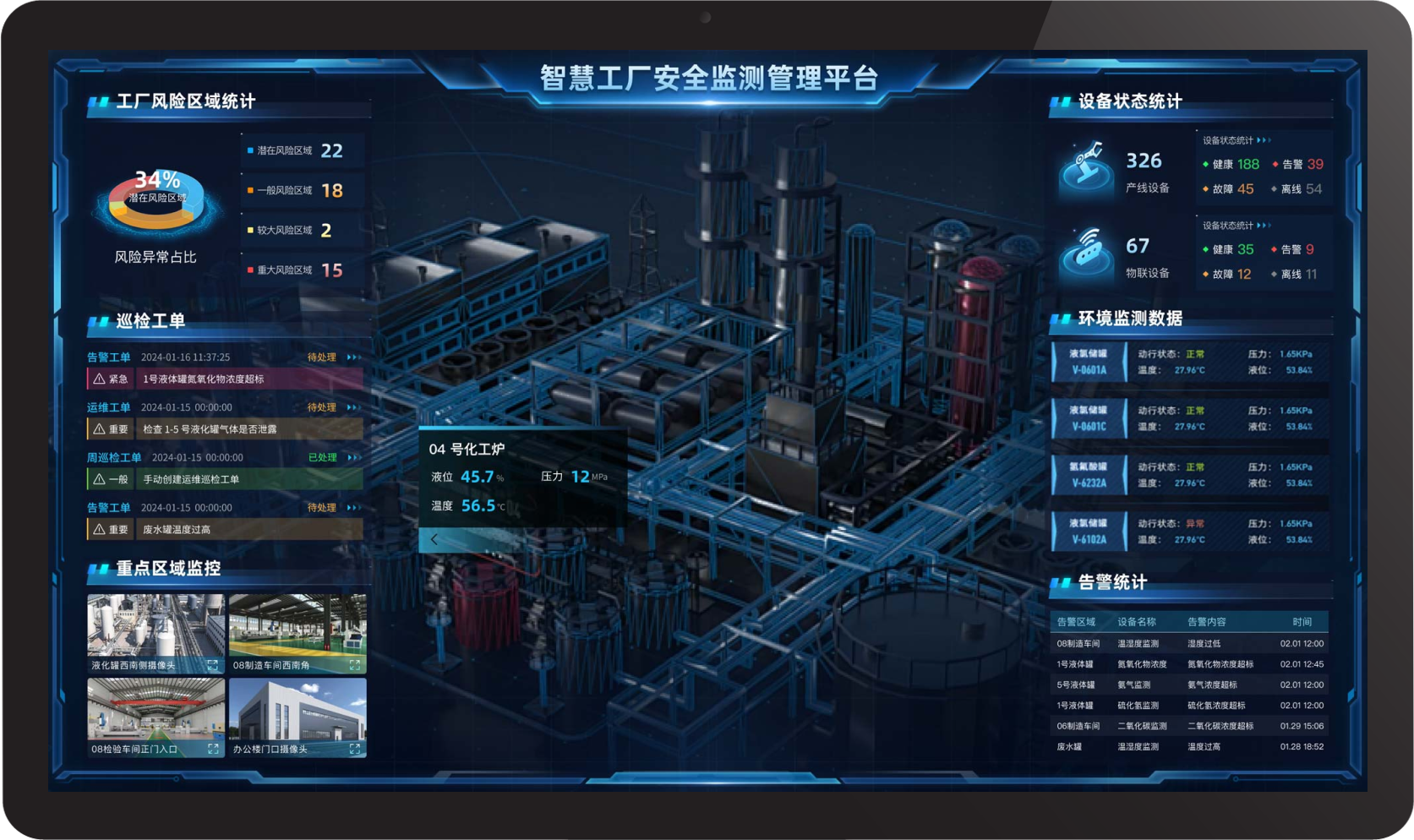
If a company already has a mature ticketing system, ZedIoT should not necessarily replace it. A better pattern is to integrate device events, alert state, and handling results through APIs or messaging. The IoT platform owns device semantics; the business system owns organization-level collaboration.
AIoT Customization: Build Trusted Data Before Adding AI
AIoT does not mean placing a chatbot on top of a dashboard. AI becomes useful only after the device model, data quality, alert rules, and history are stable enough to support predictive maintenance, anomaly explanation, energy optimization, report generation, device Q&A, or operations assistance.
For a private platform such as ZedIoT, the main AIoT benefit is a clear data boundary. The company can decide which data enters models, which analysis stays local, which fields require masking, and which AI results can feed back into work orders or alert rules. For projects with industry data and customer data constraints, this is more controllable than sending everything to an external AI service.
The boundary is also important: if device data is unstable, field definitions keep changing, or alert rules have not matured, AI development usually becomes a demo. A stronger route is to stabilize onboarding, data cleaning, device models, and the operations loop first.
When to Look at the ZedIoT Product Page
If your project has at least two of the following requirements, it is worth reviewing the ZedIoT IoT Platform:
- You need to connect devices from different vendors, protocols, or sites.
- You need device registry, status monitoring, alerts, work orders, and dashboards in one system.
- You need deployment on internal servers, private cloud, or a controlled environment.
- You need source-code delivery, customization, or integration with existing business systems.
- You expect to add AI analytics, predictive maintenance, or industry-specific applications later.
If the project is still validating one device type, start with a gateway, serial converter, edge node, or lightweight SaaS pilot. A private platform is a better fit once the organization knows it will operate device data over the long term.
Selection Guidance
The reason to choose ZedIoT should not be "it has many features." The stronger reason is that the company needs control over device data and operational processes. When device scale, protocol diversity, data governance, permission models, and customization needs appear together, a private IoT platform is a stronger long-term base than a set of isolated tools.
If the project only needs to check whether a group of standard devices is online, or if a vendor SaaS platform already covers permissions, alerts, and reports well, there is no need to start with a full private deployment. Good platform selection means choosing the system boundary that can handle the next 12 to 24 months of device operations complexity.
Image Sources
- Banner: generated with Codex built-in
gpt-image-2as a realistic enterprise IoT operations scene, then cropped tozediot-platform-private-deployment-device-management.webp. - Product screenshots: copied from local product materials under
05_星野自研产品/ZedIoT物联网平台/产品图/to show ZedIoT device inventory and dashboard examples.