
Tuya SDK App Integration for Outdoor Smart Home Devices
A connected outdoor product system needed one branded application and a more reliable path across long-distance devices, mixed interfaces, gateways, and changing site networks.
A branded Tuya app needed a field architecture that matched outdoor reality
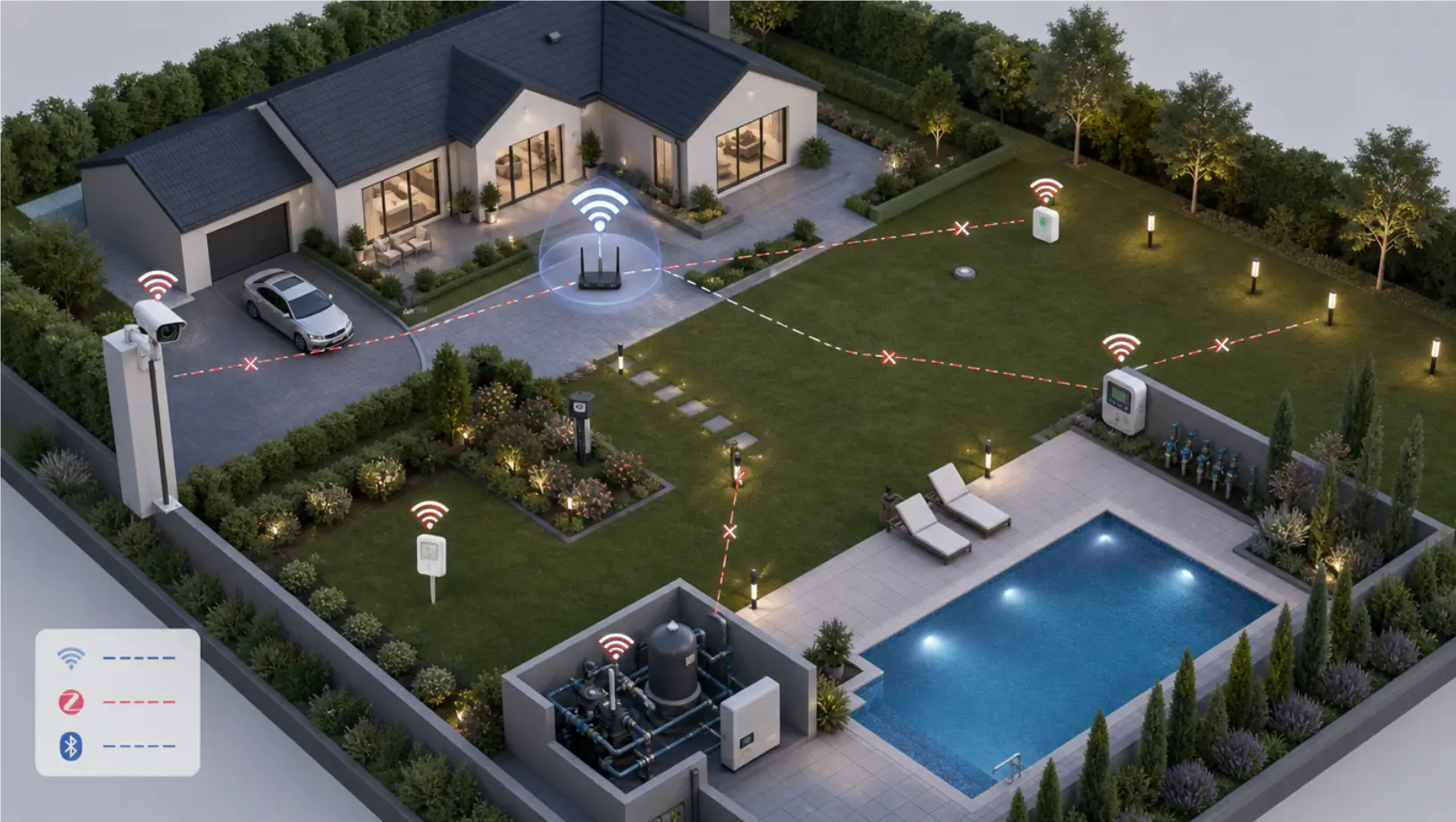
The customer was building an outdoor smart home system with devices spread across gardens, gates, pools, lighting, irrigation, and utility areas. A standard app-only approach could not address every distance, protocol, and connectivity condition.
- Client need
- One branded control experience
- Field constraint
- Mixed range and network conditions
- Integration path
- Tuya SDK + gateway + wired/wireless options
The customer was building an outdoor product ecosystem, not a single connected device
The application, connectivity, and support model had to remain coherent as new device categories and different installation conditions were added.
Outdoor product portfolio
The system had to support lighting, irrigation, gates, cameras, pool equipment, and utility controls rather than one isolated smart-home category.
Mixed device ownership
Some products could adopt Tuya modules directly; existing controllers and third-party equipment still needed a gateway or wired integration path.
Long-distance installation
Buildings, landscaping, walls, equipment rooms, and customer routers created coverage conditions that could not be assumed from a desk prototype.
Branded customer journey
Onboarding, grouping, control, support, and future services needed to remain inside the customer's own application experience.
Outdoor equipment cannot be planned like devices inside one room
Wi-Fi coverage changes across a property. BLE range is limited. Some equipment already exposes RS485. Other endpoints are battery-powered or far from the building. The customer needed a product architecture that could use the right path for each device while preserving one user experience.
- Distributed endpoints across a large outdoor property
- Mixed power, range, and installation constraints
- Existing wired controllers alongside wireless devices
- A branded application rather than a generic device panel
Use Tuya SDK as the application layer, then solve connectivity at the site
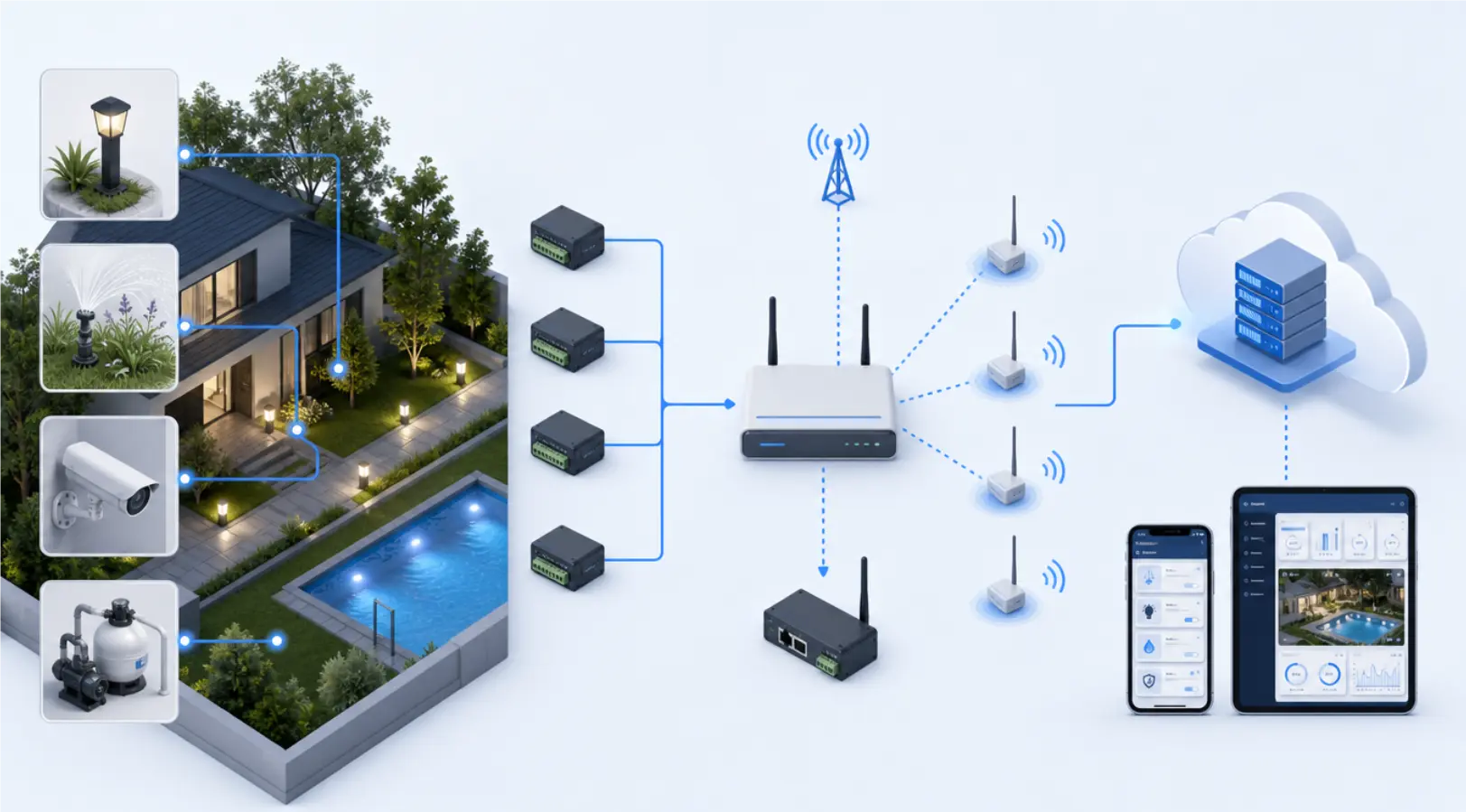
The architecture separates user experience, device communication, local gateway responsibility, and cloud integration so each layer can be tested independently.
Tuya SDK app integration
A branded application uses Tuya SDK capabilities while keeping the customer's product flow, device grouping, permissions, and service experience consistent.
Gateway deployment
A local gateway creates a stable bridge between outdoor devices, site networking, Tuya services, and the customer's operating workflow.
RS485 communication
Wired control remains available for pumps, lighting, controllers, and fixed equipment where distance, reliability, or existing wiring matters.
LoRa and 4G options
Long-range and cellular paths extend coverage where Wi-Fi or BLE alone cannot reliably reach distributed garden, pool, gate, or utility devices.
Choose the path by product and site constraints
Use for products that can adopt a suitable Tuya module and have dependable site connectivity.
Use for RS485 controllers, fixed equipment, local rules, buffering, and diagnostics that must continue without a direct cloud path.
Use LoRa or 4G where site distance, infrastructure ownership, or unattended operation makes Wi-Fi unsuitable.
A practical outdoor IoT path that can grow with the product line
The value is not one protocol. It is the ability to preserve one application and operating model while selecting connectivity according to each physical product and site condition.
One customer app
Users manage connected outdoor equipment through a branded experience instead of switching between unrelated vendor applications.
Flexible field connectivity
Wi-Fi, BLE, RS485, LoRa, and 4G can be assigned according to distance, power, installation, and site-network constraints.
Gateway-centered reliability
Local connectivity and protocol handling reduce the pressure on every outdoor endpoint to reach the cloud directly.
A repeatable product route
The architecture can support additional outdoor products without redesigning the full application and cloud path.
Tuya integration can accelerate the product, but field architecture still determines reliability
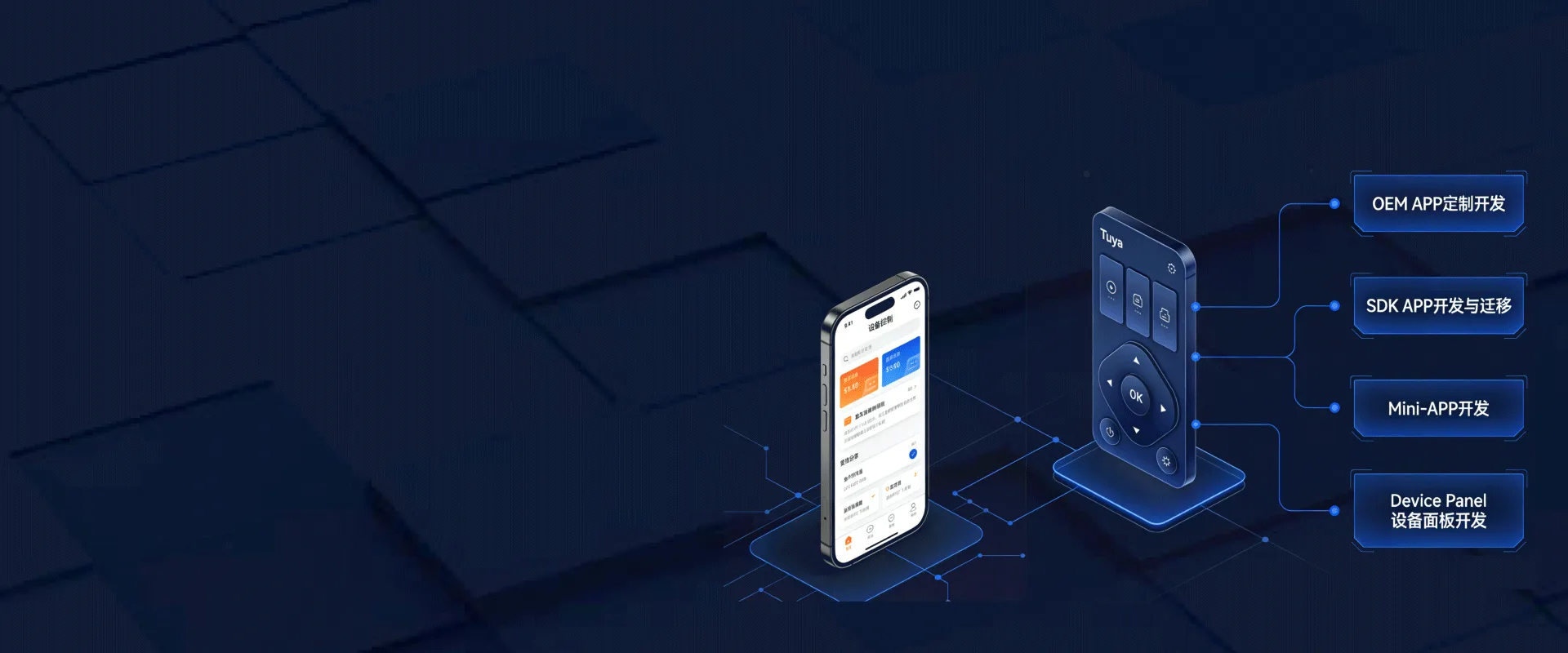
Tuya SDK reduces the effort required to deliver device onboarding and app capabilities. The remaining engineering work is to map the product's real interfaces, range, offline behavior, gateway needs, device state, and customer support workflow into a reliable system.
Explore Tuya app developmentQuestions about outdoor Tuya device integration
Why was a gateway needed for this outdoor Tuya system?
Outdoor devices were distributed across a large property and used different interfaces. A gateway provided a stable local bridge for wired and wireless equipment instead of requiring every endpoint to reach the cloud directly.
Can Tuya SDK support a branded customer application?
Yes. Tuya SDK can provide device onboarding and control capabilities inside a branded application, while the product team defines its own navigation, user workflow, permissions, support path, and related business features.
When should RS485, LoRa, 4G, Wi-Fi, or BLE be used?
The choice depends on distance, power, bandwidth, existing wiring, site ownership, installation effort, offline behavior, and service requirements. A mixed architecture is often more reliable than forcing every product onto one radio.
Can the architecture support additional outdoor products?
Yes. A stable app, gateway, device model, and cloud integration can be extended to new lighting, irrigation, access, security, pool, and utility devices after their interface and field constraints are validated.
Planning an outdoor Tuya smart device project?
Share the device list, site distances, power conditions, current interfaces, app requirements, and preferred cloud ownership. We will help map a practical connectivity and product path.
- AI + IoT product architecture review
- Hardware, firmware, cloud, and application integration
- Prototype planning and production support