

Tag - MQTT
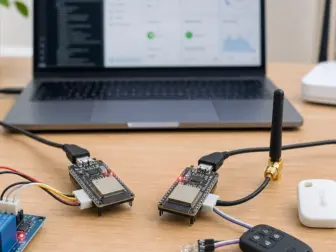
Blog, Embedded System Development, IoT Protocols and Interoperability , May 24, 2026 , BLE, ESP32, ESPHome, Home Assistant, IR, MQTT, OpenMQTTGateway, Protocol Bridge, RF


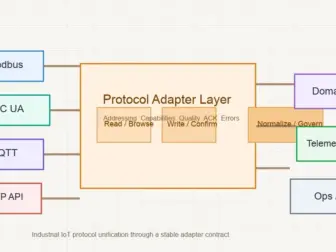
Blog, IoT Protocols and Interoperability , March 31, 2026 , Command Pipeline, Data Modeling, Edge Gateway, HTTP API, Industrial IoT, Modbus, MQTT, OPC UA, Platform Architecture, Protocol Adapter Layer
Blog, IoT Protocols and Interoperability , March 27, 2026 , device integration, Edge Gateway, Industrial IoT, Modbus, MQTT, OPC UA, protocol layering
Blog, IoT Protocols and Interoperability , November 25, 2025 , Data Acquisition, Edge Computing, Industrial IoT, IoT Gateway, Modbus TCP, MQTT, Node-RED

Blog, Edge Computing and Data Analytics , September 28, 2025 , BLE, ESP32, IoT Bridge, IoT Gateway, IR, LoRa, MQTT, OpenMQTTGateway, RF, smart Home
- 1
- 2
Exploring the Power and Potential of MQTT Technology
MQTT, or Message Queuing Telemetry Transport, is a lightweight messaging protocol ideal for IoT (Internet of Things) applications. Developed by IBM in the late 1990s, MQTT has gained popularity for its efficiency, reliability, and scalability in connecting devices over networks. This open-source protocol is known for its simplicity, making it easy to implement and deploy in various IoT ecosystems.
One of the key features of MQTT is its publish-subscribe messaging architecture, where devices communicate through a central broker. This asynchronous communication model allows for real-time data exchange between devices, enabling efficient and flexible IoT solutions. With MQTT, devices can publish data to specific topics on the broker, and other devices can subscribe to those topics to receive the information they need.
Another advantage of MQTT is its lightweight nature, which minimizes network bandwidth and power consumption. This makes it well-suited for resource-constrained devices such as sensors and actuators in IoT applications. Additionally, MQTT supports Quality of Service (QoS) levels to ensure message delivery reliability, with options ranging from at most once (0), at least once (1), and exactly once (2).
Furthermore, MQTT is highly flexible and scalable, capable of supporting large-scale IoT deployments with thousands or even millions of devices. Its ability to handle multiple clients and topics efficiently makes it a preferred choice for IoT projects in various industries, including smart homes, healthcare, agriculture, and industrial automation.
Security is a critical aspect of any IoT deployment, and MQTT offers several mechanisms to ensure data protection and privacy. These include support for Transport Layer Security (TLS) for encrypted communication, authentication mechanisms such as username/password and client certificates, and access control lists (ACLs) to restrict client access to specific topics on the broker.
In conclusion, MQTT technology offers a powerful and versatile messaging protocol for IoT applications, enabling seamless communication between devices in a secure and efficient manner. With its lightweight design, scalability, and reliability, MQTT is well-positioned to drive the next wave of innovation in the rapidly expanding IoT landscape.