
Tuya App Development Services
OEM, SDK & Custom Tuya App Solutions
From OEM deployment to custom SDK development and migration, we build scalable Tuya app architectures for smart device brands across the U.S. and Canada.
20+
Delivered Tuya Projects
70+
Dedicated Engineers
7*24h
Technical Support
ZedIoT Tuya App Development Overview
We transform Tuya OEM and SDK capabilities into fully branded mobile apps with custom UI, device panels, and cloud integration.
01
Tuya OEM App Development
Launch a branded Tuya OEM app with your logo, theme, and UI configuration. Ideal for fast time-to-market projects with reliable device connectivity.
02
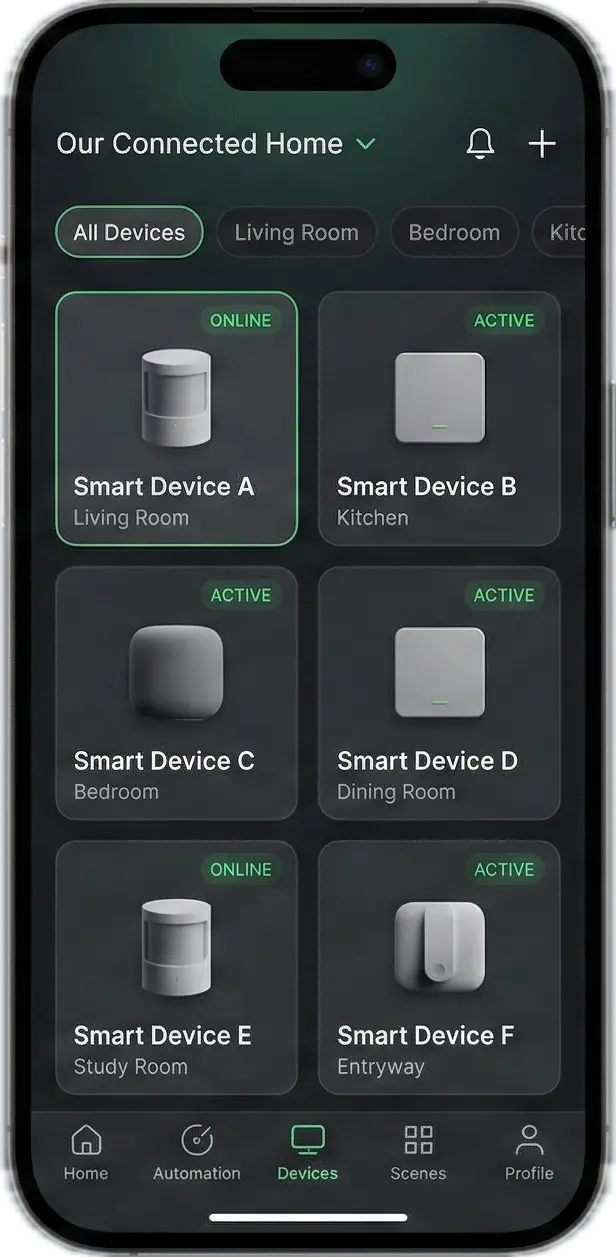
Custom Tuya SDK App & Migration
Develop fully customized iOS and Android apps using the Tuya SDK. Gain full UI control and structured OEM-to-SDK migration support.
Fastest Path to Market for Smart Device Brands
Tuya OEM App Development
Launch a branded smart device app using Tuya’s OEM framework. Configure features, apply your brand identity, and deploy within days.

Full Control Beyond OEM Limitations
Custom Tuya SDK App Development & Migration
We build custom iOS and Android apps on the Tuya SDK, enabling OEM-to-SDK upgrades and scalable architecture for smart home, appliance, outdoor, and commercial building brands across North America.
Lightweight Extensions Within the Tuya Ecosystem
Tuya Mini App Development
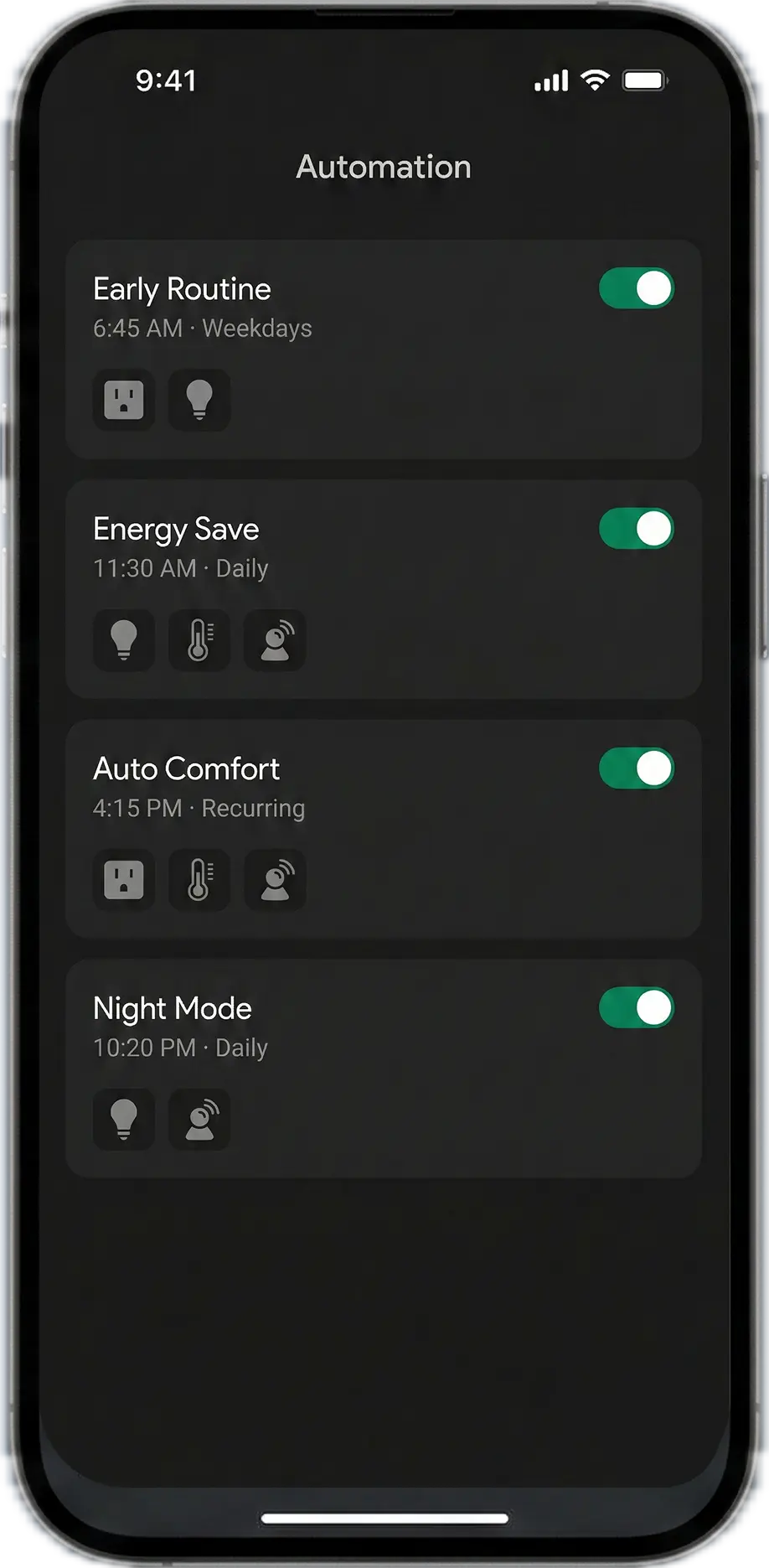
We develop Tuya Mini Apps that run within the Tuya or Smart Life ecosystem, extending device capabilities and enabling custom logic without rebuilding a full app.
Premium Device Control Experience
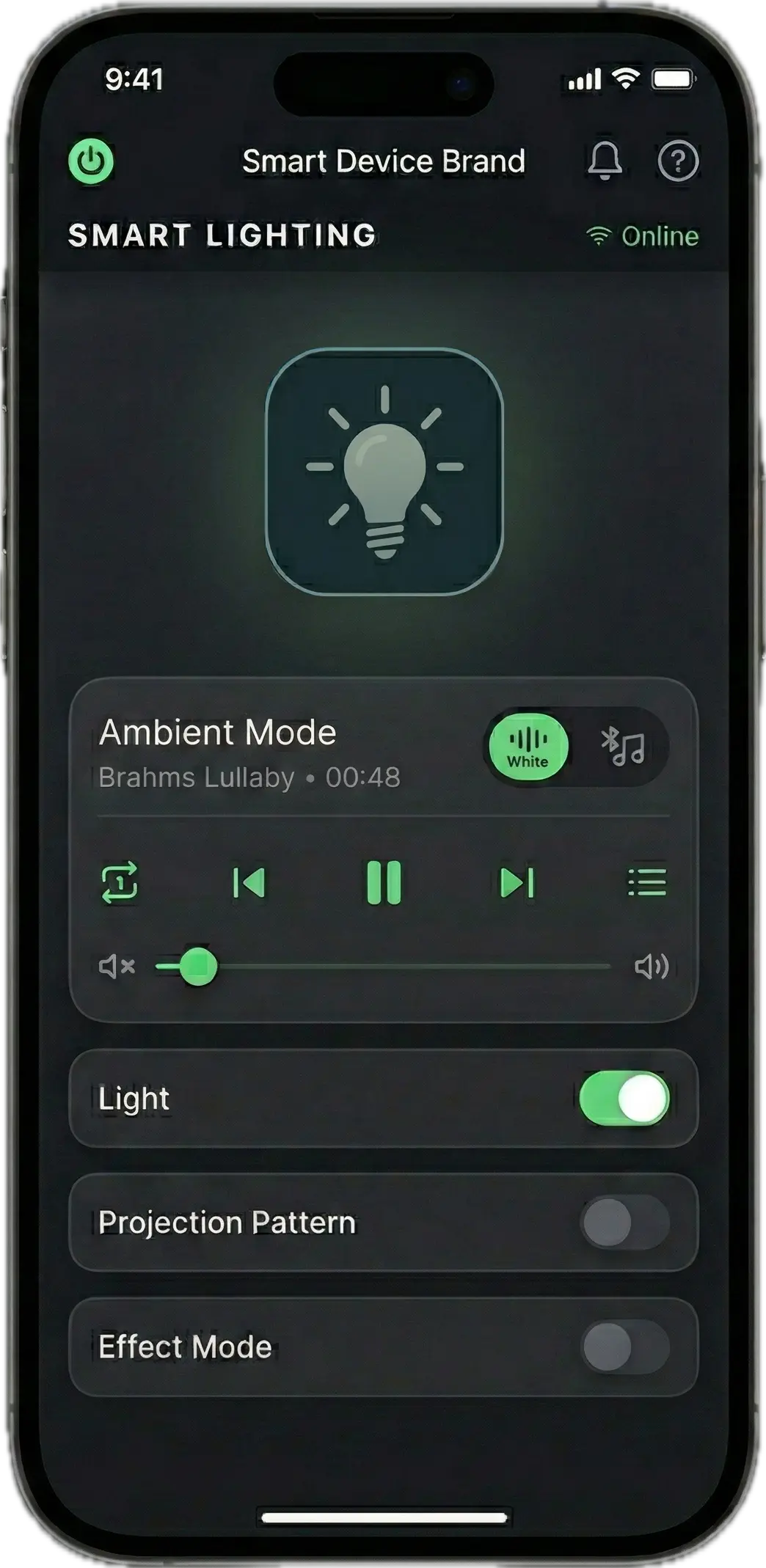
Tuya Device Panel Customization
The device panel is the primary interface between users and their smart devices. We design and customize control panels that reflect your brand identity and optimize interaction logic.
Compare Tuya App Solutions by Business Stage, Investment & Control Level
A structured comparison to help you choose the right Tuya app model for your business stage.
Category | OEM APP | SDK APP | Mini-APP | Device Panel |
|---|---|---|---|---|
Key Feature | No coding required. Quickly launch a branded app with logo, theme, and built-in core features powered by Tuya’s official framework. | Built on Tuya SDK for full customization of UI, features, and system integration. Supports OEM-to-SDK migration. | Runs within the Tuya ecosystem (Tuya / Smart Life / OEM / SDK apps). Enables lightweight feature extensions, device-level control or cross-device automation. Learn more mini app here→. | Custom control interface for individual devices. Focused on interaction logic and user experience optimization. |
Development Method | Visual configuration. No heavy coding required. | Native development (iOS/Android) or cross-platform frameworks such as Flutter or React Native. | Built with the Tuya Mini App framework using JavaScript. | Developed using Tuya panel tools or frontend frameworks (JavaScript / React). |
Development Cost | Mainly platform service fees with minimal development effort. Custom features may increase cost. | Depends on feature complexity and requires a dedicated development team. | Positioned between OEM and SDK, leveraging the simplified Mini App ecosystem. | Ranges from low-code configuration to full custom front-end development. |
Timeline | Ready shortly after configuration submission. | Depends on development scope and integration complexity. | Faster development within existing ecosystem. | Quick setup for standard panels; longer for advanced interaction customization. |
Best For | Startups or hardware brands validating the market with a fast go-to-market strategy. | Mid-to-large enterprises requiring brand independence, data ownership, and scalable architecture. | Brands of all sizes extending features or adding business modules within the Tuya ecosystem. | Smart hardware brands focused on advanced device interaction and user experience. |
Why Choose ZedIoT
8+ Tuya-Based Solutions Delivered Across the U.S. & Canada
Deep Tuya Platform Expertise
Built on the latest Tuya Open and AI capabilities for scalable IoT applications.
North American Delivery Experience
Proven projects execution for brands in the U.S. and Canada.
Structured End-to-End Execution
From solution architecture design to deployment and long-term support.
Long-Term Product & Growth Focus
Focused on scalable growth, brand control, and user experience.
Frequently Asked Questions
Answers to common questions from smart device brands evaluating Tuya OEM and SDK app development.
OEM is ideal for fast market entry and validation.
SDK is better if you need full UI control, advanced features, or long-term brand independence. more oem vs sdk comparison here→.
OEM apps can typically be configured and ready for store submission within days once branding and features are finalized. App store approval timelines vary.
Most brands upgrade when they require deeper customization, third-party integrations, advanced automation, or stronger product differentiation. You can learn more from our oem to sdk migration guide here→.
Not necessarily. With structured migration planning, user impact can be minimized — as demonstrated in previous OEM-to-SDK projects→.
Investment depends on the service model (OEM vs SDK), customization scope, integration complexity, and long-term roadmap. We provide tailored estimates after a project assessment. You can learn more about tuya development cost in business here→.
Yes. SDK-based apps support API integrations with ERP, CRM, analytics systems, and private cloud environments.
Ready to Launch or Upgrade Your Tuya App?
Let’s align your product roadmap with the right architecture.