
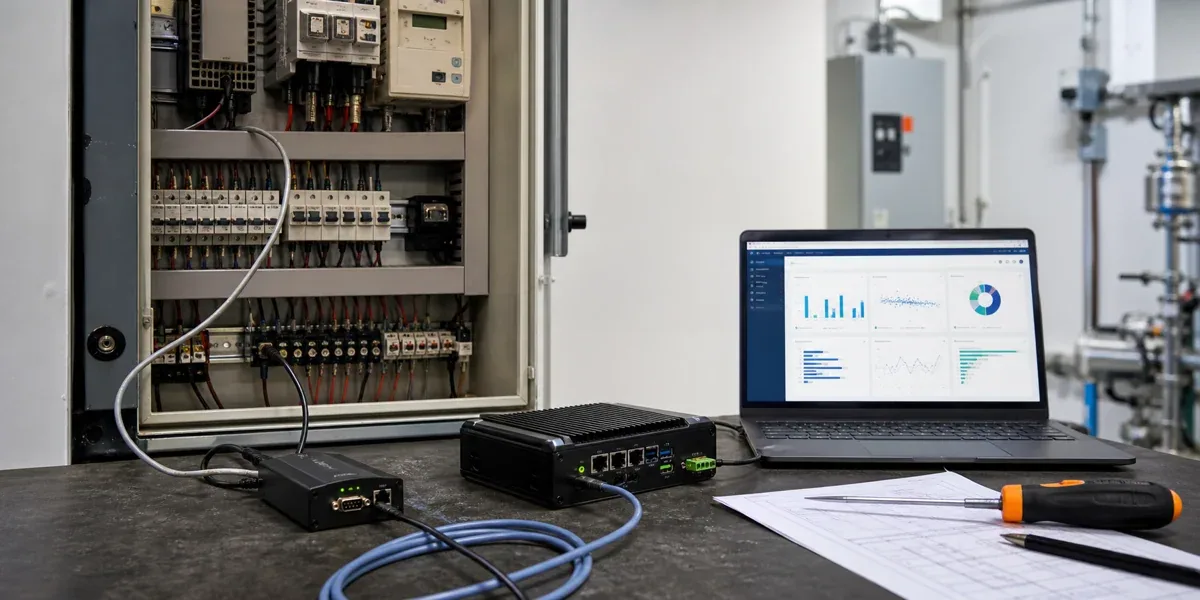
The first step in a legacy device upgrade is not choosing between a gateway, an edge box, or a platform. The first step is identifying which layer the project is missing. If the devices are not reliably connected, solve the connectivity layer first. If data is already available but local processing or low-latency decisions are needed, add an edge layer. If the project needs multi-site operations, alerts, reports, and secondary development, the platform layer becomes central.
The core answer is: choose AIoT products by separating the upgrade into four layers: device connectivity, on-site edge processing, platform operations, and business-system integration. Serial converters solve RS485 / RS232 and legacy protocol connectivity. AIHub-Z3 / AIHub-Z5 edge computing boxes solve local protocol aggregation, buffering, rule execution, and AI inference. The ZedIoT IoT platform solves device management, remote operations, analytics, visualization, and private deployment.
Decision block
If the project only needs to connect a small number of serial devices, a serial converter is usually the minimum viable option. If the site has many devices, mixed protocols, weak connectivity, or local AI requirements, add an edge computing box. If the project needs to operate devices across stores, factories, or customer sites over time, use an IoT platform. Treating these three product types as one purchase item usually creates unclear cost, maintenance, and responsibility boundaries.
1. Start by identifying the missing layer
Legacy device upgrades often combine several needs: devices must connect, data must be collected, abnormal states must trigger alerts, local automation may be required, management teams need dashboards, and business systems need integration. These needs belong to different layers.
| Project gap | Typical symptom | Product layer to consider first |
|---|---|---|
| Device connectivity | Devices only expose RS485, RS232, Modbus, or private serial protocols | ZigBee / Wi-Fi serial converters |
| On-site edge processing | Many points, mixed protocols, weak networks, local buffering, local rules, or local AI | AIHub-Z3 / AIHub-Z5 edge computing boxes |
| Platform operations | Device registry, remote control, alerts, reports, multi-tenant permissions, visualization | ZedIoT IoT platform |
| Business integration | ERP, WMS, CRM, work orders, energy systems, or store operations must consume device data | Platform APIs and custom integration |
The practical meaning is straightforward: the connectivity layer makes devices visible, the edge layer makes the site resilient, the platform layer makes devices operable, and the business layer turns device data into workflow value. If the missing layer is misdiagnosed, the product stack becomes either overbuilt hardware or underpowered software.
2. If the gap is only device networking, start with serial converters
Many legacy devices are still mechanically and electrically useful. They simply lack a modern network interface. In these projects, the first goal is not replacing the device. It is safely extracting data and control capability from the existing interface. A ZigBee serial converter or Wi-Fi serial converter can connect RS485 / RS232 devices to a wireless network and then onward to a gateway or platform.
Serial converters are a good first step when:
- The project involves one device type or a small number of devices.
- The device protocol is reasonably clear.
- The team does not want to replace the controller board or rebuild the device.
- The main requirement is data collection, parameter reading, remote visibility, or light remote debugging.
- There is no strong requirement for local AI, complex automation, or multi-protocol aggregation.
For this type of project, start with the ZigBee Serial Port Converter or Wi-Fi Serial Port Converter. Adding an edge box or a full platform too early may still work, but it introduces configuration, maintenance, and integration cost before the device data path is proven.
Serial converters are not enough when one site has dozens or hundreds of points, mixed protocols, unstable connectivity, local rules, or offline operation requirements. In that case, the converter solves connection, not the whole site system.
3. Add an edge computing box when the site needs autonomy
The value of an edge computing box is not that it is a more advanced converter. It moves the project from point-level connectivity to site-level processing. A lightweight box such as AIHub-Z3 fits smart building, restaurant, energy management, and lightweight AIoT scenarios. A higher-compute device such as AIHub-Z5 fits industrial vision, multi-peripheral integration, edge AI inference, and site-server scenarios.
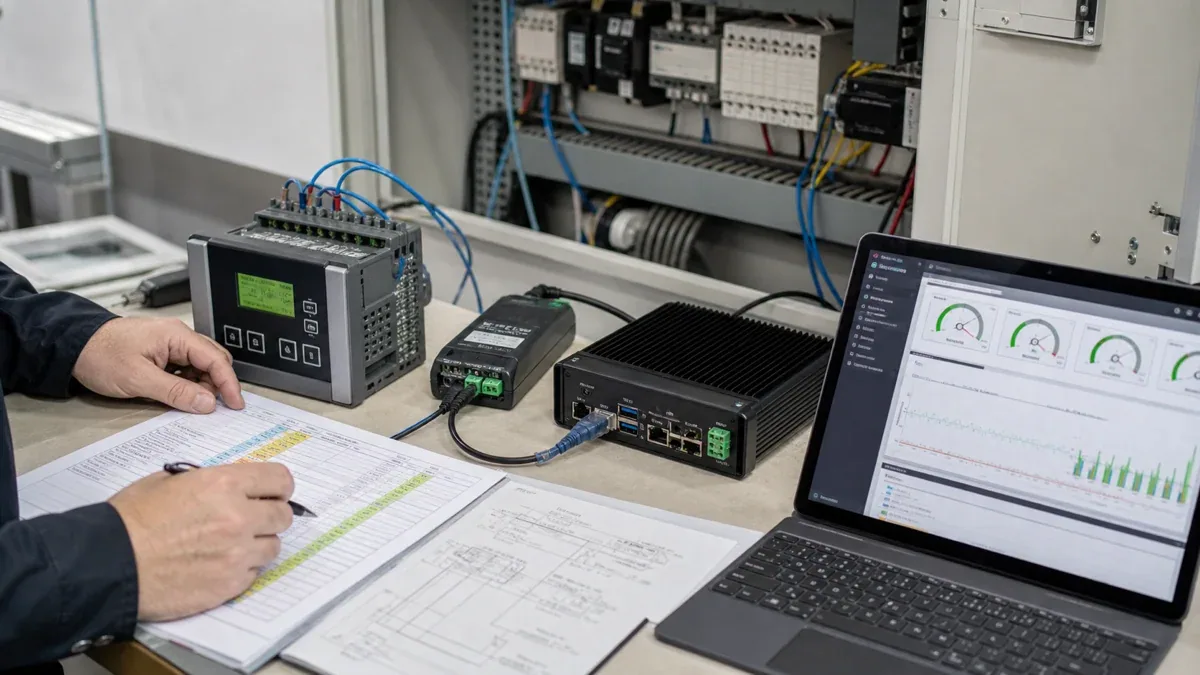
Consider an edge computing box when:
- Multiple devices need to be aggregated on site instead of each device connecting directly to the cloud.
- The site mixes ZigBee, Wi-Fi, wired Ethernet, serial ports, PLCs, and private protocols.
- The business requires local buffering, offline continuation, local rules, or local control.
- Cameras, sensors, or field workflows require AI recognition, detection, tracking, or voice input.
- Cloud latency, network reliability, or data residency constraints affect the project.
The cost is also clear: edge boxes need installation, system maintenance, remote upgrades, log collection, and operational responsibility. If the team has no device operations process, adding edge hardware only because it sounds more intelligent may create more maintenance cost than project value.
4. For long-term device operations, the platform layer is essential
When the project shifts from connecting several devices to operating a fleet, the IoT platform becomes central. The ZedIoT IoT platform can provide device connectivity, device management, data collection, data parsing, remote control, rules, dashboards, alerts, and AI data analytics.
The decision criterion is simple: if the customer needs to manage the device lifecycle continuously, instead of only proving a one-time connection, evaluate the ZedIoT IoT Platform.
Common triggers include:
- Devices are distributed across stores, campuses, customer sites, or factories.
- The project needs device registry, permissions, tenants, roles, and operation audit.
- Alerts, work orders, reports, energy analytics, or visualization dashboards are required.
- Device data must enter a business system, not only appear as live values.
- Private deployment, source-code delivery, or industry customization is needed.
The platform does not replace hardware. It turns connected hardware into an operable asset. Without a platform, upgrades often stop at connectivity. With a platform, the project can move into remote operations, analytics, AIoT applications, and continuous improvement.
5. Common product combinations
Use this table as an initial selection guide.
| Scenario | Recommended combination | Why it fits |
|---|---|---|
| A few serial devices need networking | Serial converter + platform connection | Low cost, good for proving data value and remote visibility |
| Multi-device, multi-protocol site | Serial converters + AIHub-Z3 / Z5 + ZedIoT | The edge layer handles aggregation and resilience; the platform handles operations |
| Chain-store equipment upgrade | Serial converters or controllers + ZedIoT | The main value is registry, remote alerts, reporting, and operations |
| On-site vision or AI recognition | AIHub-Z5 + cameras / sensors + ZedIoT | Compute and field feedback matter more than basic connectivity |
| Private deployment project | ZedIoT + edge boxes + protocol customization | Data control, customization, and long-term maintainability are priorities |

The diagram is not saying every project needs every layer. It helps the team decide which layer can be started first and which layer must be added before scaling. The best product stack is usually not the most complete stack. It is the stack that covers the current bottleneck while leaving a clean path for the next stage.
6. When not to start with a full-stack upgrade
A full upgrade is not always the right first move:
- Device protocols and point tables are not confirmed.
- The customer only wants to validate one device type.
- Network, power, installation space, and site maintenance responsibility are unclear.
- Device control actions have safety risks, but permissions, confirmation, and audit are not defined.
- The business team has not decided how the collected data will be used.
In these conditions, start with a small closed loop: choose one or two device types, prove connectivity, data collection, alerts, or remote control, and then decide whether edge computing and platform operations are required.
7. A minimum implementation path
A practical implementation path has four steps:
- Audit the devices: model, interface, protocol, point table, control risk, and installation conditions.
- Prove the connection: use a serial converter or controller to connect representative devices and validate data quality.
- Add site capability: when point count, protocol mix, weak networks, or local AI requirements are clear, add an AIHub edge computing box.
- Operate on a platform: use ZedIoT for device registry, alerts, remote operations, reports, visualization, and business integration.
The final judgment is: legacy device intelligence is not a single-product purchase. It is a layered product-combination decision. Serial converters connect devices, edge computing boxes make the site autonomous, and the IoT platform makes the fleet operable. If those responsibilities are clear, the project is much less likely to stop at “connected” and fail before “useful in daily operations.”