

Blogs

5G RedCap: A Low-Cost Version of 5G or the Next-Generation IoT Connectivity Solution?

5G RedCap (Reduced Capability), a part of the 5G standard, is a lightweight version designed for medium-speed, large-scale IoT scenarios. Compared to standard 5G, it is less expensive and consumes less power. Meanwhile, it offers generational advantages over 4G technologies like Cat.1.
As the global cellular IoT industry grows, RedCap is gradually transitioning from experimental phases to commercial deployment. This article will explore RedCap’s potential and role in the industry by discussing its technical features, application scenarios, and market prospects.


I. Technical Features and Positioning of 5G RedCap

1.1 What is 5G RedCap?

5G RedCap, introduced in the 3GPP R17 standard, aims to fill the gap between 4G and standard 5G by providing a cost-effective connectivity solution for medium-speed, large-scale IoT scenarios.
Compared to standard 5G, RedCap offers significant optimizations in several aspects:

  • Simplified Hardware:
    RedCap removes support for millimeter waves and limits the number of antennas to two, reducing device complexity, power consumption, and manufacturing costs.
  • Low Power Consumption:
    RedCap modules consume 60% less power than LTE Cat.4 modules and 70% less than standard 5G eMBB modules, making them ideal for long-lasting devices such as smartwatches and light industrial sensors.
  • High Cost-Performance Ratio:
    Despite hardware simplifications, RedCap retains native 5G features, including high bandwidth, low latency, and precise positioning capabilities. It offers a maximum downlink speed of 100 Mbps, sufficient for most IoT scenarios.

1.2 Positioning and Advantages of RedCap

RedCap’s core positioning lies in balancing performance, power consumption, and cost to provide efficient solutions for specific application scenarios. Below is a comparison with other cellular technologies:

TechnologyPower ConsumptionModule CostMax SpeedTypical Applications
LTE Cat.1Medium$5-$710 MbpsMobile payment, asset tracking
LTE Cat.4High$10-$15150 MbpsVideo surveillance, vehicle communication
5G RedCapLower$8-$12100 MbpsIndustrial sensors, smart wearables, connected vehicles
Standard 5G eMBBHigh$15-$251 Gbps+High-speed mobile communication, AR/VR

RedCap is set further to promote the adoption of 5G in IoT, enabling broader application scenarios.

II. Global Application Scenarios and Examples of RedCap

2.1 Industrial IoT (IIoT)

Case Study: China’s Electric IoT

  • Background: In China, the electric power sector pioneered the deployment of IoT solutions based on 5G RedCap. China Unicom built a 5G RedCap electric power private network in the province of Shandong, connecting over 10,000 smart terminals for scenarios like electric meters and power distribution monitoring.
  • Impact: Compared to traditional 4G solutions, RedCap achieved lower power consumption and higher real-time performance, with device monitoring precision increased by 30% and data transmission efficiency improved by 50%.

Case Study: Industrial Automation in Europe

  • Background: In Germany, an industrial automation company adopted RedCap modules in its smart manufacturing scenarios, deploying a batch of industrial robots to achieve real-time collaboration through RedCap’s low-latency communication.
  • Advantage: Transitioning data flow from wired transmission to RedCap wireless solutions reduced overall deployment costs by 20%.

2.2 Consumer Applications: Smart Wearables

Case Study: Global Smartwatch Market

  • Background: MediaTek launched the T300 chip, supporting smart wearables, including watches, fitness trackers, and lightweight AR/VR devices. This chip marked the first mass production of RedCap modules in wearable scenarios.
  • Practical Application: KingConv Technology developed smartwatches based on RedCap technology, used in smart factory management to collect and analyze employee health data in real time.
  • Future Prospects: The consumer market is price-sensitive, and RedCap’s low power consumption and medium-speed characteristics make it an ideal choice for smart wearables. It is expected to achieve large-scale adoption in global consumer markets.

2.3 Overseas Use Cases: Logistics and Connected Vehicles

North America: Logistics Management

  • Background: In the U.S., a logistics company introduced 5G RedCap modules for freight tracking and warehouse management. With integrated GPS positioning, RedCap devices provide real-time monitoring of cargo during transportation.
  • Impact: Compared to traditional 4G solutions, cargo loss rates dropped by 15%, and logistics efficiency improved by 20%.

Europe: Connected Vehicles

  • Background: The EU leads the standardization of connected vehicle technologies, with RedCap modules adopted in several fleet management projects.
  • Application Advantage: Compared to Cat.4 modules, RedCap offers mid-range performance at a lower cost, making it ideal for advanced driver assistance systems (ADAS).

III. Market Development and Analysis in Key Countries

3.1 U.S. Market

Current Status:

  • 5G infrastructure coverage has exceeded 90%, and RedCap has initial applications in both industrial and consumer markets.
  • By 2024, the U.S. RedCap module shipment volume is estimated to reach 500,000 units, primarily in industrial monitoring and smart wearables.

Key Vendors:

  • Qualcomm has released a series of RedCap-supporting chips, focusing on connected vehicles and smart home markets.
  • Companies like Amazon and Microsoft plan to integrate RedCap modules into their smart home ecosystems, providing faster and more reliable connectivity services.

3.2 European Market

Current Status:

  • Europe has traditionally been a market for LoRa and NB-IoT, but RedCap is gradually penetrating logistics, smart home, and remote medical device sectors with its medium speed and high reliability.
  • Countries like Germany and Norway have completed several RedCap pilot projects and plan to achieve commercial deployments by 2025.

Example Applications:

  • Smart Logistics: Norway’s Telenor completed a RedCap-based freight tracking pilot project, optimizing supply chain management through 5G positioning features.
  • Remote Healthcare: A UK-based telemedicine company used RedCap modules to enable mass production of portable health monitoring devices, providing cost-effective healthcare solutions for seniors and chronic disease patients.

3.3 Chinese Market

Current Status:

  • China has the world’s largest 5G network infrastructure, with RedCap leading applications across multiple industries.
  • In 2024, RedCap module shipments reached 500,000 to 1 million units, and it is projected to surpass 10 million units by 2025.

Key Scenarios:

  • Electric IoT: China Unicom’s successful deployment of a RedCap electric power private network in Shandong has become a benchmark for the industry.
  • Video Surveillance: Wanhua Chemicals deployed thousands of RedCap cameras in its chemical projects for real-time monitoring in hazardous areas.

IV. Ecosystem and Vendor Dynamics of 5G RedCap

4.1 Core Vendors and Their Technological Layouts

5G RedCap’s commercialization relies on the joint efforts of chip vendors, module manufacturers, and telecom operators. Below is an overview of key players:

VendorCore ProductApplication AreasMarket Focus
MediaTekT300 chipSmart wearables, lightweight AR/VRConsumer market
QualcommRedCap chip seriesIndustrial IoT, connected vehiclesGlobal, focusing on North America and Europe
HiSiliconRedCap chip modulesVideo surveillance, electric IoTChinese market
Quectel5G RedCap modulesSmart home, industrial sensorsIndustrial and smart home scenes
China Mobile IoTMR885A moduleSmart wearables, electric utilitiesPower grids and consumer devices

Chip Vendors’ Advances:

  • MediaTek T300:
    This chip specializes in low-power and cost-effective solutions, particularly in wearable and lightweight AR/VR devices.
  • Qualcomm:
    Qualcomm has released multiple RedCap chips targeting industrial IoT and automotive markets, leveraging low-latency and high-bandwidth capabilities.

Module Manufacturers’ Innovations:

  • Quectel:
    Developed various RedCap modules, supporting low-power connections in smart home and industrial scenarios.
  • China Mobile IoT:
    Offers compact modules aimed at consumer markets, addressing the needs of lightweight devices.

Telecom Operators’ Roles:

  • China Unicom:
    A leader in deploying RedCap power networks, driving industrial applications in China.
  • Telenor (Norway):
    Completed logistics and medical pilots, providing a template for RedCap adoption in Europe.

4.2 RedCap’s Commercialization Timeline

Although RedCap is in its early stages of development, its commercialization process is expected to accelerate over the next five years:

YearGlobal Shipments (Estimated)Commercial MilestonesPrimary Applications
2024500,000–1,000,000 unitsPilot deployments, early promotionElectric IoT, video surveillance
202510 million unitsScaling commercial deploymentsSmart wearables, connected vehicles
2030150 million unitsMainstream adoptionIndustrial IoT, consumer electronics

RedCap’s success depends on reducing module prices to below $8 and building a comprehensive ecosystem.

V. Challenges and Future Directions

5.1 Challenges Facing RedCap

  1. Cost Constraints:
    While RedCap modules are cheaper than standard 5G, they remain more expensive than LTE Cat.1. Further cost optimization is necessary for mass-market adoption.
  2. Network Coverage:
    RedCap’s widespread adoption requires telecom operators to upgrade their 5G networks to support seamless connections. In regions with weaker infrastructure, network coverage is a significant barrier.
  3. Ecosystem Development:
    The application ecosystem for RedCap is still nascent. Establishing industry standards and developing use cases are critical for its growth.

5.2 Future Directions for RedCap

  1. Penetration in Consumer Markets:
    Through operator subsidies and economies of scale, RedCap modules are poised to become prevalent in smart wearables, smart home devices, and AR/VR equipment.
  2. Optimization in Industrial Scenarios:
    In Industrial IoT, RedCap’s reliability and low latency will further expand applications such as industrial automation and remote device management.
  3. Integration with AIoT:
    As AI adoption grows, RedCap may become the standard connectivity solution for AIoT devices, enabling more intelligent functionalities.

VI. Conclusion: Is RedCap the Next-Generation IoT Connectivity Solution?

5G RedCap is not merely a “low-cost version of 5G”; it is a thoughtfully designed solution for medium-speed IoT scenarios. By balancing cost, power consumption, and performance, it offers a compelling option for industrial and consumer applications.

Over the next five years, RedCap will likely transition from pilot projects to mainstream adoption, scaling from millions to hundreds of millions in shipments. For enterprises and operators, capitalizing on this trend will unlock new opportunities for innovation and market leadership.

Behavior Recognition System Development for Medical Practical Training

Project Background


With the advancement of medical education, hands-on training has become essential for developing students’ practical skills. However, traditional training management faces challenges, including limited real-time monitoring and difficulty in evaluating outcomes. To address these issues and enhance training quality and management efficiency, our client, a medical university, requires an intelligent behavior recognition system for practical training management.

Project Goal


The project aims to develop an intelligent system that:

  • Monitors students’ practical training operations in real time.
  • Ensures standardized procedures.
  • Automatically evaluates training behaviors and provides timely feedback.
  • Delivers data-driven insights to support teaching improvements.

Technical Solution


To meet the needs of medical universities, we propose an integrated solution:

  • Behavior Recognition Technology
  • Use computer vision and machine learning to develop algorithms for recognizing student training behaviors automatically.
  • System Integration
  • Seamlessly integrate behavior recognition technology with the existing teaching management system for smooth data flow.
  • Intelligent Evaluation Module
  • Develop an automated evaluation module to assess training performance based on behavior recognition results.
  • User-Friendly Interface
  • Design an intuitive interface for easy access and operation by teachers and students.
image processing case02

Main Features


Real-Time Image Capture

Use HD cameras to capture live student training activities.

Behavior Recognition Algorithm

Identify key actions using advanced recognition algorithms.

Intelligent Evaluation

Automatically assess training effectiveness and provide feedback.

Data Recording and Analysis

Log training data for in-depth analysis and continuous improvement.

Statistical Reports

Generate detailed reports for reference by teachers and students.

Access Control

Implement role-based access management to ensure data security.

Project Vaule


The system accurately identifies and evaluates student training behaviors, delivering value across multiple stakeholders:

  • Teachers: Optimize teaching strategies based on data-driven insights.
  • Students: Receive instant feedback to improve skills effectively.
  • Administrators: Enhance efficiency and quality in training management through data analytics and automated reporting.

This intelligent behavior recognition system empowers medical universities to achieve smarter, more efficient training management while fostering skill development and academic excellence.

More AI Development Cases


AI Medical Information Mobile APP Development

Droplet Deformation Stress Analysis Software Development

AI Tour Guide Robot Development

Project Background


With the continuous advancement of artificial intelligence technology, office building managers are seeking smarter and more automated ways to enhance the visitor experience. Traditional manual guided tours are not only inefficient but also costly. To address this issue, our client aims to implement an innovative solution—developing an office building guide robot system. This system will train an AI robot language model using a knowledge base of building guide information, enabling visitors to quickly access information about the premises.

Project Objectives


The core objective is to create an autonomous guide robot capable of providing building navigation services, including information about building layouts and facility locations. Using natural language processing technology, the robot will understand and respond to visitor inquiries. Additionally, it will offer real-time path planning and navigation to ensure visitors reach their destinations efficiently. Multimedia displays and live video streaming will further enhance the guided tour experience.

AI-Powered Tour Guide Robot Solution


We have adopted an innovative “Robot + AI Large Model” approach, enabling the guide robot to have deep learning capabilities in speech recognition, semantic understanding, speech synthesis, decision-making, and motion control. The robot supports multi-floor unmanned guidance, facial recognition, active wake-up, trackless autonomous navigation, and engaging visitor interaction, meeting the advanced requirements of cross-floor guidance in smart buildings.

Usage Scenarios:

  • Building entrances and lobby service desks
  • Accessible via QR code to enter the corresponding web-based guide page

Main Features


Park Navigation Q&A

The robot can understand and respond to questions about building layouts, facility locations, and provide detailed navigation information.

Natural Language Processing

Using advanced natural language processing technology, the robot can comprehend user input and deliver appropriate responses.

Speech Recognition and Broadcasting

The robot features high-precision speech recognition, converting voice commands into text and delivering fluent voice responses.

Interactive Cartoon Character Design

With an animated design, the robot engages users through fun interactions, enhancing participation and experience.

Data Encryption

All transmitted data is encrypted, ensuring the security of user information and park data.

AI Model Optimization

Through continuous machine learning and model optimization, the robot improves its services, offering more accurate and personalized guidance experiences.

Project Results


Through this project, we successfully developed an intelligent office building guide robot system. The robot enhances visitor experiences by providing efficient navigation, real-time path planning, and interactive services through advanced AI technologies. It effectively reduces operational costs, improves service efficiency, and delivers a seamless user experience. This achievement demonstrates our commitment to leveraging innovative AI solutions to create smarter and more automated building management systems, setting a benchmark for future intelligent building applications.

More AI Development Cases


AI Financial Assistant Development

AI Baby Monitor Product R&D

IoT Device Management (4): How to Achieve Device Automation Management and Predictive Maintenance with AI?

With the exponential growth of IoT (Internet of Things) devices, artificial intelligence (AI) is becoming a core technology for enhancing the efficiency and reliability of device management. By integrating AI, device management is shifting from traditional manual operations to automated and intelligent processes. Notably, Predictive Maintenance enables timely warnings before device failures, reducing downtime risks and maintenance costs.

In this article, we explore how to use AI to optimize IoT device automation management processes, including automated configuration, fault prediction, intelligent optimization, and the application of AI in edge devices.


Why Choose AI for IoT Device Management?

Traditional device management relies on regular maintenance or post-failure repairs. While simple, this approach is inefficient, particularly for large-scale device management, leading to the following challenges:

  1. High Operational Costs: Frequent manual interventions increase maintenance expenses.
  2. Unpredictable Downtime Risks: Undetected failures may cause system crashes.
  3. Underutilized Data: Massive data generated by devices remains under-analyzed and underutilized.

Advantages of AI in Device Management:

  • Real-time Monitoring and Analysis: Data-driven monitoring quickly identifies anomalies.
  • Predictive Maintenance: Identifies potential issues early to prevent device failures.
  • Automated Management: Optimizes device configurations and operations using self-learning algorithms.

Key Applications of AI in IoT Device Management

1. Automated Device Configuration and Optimization

Challenges:

  • Initial configuration of numerous devices typically relies on manual work, which is time-consuming and error-prone.
  • Device operating states need dynamic adjustments to adapt to environmental or task changes.

Solutions:

  1. AI-powered Automated Configuration:
  • Analyze the operating environment using AI models to automatically generate optimal configuration parameters.
  • Use reinforcement learning algorithms to optimize device behavior, such as energy consumption or performance output.
  1. Example: Smart Lighting Control System:
  • AI dynamically adjusts light brightness and color temperature based on indoor lighting and user habits for optimal user experience.

2. Predictive Maintenance: Preventive Fault Management

Challenges:

  • How to identify potential issues before they cause failures?
  • How to reduce unnecessary regular maintenance costs?

Solutions:

  1. Machine Learning-based Fault Prediction:
  • Train machine learning models with historical data to recognize anomalous patterns in device operations.
  • Predict potential failure times and causes.
  1. Real-time Data Stream Analysis:
  • Collect and analyze operational data like temperature, vibration, and pressure through edge devices in real-time.
  • Detect anomalies using deep learning algorithms.
  1. Example: Predictive Maintenance for Wind Turbines:
  • Sensors on wind turbines monitor vibrations and temperature changes.
  • AI models predict bearing wear and schedule maintenance before failures occur.

3. Applications of Edge AI

Challenges:

  • Limited computational capacity of edge devices to efficiently run AI models.
  • Data transmission to the cloud for analysis may cause latency and privacy issues.

Solutions:

  1. Lightweight AI Models:
  • Use optimized machine learning models (e.g., TinyML) to run on edge devices.
  • Minimize resource requirements while achieving local analysis.
  1. Hierarchical Data Processing:
  • Perform simple prediction tasks (e.g., temperature anomaly detection) on edge devices.
  • Upload complex analysis tasks to the cloud to reduce edge device pressure.
  1. Example: Edge AI in Industrial Equipment:
  • Edge AI chips in factory equipment detect vibration anomalies in real-time.
  • Local alert systems quickly notify operators for inspections.

4. Data-driven Device Optimization

AI’s core lies in deep analysis and utilization of operational data, which includes:

  • Data Aggregation: Consolidating device-generated data into analyzable formats.
  • Optimization Models: Using AI to optimize operational parameters, such as energy efficiency and network performance.

Example: Device Optimization in Smart Agriculture

  • AI analyzes soil moisture sensor data to predict the best irrigation times.
  • Adjusts irrigation devices dynamically based on weather forecasts, conserving water resources and boosting crop yields.

Technologies and Tools for Implementation

To apply AI in IoT device management, the following key technologies and tools are required:

Technology/ToolApplication ScenariosFeatures
Machine Learning ModelsFault prediction, optimization controlSupports data-driven analysis
Edge Computing FrameworksEdge device intelligenceReduces latency, enhances privacy
Data Stream Processing ToolsReal-time monitoring and analysisTools like Apache Kafka and Flink
Cloud AI ServicesLarge-scale device data analysisAWS SageMaker, Google AI Platform

Recommended IoT Platforms with AI Capabilities

An excellent IoT platform should offer built-in AI analysis tools to enable automation and intelligence in IoT device management. Recommended platforms include:

PlatformAI Capability SupportApplication Scenarios
AWS IoT GreengrassEdge AI and model deploymentIndustrial intelligence, remote monitoring
Azure IoT EdgeAI model inference and edge analysisSmart cities, energy management
Google Cloud IoTHigh-performance machine learningPrecise data analysis, smart device optimization
ThingsBoardBasic analytics with plugin extensionsSmall-to-medium projects

Case Studies: Practical Predictive Maintenance

Case 1: Predictive Maintenance in Manufacturing

  • Background: Hundreds of machines deployed in an automobile factory.
  • Solution:
  1. Sensors collect data on vibrations, temperature, and current.
  2. Machine learning models predict equipment wear and schedule maintenance teams.
  • Results:
  • 30% reduction in failure rates.
  • 50% reduction in downtime.

Case 2: Equipment Management in Smart Buildings

  • Background: A large intelligent office building equipped with HVAC systems and elevators.
  • Solution:
  1. AI models analyze elevator usage data to optimize operations.
  2. HVAC systems adjust automatically to reduce energy waste.
  • Results:
  • 25% reduction in energy consumption.
  • Significant decrease in equipment failure rates.

Conclusion

The introduction of AI is revolutionizing IoT device automation management. From automated configuration to predictive maintenance and edge intelligence, AI makes device management more efficient, intelligent, and reliable.

Recommendations

  1. Plan AI Application Scenarios: Identify the most valuable use cases, such as predictive maintenance or optimization control.
  2. Choose Suitable Platforms and Tools: Select AI-enabled IoT platforms based on practical needs.
  3. Leverage Data-Driven Optimization: Fully exploit the potential of device data to improve management effectiveness.

By leveraging AI, IoT device management is entering a new era. If you face challenges in device management, consider integrating AI into your IoT systems. It can bring unprecedented value.

Let’s Automate Your Device Ecosystem

ZedIoT’s automation solutions are designed to simplify device operations, reduce maintenance costs, and enable intelligent decision-making across industries. Combining AI and IoT technologies, we enable intelligent automation—from device-level decisions to system-wide alerts—empowering industries to scale with confidence. Whether you’re looking to automate a single process or deploy predictive AI at scale, we have the tools to support you.

???? Contact us for Device Automation and AI Solutions

ai iot development development services zediot

IoT Device Management (3): Mastering IoT Device Lifecycle Management: From Deployment to Retirement

Internet of Things (IoT) device management involves not only daily operations but also the entire lifecycle management from production and deployment to retirement. Device Lifecycle Management (DLM) is not only key to the successful operation of IoT systems but also core to reducing maintenance costs, improving device reliability, and optimizing user experience.

In this article, we will deeply explore the key stages, core technologies, and best practices of IoT device lifecycle management to help you efficiently manage the entire lifecycle of IoT devices.


What is Device Lifecycle Management in IoT?

Device lifecycle management covers the entire process from production to retirement, typically divided into five stages:

  1. Production Stage: Device manufacturing, hardware testing, and initial setup.
  2. Deployment Stage: Device registration, network connection, and field installation.
  3. Operation Stage: Device monitoring, firmware upgrades, and performance optimization.
  4. Maintenance Stage: Fault diagnosis, repair, and predictive maintenance.
  5. Retirement Stage: Device data cleanup, resource recovery, and secure destruction.

Importance of Lifecycle Management:

  • Improve long-term device reliability and security.
  • Reduce maintenance and operational costs.
  • Ensure data privacy and environmental compliance during device retirement.

Key Stages of IoT Device Lifecycle and Technical Implementation

1. Device Deployment Stage: Quick Start and Configuration

Challenges:

  • How to quickly register devices in batch?
  • How to simplify device initialization and network configuration?

Solutions:

  1. Automated Registration and Configuration:
  • Use protocols like LwM2M (Lightweight Device Management Protocol) for batch device registration.
  • Use pre-configuration templates for quick device setup.
  1. Device Shadow:
  • Device shadow is a virtual device model storing current and target device states.
  • Users can sync configurations through device shadow regardless of device online status.
  1. Case Study: Smart Bulb Deployment:
  • Users scan QR code on the bulb to complete device registration via mobile app.
  • Cloud automatically adds device to network and configures operating parameters.

2. Device Operation Stage: Monitoring and Optimization

Challenges:

  • How to ensure device stability during operation?
  • How to respond quickly to failures?

Solutions:

  1. Real-time Monitoring and Alerting:
  • Use IoT platform to monitor key metrics like CPU usage, memory status, and network connectivity.
  • Set alert rules to notify operations team when device status is abnormal.
  1. OTA (Over-The-Air) Upgrades:
  • Support remote firmware upgrades to improve device functionality and security.
  • Differential upgrade technology: only transmit differences from current firmware to reduce upgrade data volume.
  1. Predictive Maintenance:
  • Use machine learning to analyze device operation data and predict potential failures.
  • Plan maintenance work in advance to avoid unexpected downtime.

Table: Device Operation Status Monitoring Example

MetricCurrent ValueNormal Range
Temperature65°C30-70°C
CPU Usage85%<80%
Network Latency150ms<200ms

3. Device Maintenance Stage: Fault Diagnosis and Repair

Challenges:

  • How to quickly locate and fix device issues?
  • How to extend device lifespan?

Solutions:

  1. Remote Diagnostic Tools:
  • Quickly locate fault causes through device logs and status data.
  • Execute device restart or parameter adjustment using IoT platform’s remote control features.
  1. Spare Parts and Field Maintenance:
  • Ensure critical devices have backup modules in industrial IoT scenarios to reduce downtime.
  • Technical staff can access device diagnostic information directly on-site with mobile maintenance tools.
  1. Case Study: Industrial Sensor Maintenance:
  • Factory sensors detect abnormal vibration and automatically trigger maintenance requests.
  • Technical staff replace sensor components based on system prompts and restore device operation.

4. Device Retirement Stage: Security and Sustainability

Challenges:

  • How to ensure retired device data isn’t misused?
  • How to handle waste devices to meet environmental requirements?

Solutions:

  1. Data Cleanup and Destruction:
  • Perform encrypted erasure of stored data before device retirement to ensure sensitive information cannot be recovered.
  • Use hardware-level encryption erasure technology (like TPM modules).
  1. Recycling and Reuse:
  • Reuse available parts from retired devices, such as storage chips or sensors.
  • Process non-recyclable devices environmentally, complying with relevant regulations (like RoHS).
  1. Case Study: Smart Home Device Retirement:
  • Users execute device data erasure through mobile app.
  • Manufacturers provide retirement recycling services, using device parts in new product manufacturing.

Key Technologies for Device Lifecycle Management

The following key technical tools are needed at various stages of lifecycle management:

Technical ToolApplication ScenarioAdvantages
LwM2M ProtocolAutomated device registration and configurationLightweight, easy to implement
Device ShadowSync device statusSupports offline management
OTA UpgradeFirmware updatesImproves device security and functionality
Edge ComputingReal-time data processing during operationReduces latency, improves efficiency
Data Encryption and Destruction ToolsData cleanup and destructionProtects user privacy

How to Choose an IoT Platform Supporting Full Lifecycle Management?

An excellent IoT platform should cover all aspects of device lifecycle and provide relevant functional support. Here are some recommended platforms and their features:

Platform NameLifecycle FeaturesSuitable Scenarios
AWS IoT CoreSupports device shadow, OTA upgrades, and security managementLarge-scale device deployment
Azure IoT HubProvides real-time monitoring, predictive maintenance, and data analysisEnterprise IoT systems
Google Cloud IoTIntegrates edge computing and device lifecycle management toolsHigh-performance IoT systems
ThingsBoardOpen-source solution, supports data visualization and monitoringSmall-medium projects
ZedIoTEnterprise solution, provides real-time monitoring, predictive maintenance, device lifecycle management, and data analysisEnterprise IoT systems

Final Thoughts

IoT Device lifecycle management is fundamental to successful IoT system operation. By adopting automation and intelligent technologies during deployment, operation, maintenance, and retirement stages, device performance and lifespan can be significantly improved while reducing operational costs.

Recommendations

  1. Plan Lifecycle Management Strategy: Plan device lifecycle management processes from project inception.
  2. Choose Suitable IoT Platform: Select comprehensive IoT platform based on requirements.
  3. Focus on Data Privacy and Security: Ensure proper handling of user data, especially during retirement stage.

Device lifecycle management is not just a technical issue; it’s also crucial for long-term business success. Through efficient management processes and technical tools, you can better address the complex challenges of the IoT era.

Ready to streamline your IoT device lifecycle?

At ZedIoT, we help businesses manage the full IoT device lifecycle—from embedded software and hardware development to cloud connectivity and secure decommissioning. Whether you’re launching a new product or optimizing existing device fleets, our end-to-end services ensure your IoT system is scalable, secure, and future-ready.
Talk to ZedIoT’s experts about building a secure, scalable, and future-proof IoT solution.

???? Schedule a Free Consultation
???? Explore Our IoT Services

IoT Device Management (2): How to Achieve Low Latency and High Reliability in Managing Large-Scale IoT Device Performance

With the development of Internet of Things (IoT) technology, the rapid growth in the number of devices presents significant challenges for device management. When managing millions of devices, ensuring system performance, maintaining low latency, and guaranteeing high reliability have become core challenges in IoT system development and operations.

In this article, we will explore how to build an efficient and stable IoT device performance management system through edge computing, distributed architecture, and load balancing, starting from architectural design, technical implementation, and practical application cases.


Why IoT Device Performance Management Is Critical for Scalable Systems

In an IoT system with millions of devices, each device may frequently send data requests and operation commands. This large-scale communication can easily lead to the following issues:

  1. Increased Latency: Communication between devices may slow down due to server overload, affecting real-time applications.
  2. System Crashes: Centralized architecture is vulnerable to single points of failure that can make the entire system unavailable.
  3. Resource Waste: Unoptimized systems may waste computing, storage, and network resources, increasing costs.

Application Scenarios:

  • Smart Cities: Large-scale networking of street lights, cameras, and traffic signals.
  • Industrial IoT (IIoT): Real-time monitoring of thousands of sensors in factories.
  • Consumer Devices: Interconnection and collaboration of millions of smart home devices.

The goal of high-performance management is to ensure rapid response and stable operation of the system under high concurrency through optimized architecture and technical measures.


Key Challenges of Monitoring IoT Device Performance at Scale

1. High Concurrent Requests

  • Massive devices sending data simultaneously can cause server overload.
  • How to handle queuing and latency issues in device communication?

2. Data Storage and Processing

  • Large amounts of data generated every second need real-time analysis and storage.
  • How to avoid data accumulation and quickly extract key information?

3. System Reliability

  • How to quickly recover and maintain business continuity when failures occur?
  • Single point failures can lead to entire system collapse.

4. Network Latency and Congestion

  • Large-scale device access may lead to network bandwidth constraints.
  • How to optimize data transmission paths and reduce latency?

Key Technologies Behind Scalable and Reliable IoT Device Monitoring

1. Edge Computing: Reducing Data Transmission Latency

Edge computing reduces data transmission latency to the cloud by processing data at nodes close to devices.

Advantages of Edge Computing:

  • Reducing Cloud Load: Distributing simple data processing tasks to edge devices.
  • Real-time Performance: Achieving millisecond-level response, suitable for latency-sensitive scenarios.
  • Bandwidth Savings: Only uploading key data to the cloud.

Case Study: Edge Computing in Smart Transportation Systems

Traffic lights use edge computing to process real-time data such as vehicle flow and weather conditions, and dynamically adjust signal timing based on analysis results.


2. Distributed Architecture: Improving System Scalability

Distributed architecture enhances system performance and avoids single points of failure by distributing tasks across multiple server nodes.

Key Technologies in Distributed Architecture:

  • Distributed Databases: Such as Cassandra and MongoDB, for storing and querying large-scale device data.
  • Distributed Message Queues: Such as Kafka and RabbitMQ, for handling high-throughput data streams.
  • Distributed Load Balancing: Dynamically allocating traffic to optimize resource utilization.

Case Study: AWS IoT Core’s Distributed Architecture

AWS IoT Core supports real-time communication and data analysis for millions of devices through distributed message queues and event stream processing.


3. Dynamic Load Balancing: Optimizing Resource Allocation

Load balancing technology prevents server overload by dynamically adjusting device request distribution.

Types of Load Balancing:

  • Static Load Balancing: Distributing traffic based on device ID or geographic location.
  • Dynamic Load Balancing: Adjusting distribution based on real-time traffic to adapt to device request fluctuations.

Diagram: Dynamic Load Balancing Workflow

Device Request --> Load Balancer --> Node1 (40%) --> Node2 (30%) --> Node3 (30%)

4. Message Queues and Stream Processing

Message queues and stream processing frameworks can effectively alleviate concurrent pressure in large-scale device communication.

Recommended Tools:

  • Apache Kafka: Processing high-concurrent data streams, supporting distributed log storage.
  • Apache Flink: Real-time stream data analysis, suitable for event-driven systems.

Case Study: Stream Processing in Industrial IoT

A large manufacturing factory’s sensors send millions of data points per second, using Kafka for efficient data stream transmission and Flink for real-time fault detection.


5. High Availability Design

To ensure system availability during failures, the following methods can be adopted:

  • Redundant Design: Deploying multiple replicas for critical services.
  • Automatic Failover: Traffic automatically switches to backup nodes when one node fails.
  • Monitoring and Alerting: Real-time system performance detection and timely failure response.

Case Study: High Availability in Smart Grid

In smart grids, systems utilize redundant design and automatic switching to ensure quick recovery of power distribution devices during outages.


How to Choose a High-Performance IoT Platform for Scalable Device Management

A powerful IoT platform is essential when managing millions of devices. Here are several mainstream platforms and their characteristics:

Platform NameFeaturesSuitable Scenarios
AWS IoT CoreSupports distributed architecture and edge computingLarge-scale device management, Industrial IoT
Azure IoT HubStrong data analytics and security management featuresEnterprise IoT projects, Smart cities
Google Cloud IoTHigh-performance stream processing and ML integrationHigh concurrency scenarios, Precise data analysis
ThingsBoardOpen-source solution, suitable for small-medium projectsSmart agriculture, Consumer IoT systems
ZedIoTCustomized solutions based on private platform, suitable for rapid deployment and secondary developmentEnterprise IoT projects, Smart cities, Consumer IoT systems, Large-scale device management, Industrial IoT

Summary

Key Points

In high-performance management of millions of devices, edge computing, distributed architecture, and dynamic load balancing are core technologies for achieving low latency and high reliability. Through optimized architecture design and technical implementation, the challenges of large-scale IoT device performance management can be effectively addressed.

Recommendations

  1. Layered Architecture Design: Combine cloud and edge computing to share data processing load.
  2. Choose Appropriate Platform: Select IoT platforms supporting distributed and high availability based on project scale and requirements.
  3. Implement Real-time Monitoring: Optimize system operation through stream processing and dynamic load balancing.
  4. How to Achieve IoT Device Interconnection Across Brands and Protocols
  5. What Is IoT Device Management and Why It Matters

Managing millions of devices is no easy task, but through proper technical architecture and tool selection, we can build an efficient, stable, and reliable IoT system, laying a solid foundation for future intelligent life.

Optimize Performance of Your IoT Devices with ZedIoT

At ZedIoT, we specialize in building scalable systems for IoT device monitoring and high-performance management. Whether you’re managing thousands or millions of devices, our solutions ensure:

  • ✅ Real-time monitoring of IoT device performance
  • ✅ Intelligent alerting and diagnostic dashboards
  • ✅ Seamless integration with your edge/cloud infrastructure
  • ✅ Performance-tuned security algorithms for large-scale environments

Need help monitoring IoT devices at scale?
???? Get in touch to design your next high-performance IoT platform.

IoT Device Management (1): How to Achieve IoT Device Interconnection Across Brands and Protocols

The Internet of Things (IoT) has developed rapidly over the past decade, but one of its biggest challenges remains how to achieve efficient interconnection between devices of different brands and communication protocols. This interoperability issue directly affects the compatibility, scalability, and stability of IoT systems.

In this article, we explore how to solve this problem through technical strategies, including the selection of standardized IoT communication protocols, the application of edge computing, and how to build unified data models. We aim to provide a comprehensive guide to achieving IoT device interconnection and improving multi-protocol IoT connectivity.

Why is IoT Device Interconnection Important?

Today’s IoT landscape includes everything from smart home bulbs and sockets to industrial sensors and controllers. These devices often fail to communicate effectively due to:

  • Different brands use different IoT communication protocols (e.g., Zigbee, LoRa, Wi-Fi)
  • A lack of standardization in data formats and communication methods
  • High system integration costs from extensive custom development

Significance of Device Interconnection:

  1. Improved Device Connectivity: Enabling seamless interaction between various devices
  2. Reduced Maintenance Costs: Decreased complexity in system integration and subsequent maintenance
  3. Enhanced System Scalability: Easy addition of new devices and support for future upgrades

Challenges in IoT Device Connectivity

To achieve how to connect IoT devices effectively, we must overcome key obstacles:

1. Protocol Fragmentation Common IoT protocols include:

There are numerous communication protocols in the market, such as:

  • Zigbee: Widely used in smart home devices
  • LoRaWAN: Low-power wide-area network protocol, suitable for industrial and agricultural applications
  • MQTT: Lightweight message queue protocol, commonly used for cloud communication
  • Matter: A unified standard addressing IoT interoperability

Problem: Devices typically support only a single protocol and cannot directly communicate with devices using other protocols.

2. Non-uniform Data Formats

Different devices have varying data structures and formats. For example, a temperature sensor might send data in JSON format, while another device might use XML format. This inconsistency increases the complexity of data parsing.

3. High System Integration Costs

IoT systems require extensive custom development, including protocol conversion and data format processing. This is not only time-consuming but also increases the complexity of subsequent maintenance.

How to Achieve Multi-Protocol IoT Connectivity?

1. Use Standardized IoT Communication Protocols

Matter Protocol: A Common Language for IoT Devices

Matter is an open-source IoT communication protocol launched by the Connectivity Standards Alliance (CSA), supporting multiple communication technologies including Zigbee, Wi-Fi, and Thread.

Matter’s Features:

  • Supports multi-brand device interconnection
  • Provides secure device communication and control
  • Simplifies the device certification and integration process

Matter’s Advantages:

  • User-Friendly: More intuitive device installation and configuration
  • Broad Compatibility: Supports mainstream brands and protocols, such as Apple HomeKit, Google Home

Use Case: Connecting Smart Home Devices with Matter

Imagine your home’s light bulbs, smart plugs, and sensors use Zigbee, Wi-Fi, and Thread, respectively. The Matter protocol allows these devices to work together seamlessly, without the user having to worry about the differences in underlying protocols.

2. Use Edge Computing Gateways

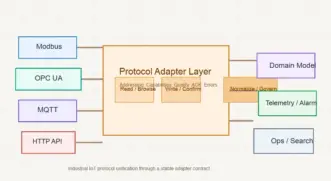
Edge gateways act as intermediaries, translating between multi-protocol IoT connectivity scenarios.

Edge Computing Gateway Functions:

  • Protocol Conversion: Supports multi-protocol communication including Zigbee, LoRaWAN, MQTT
  • Data Processing: Converts device data into unified formats
  • Local Intelligence: Uses edge computing to reduce cloud load and improve system response time

Use Case: Edge Gateway Applications in Smart Factories

In industrial settings, different types of sensors, such as temperature sensors using LoRaWAN and vibration sensors using Zigbee, are integrated through edge computing gateways. These gateways process the data uniformly before sending it to the industrial cloud platform.

Edge Computing Gateway Workflow:

Device A (Zigbee) –> Edge Gateway –> Unified Data Format –> Cloud Platform
Device B (LoRa) –> Edge Gateway –> Unified Data Format –> Cloud Platform

3. Build Unified Data Models

Unified data models can standardize data from different devices, making it easier for systems to understand and process.

Data Model Example:

PropertyData TypeUnitDescription
TemperatureFloat°CCurrent environmental temperature
HumidityInteger%Current environmental humidity percentage
Device StatusStringN/ADevice operating status (ON/OFF)

4. API Abstraction Layer

Standard API endpoints for device management:

  • Device Control: /device/{id}/control
  • Data Query: /device/{id}/data

5. Choose an Excellent IoT Platform

Important capabilities for achieving IoT device interconnection::

  1. Multi-protocol IoT connectivity
  • Support for MQTT, CoAP, LoRa, Zigbee, Matter
  • Protocol gateway capabilities
  1. Data Processing
  • Real-time analysis
  • Visualization tools
  • Data storage solutions
  1. Device Management
  • Batch registration
  • OTA updates
  • Monitoring capabilities

Platform Comparison:

PlatformProtocolsKey FeaturesUse Cases
AWS IoT CoreMQTT, HTTPS, LoRaCloud management, analyticsSmart homes, industrial IoT
Azure IoTMQTT, AMQP, HTTPSStream processing, edge computingSmart cities, enterprise IoT
Google Cloud IoTMQTT, HTTPCloud integration, scalabilityHigh-performance systems
ThingsBoardMQTT, CoAP, HTTPOpen-source, visualizationSmall-medium projects

Summary

To enable future-ready IoT device connectivity, we recommend:

  • Building unified data models and API layers
  • Using IoT communication protocols like Matter for home automation
  • Applying edge computing for protocol bridging

Build Seamless IoT Device Connectivity with ZedIoT

Achieving seamless IoT device interconnection across brands and protocols can be complex, but with the right platform, it’s possible. At ZedIoT, we provide:

Need expert help to connect your IoT ecosystem?
???? Contact our team for a custom solution.

AI Application in Healthcare

Project Background


The client, a company specializing in healthcare content and technological innovation, aims to adapt to the digital transformation in accessing medical information. To meet the diverse needs of professionals and the public, they sought to create an intelligent service platform that integrates emergency knowledge, medical videos, courses, live streaming, and a medical encyclopedia

Project Objectives


To build a comprehensive and user-friendly medical information platform that spans multiple user terminals, addressing the limitations of traditional platforms. The solution aims to deliver timely and accurate information, improving efficiency for professionals and enhancing health awareness among the public….

AI-Powered Medical Information System Solutions


To achieve the stated goals, we developed a multi-user platform for the client, including a mobile app, WeChat Mini Programs, and a backend management system to cater to diverse user groups. The platform integrates an advanced content management system, enabling the upload, management, and distribution of medical videos, courses, and medical encyclopedia entries. Additionally, AI-powered features provide personalized content recommendations and intelligent search functionality.

The platform offers a wealth of high-quality course resources and allows third-party organizations or individuals to upload courses, which are published after backend review. Both free and paid course options are supported. The backend system facilitates unified review, publication, and management of course information, while users can manage their course content through a personalized dashboard.

Usage Scenarios:

  • End users (C-end) can view or purchase course videos via the mobile app.
  • End users can upload course videos on the mobile app, have them reviewed, and manage their published videos.
  • Administrators can manage course publication, approvals, and overall course management in the backend system.

AI-Powered Medical Information System Main Features


Emergency Medical Knowledge base

Offers guidelines and procedures for critical situations.

Medical Video Library

Includes professional videos on surgical operations and case studies.

Online Medical Courses

Provides diverse courses with options for online learning and exams.

Video Live Streaming

Supports expert lectures and surgery live streams for remote teaching.

Medical Encyclopedia

A comprehensive database of medical terms with precise explanations.

Personalized Recommendations

Uses AI to suggest content based on user preferences and behavior.

Smart Search

Delivers fast and accurate results using AI technology.

User Management

A backend system for user information management, content review, and data analysis.

More AI Development Cases


AI Financial Assistant Development

AI Baby Monitor Product R&D

AI Financial Assistant Development

Project Background


With the rapid development of artificial intelligence technology, especially in the field of natural language processing (NLP), ChatGPT, as a deep learning-based NLP tool, has shown great potential in the field of financial question-and-answer. Our customers realized that by developing an APP based on ChatGPT’s deep financial training AI language model, they could provide users with more convenient and personalized financial information services.

AI Financial Assistant Solution


We created a product for our customers, using ChatGPT’s deep learning capabilities to train a large amount of data in the financial field, so that the AI ​​model can understand and answer complex financial questions; using modular design to ensure that each functional module of the APP can be independently developed and maintained while maintaining overall coordination. Users can choose the corresponding financial theme module to chat through the WeChat Mini Program; chat replies can be liked, answers can be retrieved, or answers can be saved; users can view popular keywords and quickly initiate chats. Through user feedback and behavioral data, the AI ​​model is continuously optimized and adjusted to provide more accurate financial information services.

AI Financial Assistant APP Main Features


General Chat Q&A

Develop an intelligent dialogue system that can understand the user’s natural language input and provide corresponding answers

Financial Topic Chat Q&A

Based on the ChatGPT model, specially trains the Q&A model in the financial field to provide professional financial consulting services

AI Market Viewing Feature

Integrate market data interface, use AI technology to analyze market trends, and provide users with real-time market viewing services

Popular Q&A Viewing Function

Collect and display the most frequently asked financial questions and answers by users to improve the efficiency of information acquisition

Hot Knowledge Graph

Provide knowledge graph management functions including stocks, Hong Kong stocks, US stocks, funds, futures and other hot spots

Membership

Provide more exclusive services for paying members, such as in-depth market analysis, personalized investment advice, etc.

Project Results


The product’s APP intelligent Q&A function greatly simplifies the process of users obtaining financial information and improves the efficiency of information acquisition; the product helps users monitor market trends in real time and make investment decisions in a timely manner. The introduction of membership functions has created a new source of income for client companies and provided users with more value-added services. Since its launch, the mini program has accumulated tens of thousands of users and has received positive reviews in the industry.

More AI Development Cases


AI Application in Healthcare Information Management

AI Baby Monitor Product R&D