
AI Acoustic Monitoring for Early Data Center Fault Detection
A data center monitoring program needed to detect abnormal equipment sounds earlier and route useful evidence into the maintenance tools operators already used.
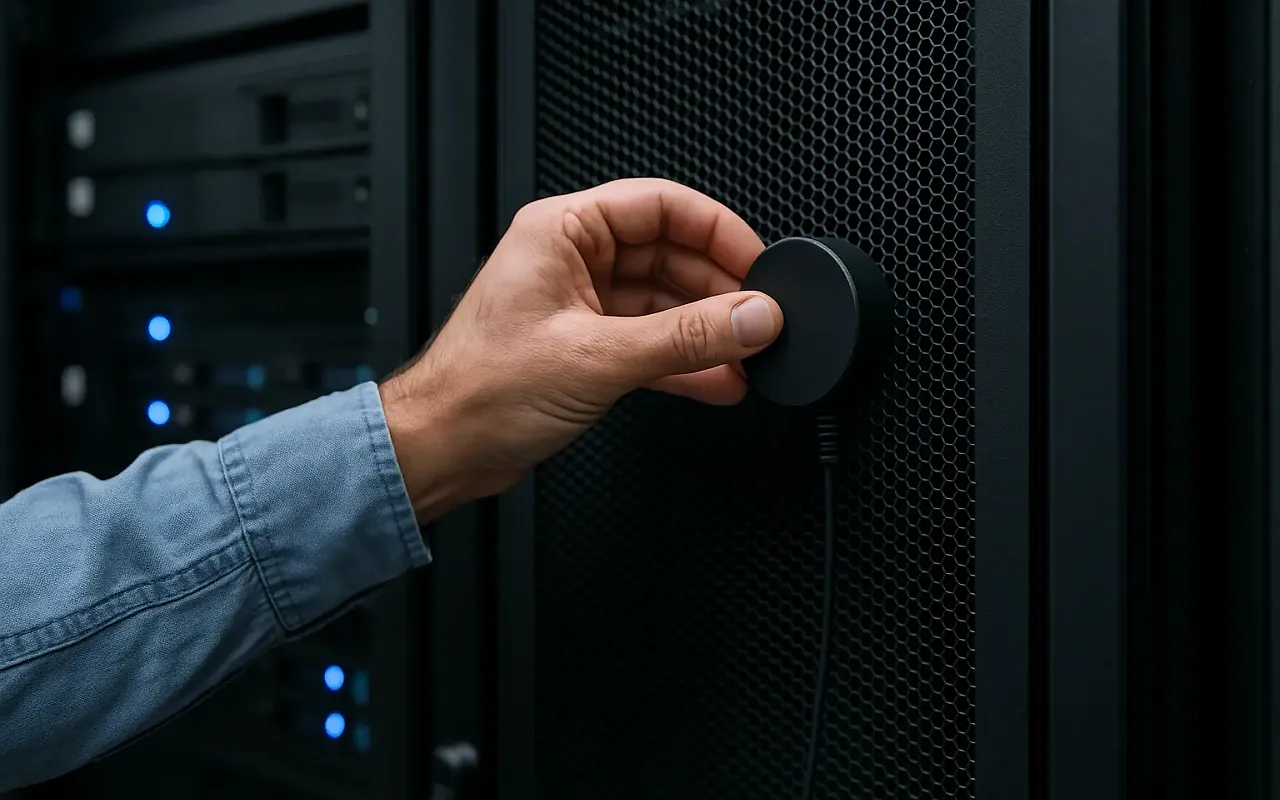
Find weak fault signals inside a noisy, changing machine environment
Fans, pumps, airflow, rack position, load, maintenance activity, and sensor placement all change the acoustic baseline. The system had to distinguish actionable anomalies from harmless variation.
- Project focus
- AI acoustic data center monitoring
- Delivery scope
- Sensing plan + Edge features
- Operating goal
- New fault signal
The model was only one part of the operating system
- 01
Capture consistent audio features without retaining unnecessary raw sound
- 02
Create baselines by equipment type and operating state
- 03
Reduce false alarms before connecting work-order systems
- 04
Explain each alert with enough context for a technician
Build an evidence path from sensor to maintenance decision
ZedIoT connected distributed acoustic sensing, edge preprocessing, encrypted feature transfer, model scoring, alert policy, and integrations with tools such as Zabbix, Nagios, or Prometheus.
Sensing plan
Sensor placement, sampling, equipment identity, and operating context are defined together.
Edge features
Preprocessing reduces noise and limits unnecessary raw-audio transfer.
Anomaly model
Models compare current signatures with equipment and state-specific baselines.
Maintenance integration
Alerts include evidence, severity, asset context, and a path to work orders.
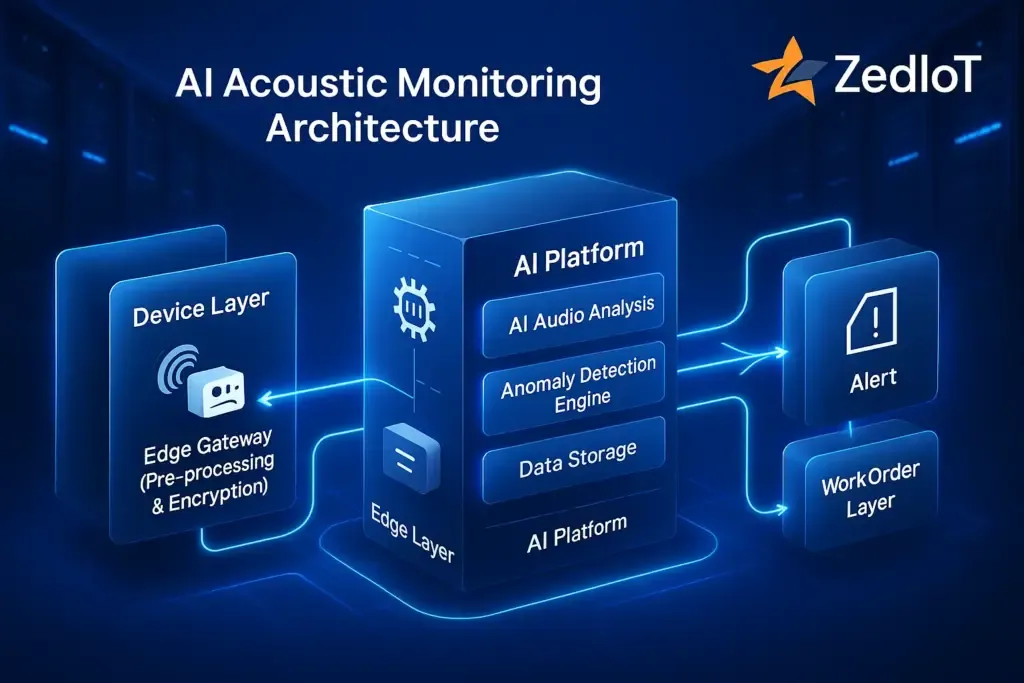
A reviewable workflow around the model
The architecture preserved the path from edge audio features through anomaly detection, alerts, and work-order review.
From machine sound to a reviewable maintenance event
Capture
Sensors collect bounded acoustic windows near target equipment.
Preprocess
Edge logic extracts stable features and quality indicators.
Score
The model identifies deviations against relevant baselines.
Respond
Monitoring and maintenance systems receive contextual alerts.
Earlier investigation without replacing existing monitoring
The case added acoustic evidence to established data center operations so technicians could inspect developing issues before a simple threshold alarm exposed them.
New fault signal
Acoustic behavior became another observable channel alongside power, temperature, vibration, and logs.
Operational fit
Alerts entered familiar monitoring and work-order workflows instead of a standalone AI screen.
Reviewable evidence
Asset, time, baseline, score, and supporting features helped technicians assess each event.
Detection performance depends on representative training and validation data, sensor placement, equipment mix, operating states, and a monitored human-review process.
AI acoustic data center monitoring questions
What did ZedIoT deliver for this ai acoustic data center monitoring project?
ZedIoT connected distributed acoustic sensing, edge preprocessing, encrypted feature transfer, model scoring, alert policy, and integrations with tools such as Zabbix, Nagios, or Prometheus. The final scope depended on the customer's devices, interfaces, operating workflow, and acceptance criteria.
Can this project pattern be adapted to another product or site?
Yes. The reusable pattern is the way capture, preprocess, score are connected. Device protocols, deployment topology, data ownership, and operating rules are validated for each new project.
What should be confirmed before starting a pilot?
A useful pilot starts with representative hardware, interface documentation, real operating conditions, expected users, failure cases, and measurable acceptance criteria. Detection performance depends on representative training and validation data, sensor placement, equipment mix, operating states, and a monitored human-review process.
Planning a related AI + IoT project?
Share the current device or system, the operating problem, available interfaces, intended users, and the result you need to validate. ZedIoT can help define a focused prototype and production path.
- AI + IoT product architecture review
- Hardware, firmware, cloud, and application integration
- Prototype planning and production support