

AI Tour Guide Robot for Smart Building Visitors
An office-building operator wanted to reduce repetitive reception work while giving visitors a more direct way to ask questions, find facilities, and reach destinations through voice, maps, and autonomous navigation.
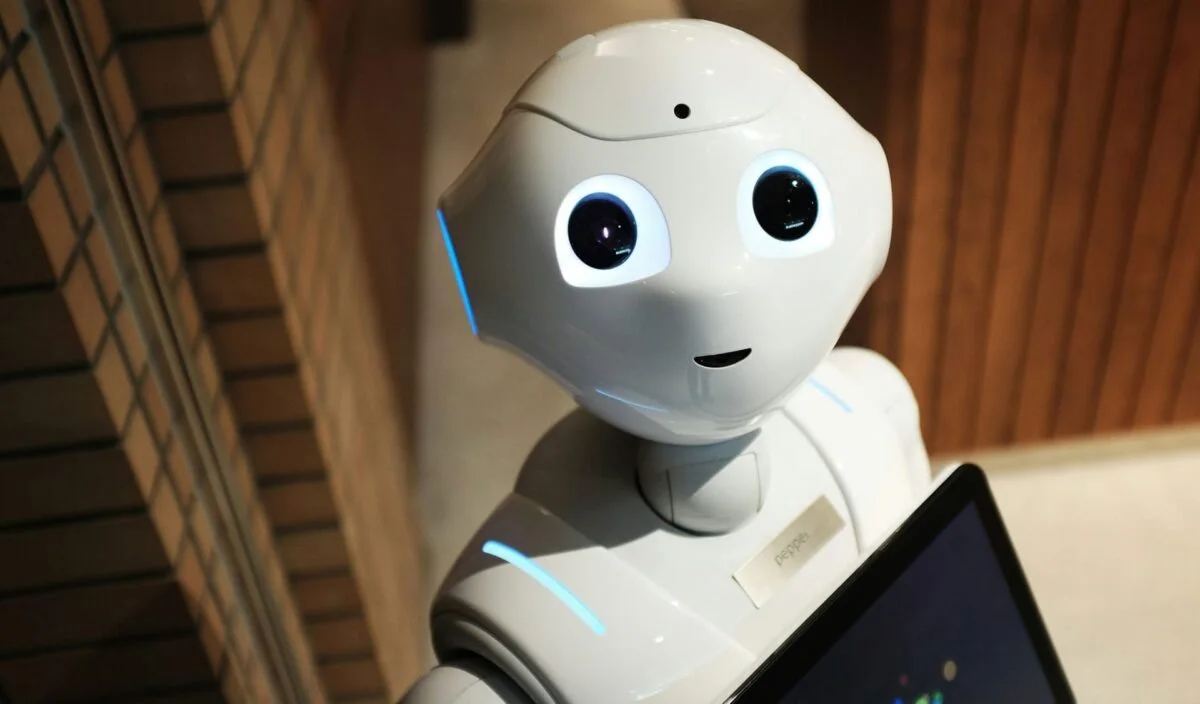
Turn a static building guide into an interactive visitor service
Traditional guided tours were costly and difficult to scale. The customer needed a robot that could answer building questions, explain facilities, plan a route, and guide visitors without requiring a staff member for every request.
- Primary setting
- Office lobbies and service desks
- Core interaction
- Voice, screen, and navigation
- AI foundation
- Building knowledge base
Combine language understanding with real movement through the building
The robot had to understand natural-language requests, answer approved questions, plan a route, navigate safely, and keep the visitor engaged with voice and multimedia content.
- Accurate answers about layouts and facility locations
- High-quality speech recognition and voice response
- Real-time path planning and obstacle handling
- Multi-floor or handoff-aware visitor guidance
- Encrypted data transmission and managed content
Connect conversation, knowledge retrieval, and autonomous guidance
The documented Robot + AI architecture coordinates these capabilities through explicit operational handoffs.
Welcome and identify intent
The robot greets visitors, recognizes a request, and distinguishes information questions from navigation tasks.
Answer from the building knowledge base
Speech recognition, retrieval, and language-model reasoning turn approved building information into a conversational response.
Plan and execute the route
The robot maps the requested destination to the building graph, plans a route, and navigates while monitoring obstacles.
Present and hand off
Multimedia, voice, and screen content explain the destination while the system records completion or routes the visitor to staff.
Keep knowledge, dialogue, navigation, and motion control synchronized
Capture speech, identify the request, and preserve conversational context.
Find building information, facility records, maps, and service guidance.
Decide whether to answer, display information, navigate, or hand off.
Coordinate voice, screen, sensors, robot movement, and arrival confirmation.
Deliver a complete visitor experience, not only an AI answer
Building knowledge assistant
Answers questions about layouts, facilities, departments, services, and visitor guidance from an approved knowledge base.
Speech interaction
Speech recognition, semantic understanding, and speech synthesis support a hands-free visitor experience.
Autonomous navigation
Real-time path planning and obstacle handling guide visitors to destinations without fixed floor tracks.
Multi-floor workflow
Cross-floor guidance coordinates robot movement, building maps, elevator or handoff logic, and destination confirmation.
Multimedia presentation
The screen and live media path can show maps, introductions, instructions, or remote assistance during a tour.
Controlled data handling
Encrypted communication and permission-aware content protect visitor and building information in transit.
A working smart-building guide that joins AI interaction with physical navigation
The published case reports successful delivery of the office-building guide robot. It supports information assistance, route planning, visitor interaction, and a path to more automated building service.
More direct visitor support
Visitors can ask questions and request destinations without waiting for a manual tour.
Reusable building knowledge
Approved information can be maintained centrally and delivered through voice and screen.
Navigation as part of the answer
The system can move from explanation to real guidance when the visitor needs a destination.
Foundation for service automation
The same architecture can extend to reception, exhibitions, hospitals, campuses, and retail service.
AI tour guide robot questions
What does an AI tour guide robot need beyond a language model?
It needs approved knowledge, speech recognition, speech synthesis, maps, localization, obstacle handling, route planning, robot control, screen interaction, security, monitoring, and a human handoff path.
Can the robot answer questions about a specific building?
Yes. Building layouts, facilities, departments, services, visitor rules, and other approved content can be organized in a controlled knowledge base that the assistant uses when responding.
How does autonomous visitor guidance work?
The system identifies the destination, maps it to the building graph, plans a route, navigates while observing obstacles and localization state, and confirms arrival or hands the visitor to the next step.
Can the same approach be used outside office buildings?
Yes. The architecture can be adapted to exhibitions, campuses, hospitals, retail spaces, museums, factories, and other environments after their maps, safety rules, content, traffic, and handoff workflows are defined.
How should an AI guide robot proof of concept be scoped?
Choose one robot platform, one controlled floor or route, a small approved knowledge base, representative questions, navigation acceptance criteria, and a clear staff handoff before expanding the service.
Planning an AI service robot or smart-building assistant?
Share the robot platform, building maps, visitor scenarios, languages, knowledge sources, navigation constraints, and required integrations. We will help define a focused proof of concept.
- AI + IoT product architecture review
- Hardware, firmware, cloud, and application integration
- Prototype planning and production support