

Civil Defense Alarm System for School Emergency Response
A regional authority needed to connect legacy and new school broadcast equipment through a central platform while preserving local operation and resilient emergency communication.
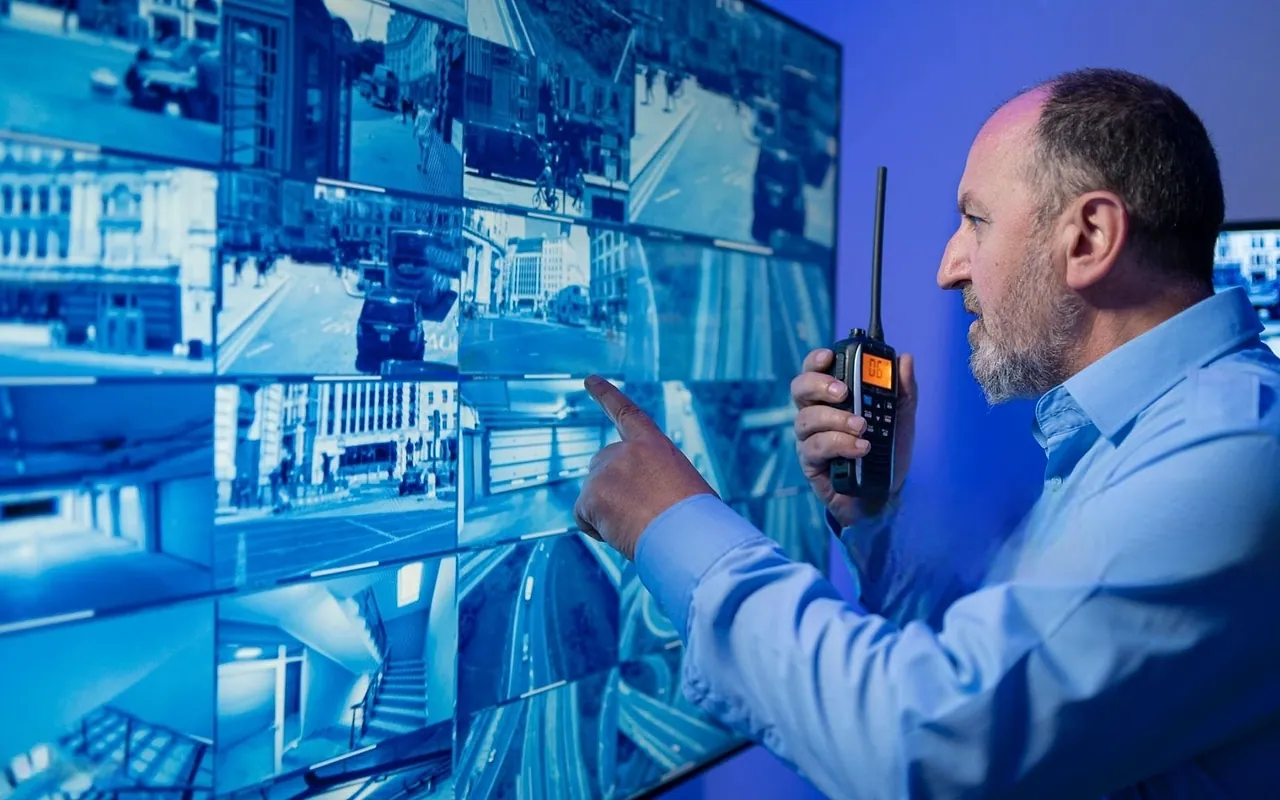
Coordinate distributed schools without creating one fragile control point
The system had to support different hardware generations, school subnets, remote commands, local fallback, redundant services, permissions, event records, and degraded-network behavior.
- Project focus
- school civil defense alarm system
- Delivery scope
- Equipment adapters + Edge continuity
- Operating goal
- Mixed-generation support
The monitoring loop had to end in a real response
- 01
Connect legacy and current broadcast controllers
- 02
Separate regional, district, school, and operator authority
- 03
Keep essential local behavior available during network faults
- 04
Record command, delivery, acknowledgment, and equipment health
Use central orchestration with school-level edge control
ZedIoT developed middleware adapters, containerized central services, school edge components, endpoint models, remote command workflows, redundancy, logs, and operational dashboards.
Equipment adapters
Legacy and new broadcast endpoints use explicit, testable command and status contracts.
Edge continuity
School-side services preserve approved local operation during central-network disruption.
Central authority
Roles and command scope remain controlled by region, organization, school, and endpoint.
Event evidence
Command, delivery, acknowledgment, failure, and recovery remain traceable.
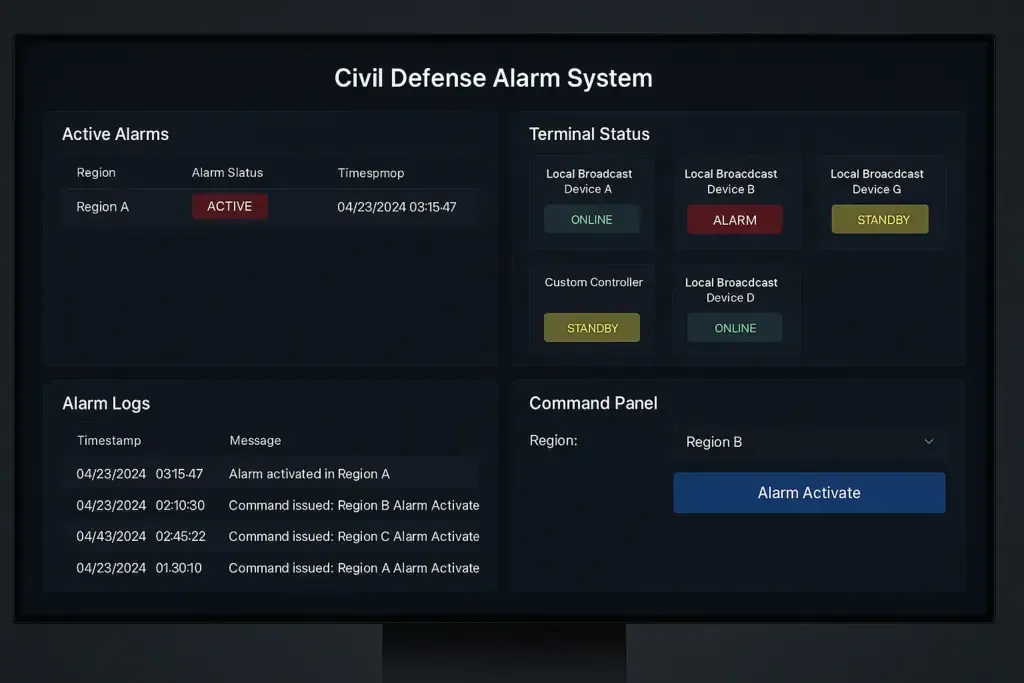
Field evidence connected to the response workflow
The command view makes terminal connectivity, active alarms, action history, and authorized remote control visible together.
A resilient command path from authority to school endpoint
Authorize
The platform verifies user, scope, target, and emergency action.
Distribute
Central and edge services route the command through available paths.
Broadcast
The local controller operates the intended endpoints.
Confirm
Delivery, endpoint state, exceptions, and recovery return as evidence.
A more unified emergency broadcast operation across schools
The case connected distributed equipment and roles through a resilient architecture designed for central coordination and local continuity.
Mixed-generation support
Legacy and newer school equipment could participate in one managed workflow.
Local resilience
Edge services reduced dependence on a continuously available central connection.
Accountable commands
Authority, target, delivery, and response evidence remained visible.
Emergency communications require site surveys, qualified authorities, drills, redundancy validation, cybersecurity review, and applicable civil-defense and education regulations.
school civil defense alarm system questions
What did ZedIoT deliver for this school civil defense alarm system project?
ZedIoT developed middleware adapters, containerized central services, school edge components, endpoint models, remote command workflows, redundancy, logs, and operational dashboards. The final scope depended on the customer's devices, interfaces, operating workflow, and acceptance criteria.
Can this project pattern be adapted to another product or site?
Yes. The reusable pattern is the way authorize, distribute, broadcast are connected. Device protocols, deployment topology, data ownership, and operating rules are validated for each new project.
What should be confirmed before starting a pilot?
A useful pilot starts with representative hardware, interface documentation, real operating conditions, expected users, failure cases, and measurable acceptance criteria. Emergency communications require site surveys, qualified authorities, drills, redundancy validation, cybersecurity review, and applicable civil-defense and education regulations.
Planning a related AI + IoT project?
Share the current device or system, the operating problem, available interfaces, intended users, and the result you need to validate. ZedIoT can help define a focused prototype and production path.
- AI + IoT product architecture review
- Hardware, firmware, cloud, and application integration
- Prototype planning and production support