

Custom Industrial Gas Detection System with Real-Time Alerts
A manufacturing operator needed faster gas-leak response, worker fall detection, and coordinated evacuation across hazardous zones. ZedIoT connected sensors, edge processing, dashboards, and escalation workflows into one safety system.
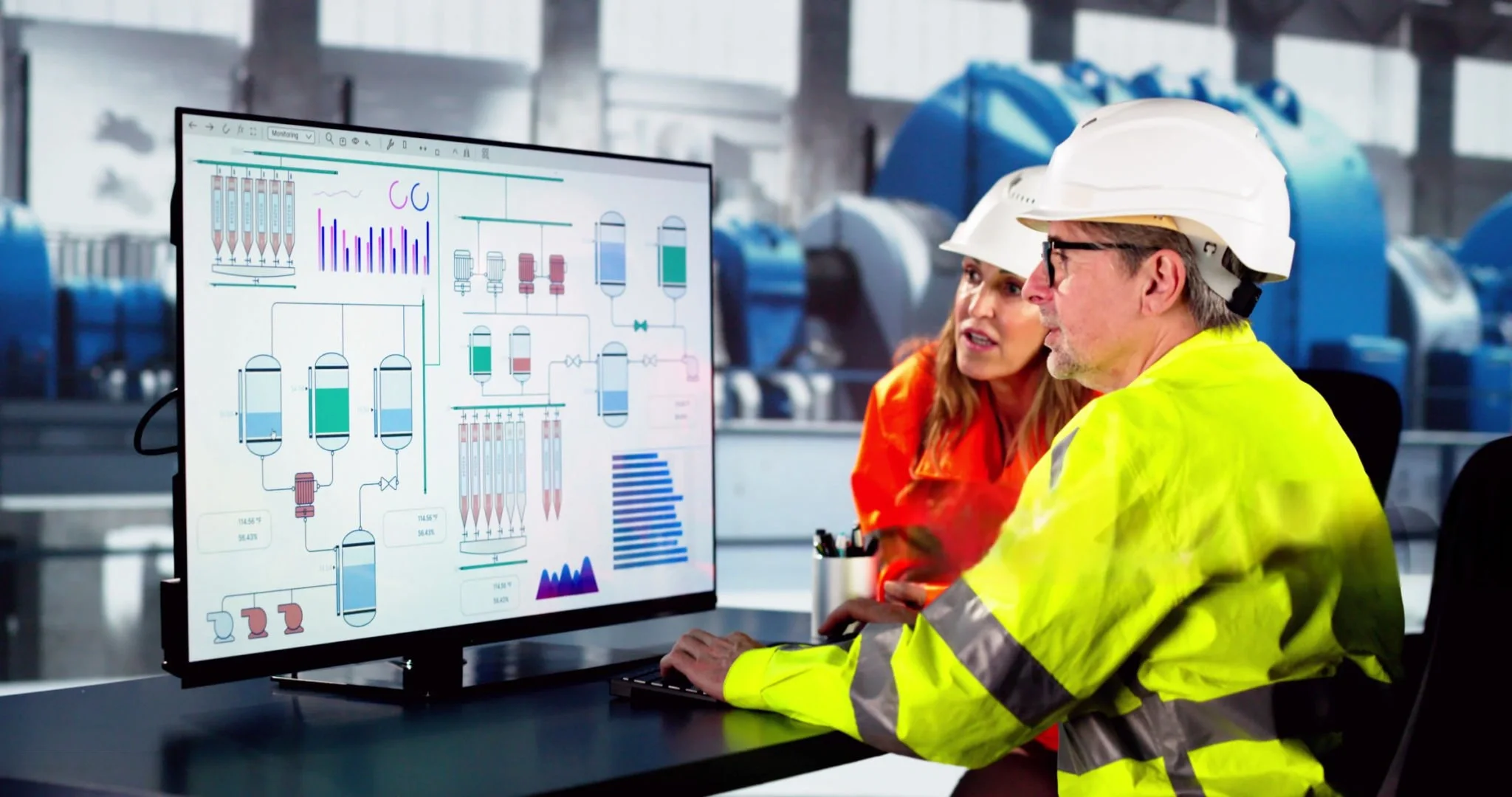
Replace passive gas logs with an active incident-response loop
The client operated multiple hazardous gas sources. Its legacy system recorded data but did not provide real-time mobile alerts, worker-down visibility, or a centralized response workflow. Manual monitoring delayed action and produced inconsistent records.
- Environment
- Multi-zone industrial facility
- Critical events
- Gas threshold and worker fall
- Operating goal
- Detect, escalate, and respond
The pilot tested coverage, latency, and worker workflows in a real facility
These figures come from the published project record and describe that deployment rather than a general product guarantee.
Safety events needed to reach the right people before manual review
- No real-time alert route for different factory zones
- No dependable visibility into worker fall events in unmanned areas
- Gas data and response records were not centralized
- Mobile access and control-room workflows were disconnected
- The architecture needed to expand across more facilities
Keep critical alarm behavior close to the site while centralizing oversight
The layered design supports real-time processing, multi-zone coverage, mobile access, and local fallback instead of depending on one uninterrupted cloud connection.
Fixed and wearable sensors
Networked gas detectors and wearable tags collect concentration, presence, exposure, motion, and fall events at the relevant risk points.
On-site edge processing
The edge gateway filters signals, compares thresholds, stores events, and preserves local alarm behavior when cloud connectivity is interrupted.
Gas monitoring platform
The platform organizes zones, devices, workers, events, escalation rules, dashboards, and historical compliance records.
Alert and evacuation workflow
Email, SMS, app, siren, and optional voice broadcast routes can be tied to zone-specific escalation and evacuation logic.
Trace each incident from sensor signal to acknowledged action
Fixed or wearable sensors report gas concentration, exposure, motion, and fall events.
Edge logic applies thresholds, preserves local alarms, buffers events, and handles failover.
The platform maps devices and workers to zones, rules, notification routes, and records.
Teams acknowledge alerts, execute evacuation steps, and retain evidence for follow-up.
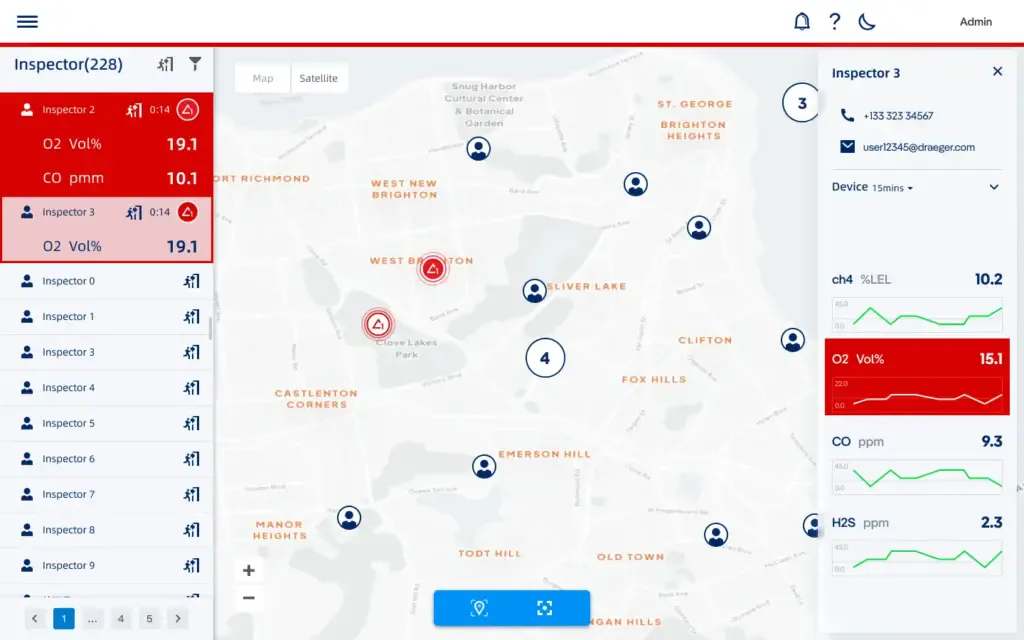
One live view for zones, workers, gases, and escalation state
Authorized users can review sensor readings, system health, alarm context, worker position, and acknowledgement state from the dashboard. Historical records support management and compliance workflows.
Explore IoT platform developmentFaster response with a repeatable path for more plants
Results come from the documented pilot and should be evaluated against the site layout, detector selection, radio conditions, alarm policy, and acceptance tests of each new deployment.
The published project reports reducing average incident response from eight minutes to under three minutes.
Four high-risk zones covered 95% of the active floor area in the documented deployment.
More than 120 daily users were supported across desktop, tablet, and mobile in the project record.
The customer approved a second-plant expansion with greater sensor density and additional dashboard functions.
Industrial gas detection questions
What is a custom industrial gas monitoring system?
It combines gas detectors, optional wearable sensors, gateway or edge processing, dashboards, alarm rules, notification routes, worker workflows, and historical records around the facility's actual zones and emergency procedures.
Why is edge processing important for gas detection?
Edge processing can compare thresholds, trigger local alarms, buffer events, and preserve critical site behavior when a cloud connection is delayed or unavailable.
Can existing gas detectors be connected?
Often yes, if their electrical or communication interfaces, measurement ranges, calibration state, and alarm behavior can be documented. Integration should be validated with representative devices and field conditions.
How should a gas monitoring pilot be evaluated?
Define target gases, zones, detector placement, radio conditions, alarm latency, local fallback, notification routes, acknowledgement, evacuation workflow, and acceptance tests before deployment.
Can the platform support multiple plants?
Yes. A multi-tenant or multi-site platform can separate facilities, zones, devices, users, alarm policies, and reports while retaining central visibility.
Planning a custom gas or worker-safety monitoring system?
Share the facility zones, gas types, current detectors, worker workflow, alarm policy, connectivity conditions, and required integrations. We will help define a pilot and acceptance plan.
- AI + IoT product architecture review
- Hardware, firmware, cloud, and application integration
- Prototype planning and production support