

Environmental Monitoring System for Remote Stations
A regional equipment integrator had its own gateways but needed the software layer to collect mixed sensor data, visualize remote stations, detect failures, and route environmental alerts without constant field visits.
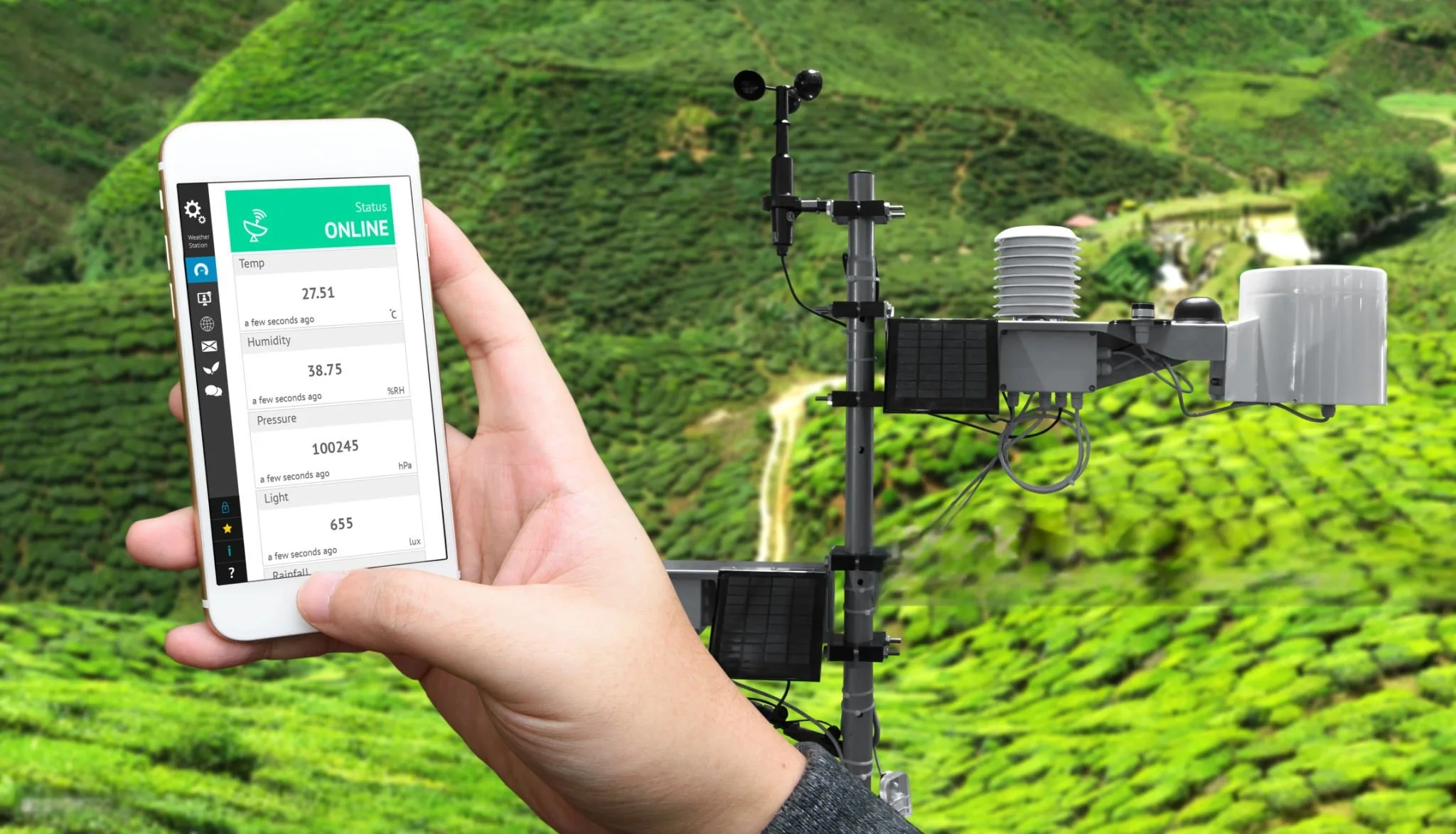
Add a dependable software platform to the client's existing gateways
The client was developing an IoT monitoring offer around its own gateway devices. It needed a centralized platform for sensor onboarding, live data, performance logs, failure visibility, and rapid response to power, water, and environmental anomalies.
- Client role
- Environmental equipment integrator
- Existing asset
- Proprietary gateway devices
- Missing layer
- Monitoring and alert platform
Remote stations were connected, but the operating team could not see enough
- No central view of sensor data or station health
- No dependable failure and environmental alert workflow
- Manual review slowed response to leaks and power events
- The platform had to work with existing gateway hardware
- Deployment needed to remain portable across customer environments
Connect sensors, gateways, dashboards, and alerts as one deployable system
Sensor acquisition
Custom drivers collect temperature, humidity, power, PDU, water-leak, and air-conditioner status from distributed stations.
Gateway compatibility
The platform integrates with the client's existing gateways and supports both site LAN and cloud connectivity.
Central dashboard
Multi-site status, sensor health, charts, and color-coded alarms give operators one view of remote infrastructure.
Containerized deployment
Docker packaging simplifies deployment, versioning, recovery, and future expansion across customer environments.
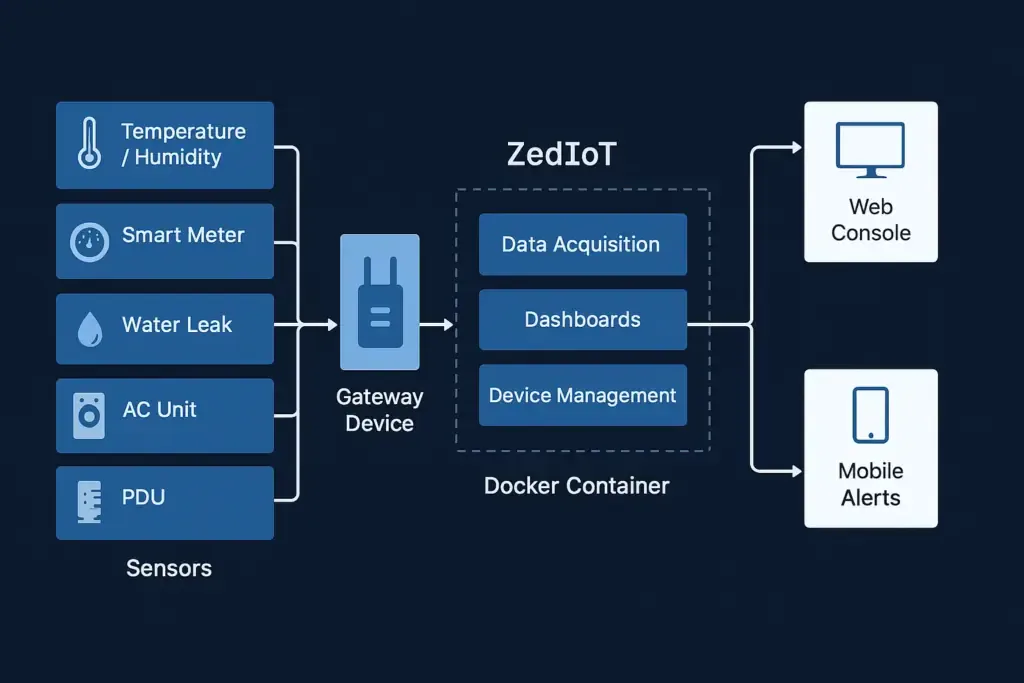
Keep the field gateway and software platform independently maintainable
Sensors connect through the customer's gateway. A containerized platform handles acquisition, dashboards, device management, and alarm rules, then exposes web operations and mobile notifications.
- Temperature, humidity, power, PDU, leakage, and AC status
- LAN or cloud deployment according to site constraints
- Reusable Docker packaging for rollout and recovery
- Web console and mobile alert routes
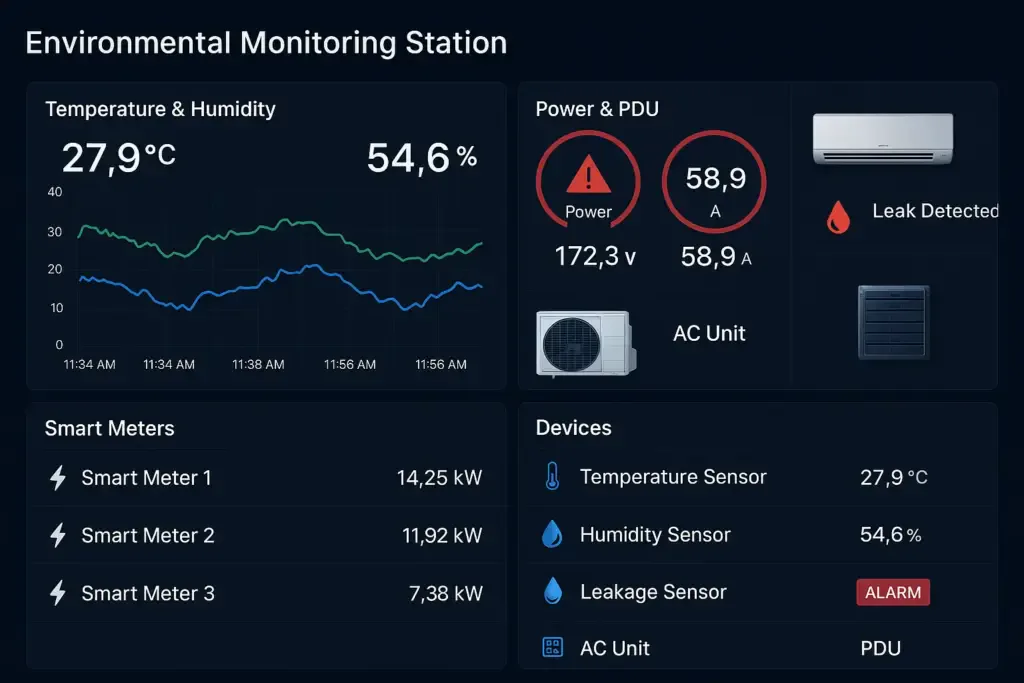
Put current conditions, device health, and active alarms in the same view
Operators can review environmental trends, power status, leakage alarms, connected devices, and site-level exceptions without opening separate tools for each sensor type.
Explore IoT device managementBetter station visibility with less routine manual intervention
The published case reports centralized data visibility, real-time temperature, power, and leakage alerts, faster response, and stable operation over twelve months.
Centralized visibility
Sensor and station status can be reviewed from one dashboard rather than separate field tools.
Real-time alerts
Temperature, power, leakage, and equipment events can trigger configured email or SMS notifications.
Lower manual effort
Remote health and alarm evidence reduce routine site checks and help teams prioritize visits.
Stable operation
The published case reports more than twelve months of operation with no major failures.
Remote environmental monitoring questions
Can one platform monitor multiple remote stations?
Yes. Sites, gateways, sensors, alarms, users, and reports can be organized in a central platform while retaining station-level permissions and operating context.
Which sensors can be connected to an environmental monitoring system?
Common inputs include temperature, humidity, water leakage, air quality, smart meters, PDU, power status, air conditioners, and equipment health. The final set depends on available interfaces and drivers.
Can the platform use existing gateway hardware?
Often yes. The gateway protocol, device model, transport, authentication, buffering, and command behavior should be documented and tested before full integration.
Can the system run on premises?
Yes. Containerized deployment can support on-premises, private cloud, or controlled remote infrastructure, with backup, monitoring, update, and recovery procedures defined for the operating team.
How should alerts be designed for remote sites?
Alerts should include the site, sensor, value, threshold, severity, duration, current device health, and the person expected to respond. Escalation and acknowledgement rules should match the real maintenance workflow.
Planning a remote station monitoring system?
Share the sensor types, gateway interfaces, site connectivity, alert policy, deployment environment, and maintenance workflow. We will help map a practical pilot and rollout plan.
- AI + IoT product architecture review
- Hardware, firmware, cloud, and application integration
- Prototype planning and production support