

Computer Room Power, Environment, and Energy Monitoring
A computer-room operation needed to unify cabinet power, environment, energy, equipment status, alarms, and maintenance evidence across distributed infrastructure.
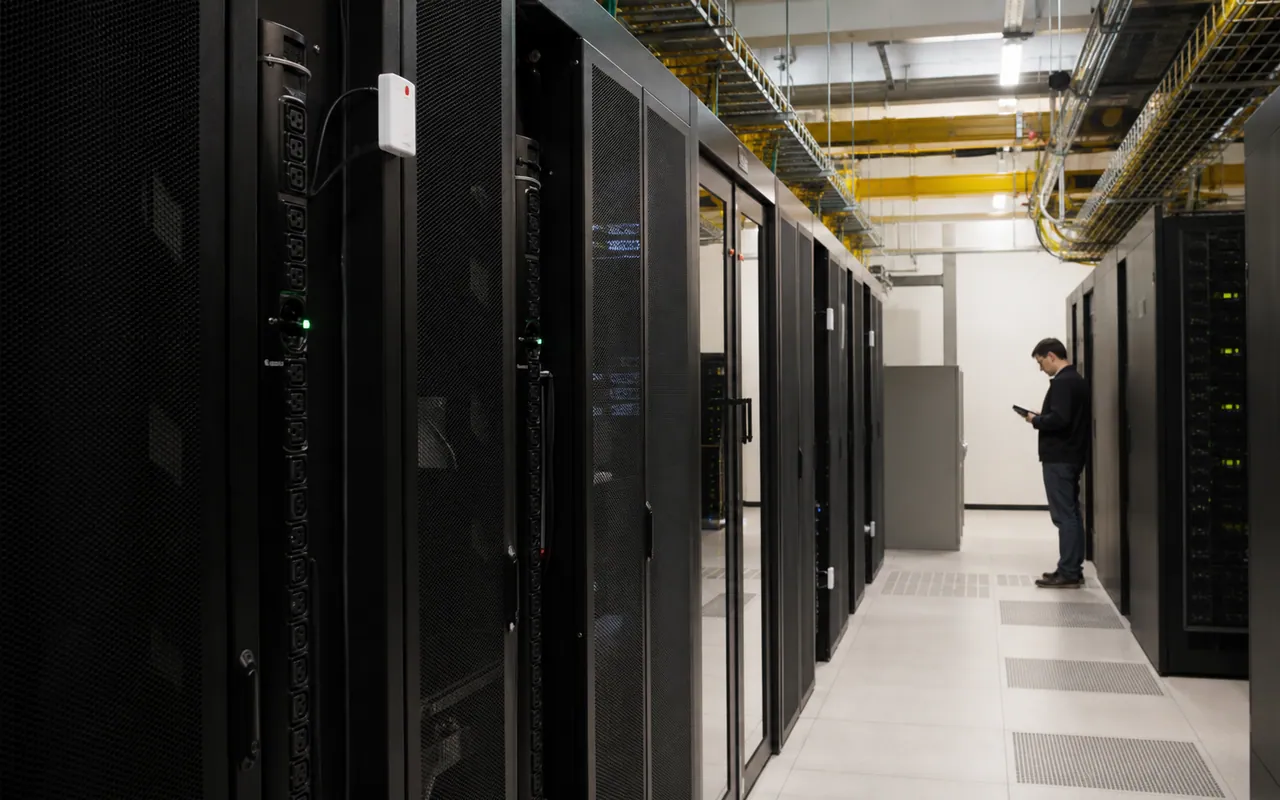
Give operators one context across power, environment, and equipment
UPS, PDU, meters, temperature, humidity, water leakage, access, cooling, and network devices produced separate signals that had to be correlated by room, rack, asset, and time.
- Project focus
- computer room monitoring platform
- Delivery scope
- Infrastructure access + Rack and asset model
- Operating goal
- Unified infrastructure view
The field data needed business and operating context
- 01
Integrate heterogeneous infrastructure and environmental interfaces
- 02
Associate readings with room, rack, circuit, and equipment
- 03
Detect developing conditions without flooding operators
- 04
Preserve history for energy, capacity, and maintenance analysis
Build an infrastructure model above isolated monitoring tools
ZedIoT connected gateways, device adapters, rooms, racks, assets, points, alarm policy, energy analytics, dashboards, reports, and predictive-maintenance foundations.
Infrastructure access
Power, cooling, environment, access, and network signals enter through controlled adapters.
Rack and asset model
Rooms, racks, circuits, devices, points, and relationships create operating context.
Alarm correlation
Rules evaluate multiple signals, communication quality, duration, and recovery.
Energy and capacity
Trends support energy review, load balance, capacity, and maintenance planning.
A connected view from field point to infrastructure risk
Collect
Gateways read power, environment, cooling, access, and equipment state.
Contextualize
The platform maps each point to room, rack, circuit, and asset.
Evaluate
Rules and trends identify alarms, degradation, and capacity concerns.
Maintain
Operators investigate and close work with supporting evidence.
A common operating layer for computer-room infrastructure
The system connected immediate alarms with longer-term energy and equipment history so teams could manage both availability and efficiency.
Unified infrastructure view
Power, environment, cooling, access, and equipment status shared one topology.
Better alarm context
Events could be reviewed against related signals and communication state.
Maintenance foundation
Historical data supported energy, capacity, and condition-based analysis.
Availability and predictive outcomes depend on sensor coverage, protocol access, topology accuracy, alarm design, redundancy, and operating procedures.
computer room monitoring platform questions
What did ZedIoT deliver for this computer room monitoring platform project?
ZedIoT connected gateways, device adapters, rooms, racks, assets, points, alarm policy, energy analytics, dashboards, reports, and predictive-maintenance foundations. The final scope depended on the customer's devices, interfaces, operating workflow, and acceptance criteria.
Can this project pattern be adapted to another product or site?
Yes. The reusable pattern is the way collect, contextualize, evaluate are connected. Device protocols, deployment topology, data ownership, and operating rules are validated for each new project.
What should be confirmed before starting a pilot?
A useful pilot starts with representative hardware, interface documentation, real operating conditions, expected users, failure cases, and measurable acceptance criteria. Availability and predictive outcomes depend on sensor coverage, protocol access, topology accuracy, alarm design, redundancy, and operating procedures.
Planning a related AI + IoT project?
Share the current device or system, the operating problem, available interfaces, intended users, and the result you need to validate. ZedIoT can help define a focused prototype and production path.
- AI + IoT product architecture review
- Hardware, firmware, cloud, and application integration
- Prototype planning and production support