

Smart Manufacturing, Predictive Maintenance and Industry AI
A guide for industrial AI, predictive maintenance, equipment data, rules, anomaly detection, MES/WMS/ERP integration, and operational value.
What this topic covers
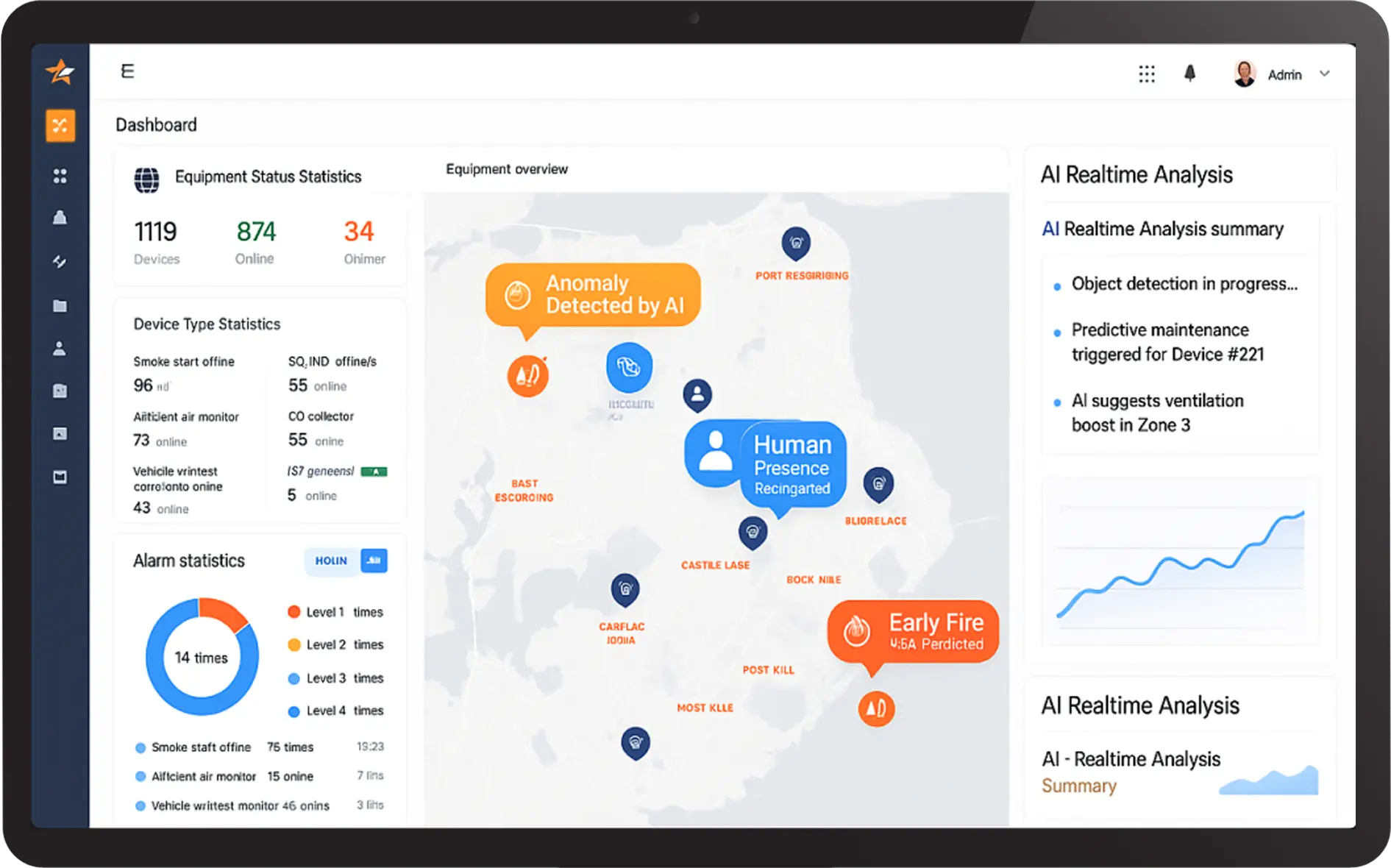
Smart manufacturing, predictive maintenance and industry AI use equipment data, rules, anomaly detection, AI models, and system integration to improve uptime, quality, energy, traceability, and service workflows.
- Manufacturers targeting measurable outcomes such as downtime reduction, yield improvement, energy savings, quality, or traceability.
- Operations teams that need equipment data connected with MES, ERP, WMS, CMMS, dashboards, or ticketing.
- Industrial companies starting from one line, one machine group, or one failure mode before scaling to a broader platform.
What to clarify before implementation
Smart manufacturing projects should start from measurable goals such as downtime reduction, yield improvement, energy savings, traceability, quality, or remote service.
Define the business objective
Clarify whether the project targets downtime, loss reduction, energy savings, traceability, inspection, or remote operations.
Build asset and data models
Collect equipment state, operating parameters, energy, alarms, environment, maintenance, and production events.
Combine rules with AI
Use thresholds, trend analysis, anomaly detection, prediction, and service workflows together rather than relying on one model.
Integrate industry systems
Send results to MES, WMS, ERP, CMMS, ticketing, dashboards, or customer-owned platforms.
Guides that support this decision
Move from topic to buildable stack choices
Related implementation entries
Planning an industrial AI or predictive maintenance project?
Start with the equipment list, data history, current failure modes, maintenance workflow, and measurable business target.
Common planning questions
Use these answers to frame the first practical decisions around Smart Manufacturing.
Do we need a large dataset for predictive maintenance?
Useful predictive models need enough failure history and operating context. If data is limited, start with rules, trends, alarms, and maintenance workflow digitization.
Can smart manufacturing start with one line or machine?
Yes. A focused pilot is often better than a large dashboard project, as long as the data model and architecture can scale.
Plan this topic with an AI-IoT engineering team
Share the current equipment, workflow, data source, or system integration you are evaluating. We will help convert the topic into a practical implementation path.
- AI + IoT product architecture review
- Hardware, firmware, cloud, and application integration
- Prototype planning and production support